
By the mid-nineteenth century Polmont was thickly populated by small country estates – Weedingshall, Polmont Park, Polmontbank, Kersiebank (Inchyra), Millhall, Millfield, Meadowbank, Polmont House, Thornhall, Haypark and Parkhill to name but a few. Most of these were, as the author of the New Statistical Account of 1841 remarks, modern. Some had more ancient origins which have now been lost. The area which included Polmont was part of the Barony of Abbotskerse with its locus at Abbotsgrange in what is now Zetland Park. The barony was owned by Holyrood Abbey and prior to the Reformation Polmont was divided into two divisions – Nether and Over Polmont. The boundary between these approximated to the line of the present Falkirk-Linlithgow Road with Kersiebank, Millhall and Polmont Park to the north being in Nether Polmont and Parkhill (including Millfield) and Polmont House being in Over Polmont.
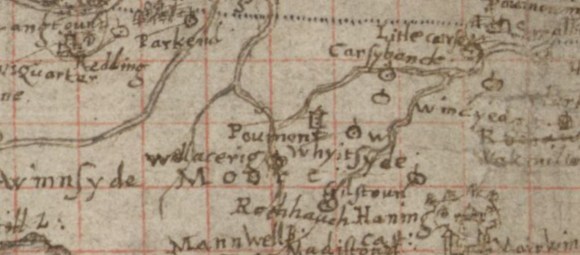
Timothy Pont depicts a small two-storey tower-house called “Poumont” in this area. Unfortunately his map is unusually distorted at this point and it is not clear which of the estates is being referred to, though it is reasonable to associate it with a cadet family of the Livingstones of Callendar (Reid 2009, 232; Reid 1997, 76). In 1793 a sasine refers to “a third part of Polmont called Nether Polmont or Polmont Park” (Reid Notes) which would make it appear that Nether Polmont and Polmont Park were one and the same thing. However, Polmont Park had been taken from the Lands of Kersiebank in 1784 when George Shaw feued it to William Pearson (ibid) and this provides us with one of the first mentions of the name and a probable date for its formation.
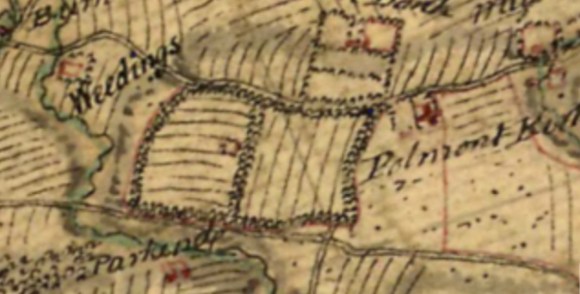
Roofed structures were already shown between Weedings and Polmont Kirk at the site of Polmont Park House on Roy’s map of 1755 but the fact that they are not named suggests that they represent farm buildings associated with Kersiebank. They were ranged around a courtyard and correspond with the later walled garden and its outhouses.
However, the construction of the mansion at Polmont Park was probably a speculative venture on the part of George Shaw. The name is clearly a new invention of the time and was intended to help with the sale which was first advertised in March 1780:
“To be sold part of the Lands of Polmont called Polmont Park, and house thereon, lying in the parish of Polmont. The lands contain about 63 acres, which are all inclosed and sub-divided with hedges. The house is new and elegantly finished and consists of ten fire rooms, besides closet, kitchen, and cellars. Being situated on the rising ground above the Carse of Falkirk, it commands a most extensive and beautiful prospect of the Firth of Forth, Carron Work and Great Canal and country adjacent. From this delightful and remarkably healthy place, may be seen part of nine counties. The lands hold feu of the Duke of Hamilton…” (Edinburgh Evening Courant 13 March 1780, 4).
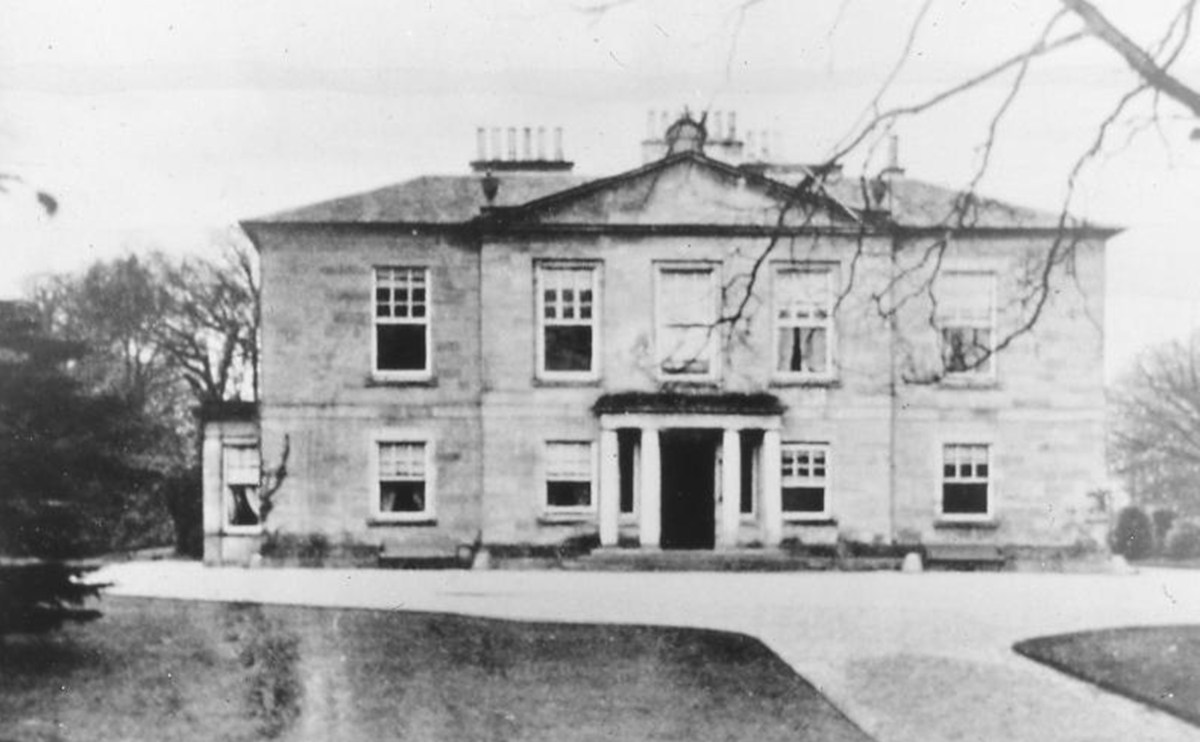
This house was presumably the eastern portion of the later mansion and its grandiose symmetrical Georgian façade of polished ashlar faced east. The central bay under a triangular pediment was slightly advanced with vases on the wallhead at either end. A columned porch on the ground floor was reached by two steps. Broad bays with hipped roofs to either side emphasised the symmetry.
William Pearson Esq of Polmont Park held a game license in 1788. Two years earlier it had been held there by William Barron (which may have been a misprint). Pearson was from Kippenross and died at Polmont Park in April 1793 (Edinburgh Magazine vol. i, 411). Polmont Park was then advertised as consisting of 60 to 70 acres in 8 enclosures – a genteel house upon the property, a good garden and orchard (Edinburgh Evening Courant 16 May 1793).
“LANDS IN STIRLINGSHIRE. To be SOLD by public roup, (the day and place of sale to be afterwards advertised. THE Lands of POLMONT-PARK, in the parish of Polmont, and shire of Stirling. These lands are situated twenty-one miles west from Edinburgh, upon the road leading to Stirling by Linlithgow and Falkirk, from which last they are only three miles distant. They contain between 60 and 70 acres of very rich ground divided into eight different inclosures, completely fenced by excellent hedges, and stripes of planting, and are all well laid down, and in the highest order.
There is a genteel house upon the premises, commanding an extensive view of the Carse of Falkirk, the Forth of Forth, and rich country on both sides, together with an excellent set of offices, a good Garden and Orchard, and well stocked Pigeon-house.
The title deeds, and a plan of the lands, may be seen by applying to Archibald Gibson, writer to the signet…” (Caledonian Mercury 25 May 1793, 4).
It does not appear to have sold and may have been rented for a number of years. In 1804 it was again put up for sale and if not sold this time the grounds were to be feued for building along the high road (Caledonian Mercury 21 July 1804, 3). Alexander Speirs of Elderslie was a well-known Glasgow tobacco baron and had died in 1782 leaving a vast fortune to be administered by his trustees, which included his wife and two sons, Archibald and Peter. His four youngest daughters were bequeathed £2,500 each on marrying with their mother’s consent. Failing that, they would only get the interest on that sum, the capital being given when both parents had died. He also specified which trustees would be tutors to them. His married daughter Martha was given £5,000. The Trustees authorised payment to Mrs Speirs of £350 yearly for both Mary and Helen for their maintenance, washing and lodging and to provide a proper woman to act as their servant. £330 was allocated for Grace and Joanna, and £50 to provide clothes for Mary and Helen (Boyd nd).
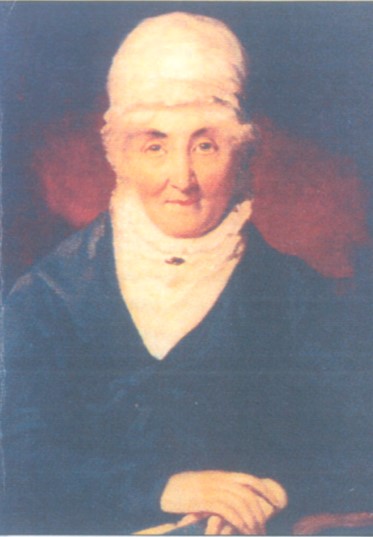
Alexander Speirs’ widow, Mary Buchanan, had inherited her own fortune and it is not clear whether it was her or the Trustees who bought Polmont Park in 1804. The house was then lived in by her and her unmarried daughters – Grace, Mary, Helen and Joan Isabella. Miss Grace Speirs married William Murray of Polmaise at the House in 1805. Mary Speirs continued to live at the house until her death in December 1818 aged 88 and was buried in Polmont Churchyard. In March 1828 history repeated itself when a Murray of Polmaise married a Speirs at Polmont Park; this time it was Mary Buchanan Murray, daughter of William and Grace Murray, to Alexander Graham Speirs, younger of Culcreuch (the son of Peter Speirs). The house was extended westward to accommodate the sisters and their relatives.
Mary, Helen and Joan remained single and spent the rest of their lives at Polmont Park. They were philanthropic, giving money to many charitable causes, including the school at Polmont in 1852 (see Polmont Female School). Mary died in 1849, Helen in 1852, and Joan Isabella in 1860. Their sister Grace died in 1858 and she and her husband were interred at Polmont Churchyard with her sisters. Archibald Speirs inherited Elderslie and married Margaret Dundas the daughter of Thomas Lord Dundas.
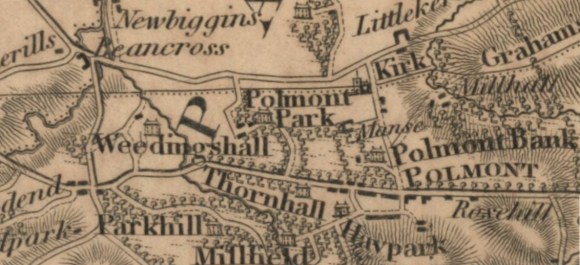
The sisters were very fond of their garden at Polmont Park, of which the following description was given in 1845:
“The Misses Speirs of Polmont Park are famous for the elegant taste and warm patronage they have shown to everything connected with the garden and not a little are we indebted to them for the diffusion of something of a similar spirit all around. Polmont Park is one of the sweetest lying estates on the south banks of the Forth. The garden, in which the ladies so worthily take delight, is situated at the north-west corner of the fine lawn, and immediately connected with the mansion. It contains altogether about 4½ acres. It has rather an unfortunate inclination to the north, but just so much has skill to grapple with. Entering first the flower garden, the amateur at once sees he is not amid common grounds. Numerous parterres and fancifully designed beds distract the eye with collections of flowers, any one of which would be thought an extensive selection in itself. Here are whole beds of geraniums, many of them very fine. There are equally crowded plots of fuchsias, heaths, pinks, and competing flowers. The rosiary is extensive, and excellently kept up by a succession of all the finest sorts that the season offers for purchase. We were highly pleased with ten varieties of dianthus, and no less with a bed containing six varieties phlox Drummondii. The picotees and carnations, as may be imagined, among 100 varieties, contain selected flowers of great beauty. The collection of dahlias is very fine. Three splendid specimens of camparuapalada are worth particular attention. In fact, the great number of the rarest greenhouse plants, all profusely growing in the open air, is exceedingly striking, and hardly makes one regret that there is actually no greenhouse at Polmont Park. Within the walls an acre is laid out in capital style, comprising another array of flower beds, and exhibiting vegetables of immense size. The melon, and other hot beds, are on the best principle, and the produce great. The walls, besides apples and pears, of the finer sort, are lined with young trees of the peach and apricot, which already show thick crops. Mr David Howe, who has been for six years the head gardener, evinces the most ample knowledge of his profession, and had been ten years in England. The vinery, we had forgot to say, contains the black Hamburgh and sweet water, and nowhere have we seen such a uniform or larger-bunched crop. Altogether, as a specimen of what the gardens are about Polmont, the Misses Speirs may well plume themselves on their devotion to horticulture, being thus seconded by one of the most superb gardens in Stirlingshire…
The view from the lower garden (a third compartment devoted to small fruits and vegetables) is exceedingly grand, and may be taken for what is presented from some other spots in the neighbourhood. It bursts on the delighted and astonished spectator to the west, north and east, and long ago elicited a tribute from Sir Walter Scott. To the left the scene is bounded by the Campsie Fells and high hills above Denny. The north-west opens up a far-stretching glimpse into the Highlands of Perthshire – the lofty Benalmond and Benledi towering in the distance; while nearer, the ruins of temples and feudal towers are relieved by smiling villages, gentlemen’s seats and church spires. The Grampians seem to merge into the Ochills, which range along and bound the view to the north, terminating with the Yetts of Muckhart and Castle Campbell…” (Stirling Observer 4 September 1845, 1).
And again in 1854:
“these gardens are not extensive, but they are well kept, and the various flowers cultivated in them reflect great credit upon the horticultural ability of Mr Howe, the gardener, who has been for several years celebrated in the locality for the cultivation of that popular flower the Dahlia, having taken the first prize for his flowers at most of the local shows. At this season of the year these flowers constitute quite a feature in the grounds, and show what it is possible for skill and energy to accomplish… The gardens at Polmont Park are essentially English in their style. The ground-work of the flower garden is grass, and the figures, generally speaking, are of that irregular outline which by common consent had been termed English. There are several rich masses of that American production the rhododendron, which bloom here freely; beautiful bushes of azaleas, which, during their flowering season, are surprisingly lovely; and a fine mass of the newer varieties of rose, over which one could spend a day and return on the next and the next un-tired of their beauty. There are many of the compartments of the flower garden allotted to the growth of what are characteristically enough designated half-hardy plants, which, during the summer months, give one continued succession of bloom, the bright and varied hues of which contrast finely with the sober green tints of the grassy lawn, or the foliage of the surrounding trees, and the shrubs with which the scarlet, yellow, blue, white, or pink beds are interspersed. The garden is surrounded with tall trees, which give it a snug, sheltered look; and beyond these there is a beautiful park stocked in summer with sheep, and thickly planted with trees. There is a broad green walk shaded with huge old sycamores…” (Falkirk Herald 21 September 1854, 4).
Much of the remainder of the estate was cultivated with the fields set amongst broad bands of trees. Those nearest the house, forming a lawn of 37 acres, were kept in permanent pasture only cropped by sheep and were let each year. They were called Glen Park, Johnston’s Park and North Park.
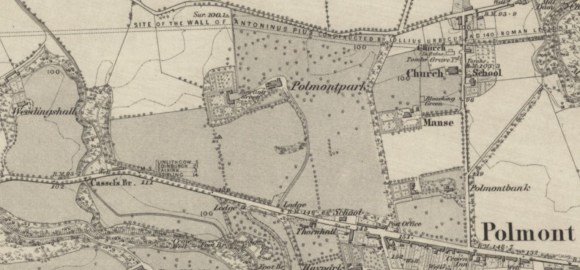
Grace Murray, the niece of the Speirs sisters, went to live with them at Polmont Park and died there on 27 November 1858. She was well known and highly respected in the locality for her active and Christian philanthropy. It was at this time that the Ordnance Surveyors described the house as “A neat cottage with offices attached, all two stories and in good repair. Property and residence of Miss Johanna Spiers.” The connection of the Speirs family with Polmont Park ended after the death there of Joanna Isabella on 7 July 1860.
| George Shaw | 1784 | |
| 1784 | William Pearson (purchase) | 1793 |
| Tenants? | ||
| 1804 | Mary Speirs nee Buchanan (purchase) | 1818 |
| 1818 | The Speirs sisters (daughters) | 1860 |
| 1801 | Alexander Crum Ewing (tenant) | c1877 |
| Mrs Ann Hume Speirs (granddaughter of Peter) | ||
| Peter Alexander Speirs (grandson of Peter) | 1884 | |
| 1885 | Mr and Mrs Stevenson (tenants) | |
| 1886 | Mr and Mrs Middleton (tenants) | 1888 |
| 1889 | James McKillop (purchase) | 1907 |
| 1907 | John Colville (purchase) | 1926 |
| 1926 | Dr Alfred Griffiths (purchase) | 1939 |
| 1930 | Helen Griffiths (wife) | 1950 |
| 1950 | Geoffrey & Donald Griffiths (sons) | 1959 |
| 1959 | house demolished and estate split up |
The house was put up for let:
“TO BE LET. FURNISHED, for such term of years as may be agreed upon, from 15th May 1861, POLMONT PARK HOUSE, Offices. Garden, and Pleasure-Ground. The House, which contains every accommodation suitable for the residence of a Gentleman’s family, is situated within fifteen minutes’ walk of Polmont Junction Station, and thus within an equally convenient distance of Edinburgh, Glasgow, and Stirling.
All or a portion of the Grass may be had with the House, if desired, and early enough arranged for…” (Edinburgh Evening News 30 January 1861)
The first tenant was Alexander Crum Ewing and his family. A daughter was born to them at Polmont on 5 January 1862. His wife was the only daughter of Admiral Hayes O’Grady of Erinagh House, County Claire in Ireland (Munster News 28 December 1861, 4) and he was a frequent visitor at the house. Standish H O’Grady was also a guest for several months. He was the editor of the Ossianic Society’s publications which included the “Pursuit of Diarmuid and Grainne.” Alexander Crum Ewing had estates in Jamaica producing sugar cane and then bananas. At Polmont Park he was frequently seen out hunting. He and his family took an active interest in local affairs and the Polmont Horticultural Show was held in the grounds of Polmont Park on several occasions. The pupils of the Polmont Female School and the Band of Hope were also given ready access once a year, as well as refreshments. Alexander Crum Ewing was a member of the Falkirk and District School Board. Around 1877 he moved to Edinburgh and subsequently inherited Strathleven estate from his grand-uncle. This prompted a review of the contents of Polmont Park house and surplus furniture was sold off:
“HOUSEHOLD FURNITURE AND FURNISHINGS, AT POLMONT PARK, On SATURDAY, 7th DECEMBER. JAMES NEILSON & SONS have been instructed to Sell by Public Roup at the Mansion House, Polmont Park, on Saturday, 7th December, 1878, a Large Quantity of Surplus Household Furniture and Furnishings, comprising:
Set of mahogany dining tables, mahogany round table, writing tables, chests of mahogany and other drawers, Handsome rosewood bookcase with marble top,
Small enclosed bookcase, mahogany bedsteads, mattresses, mahogany napery press, wash-hand stands, toilet tables and glasses, mahogany and other chairs, bedside stands, windows and bed curtains, towel rails, close kitchen range, set of dish covers, several baths, brass jelly pan, part of a dessert set, dinner stoneware, crockery, culinary utensils, and other miscellaneous household furniture.” (Falkirk Herald 30 November 1878, 2).
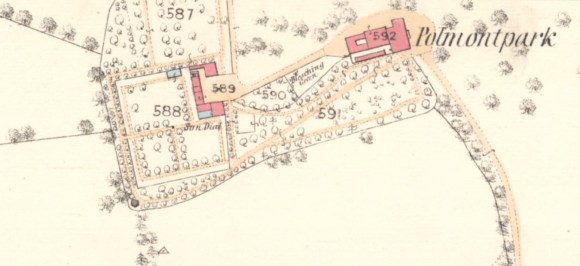
The house was large and it appears that parts of it were let to other tenants. These included John Russell, a fish agent from Lowestoft. On 28 July 1874 he married Jeanie Aird at Polmont Park and on 5 July the following year their son was born there. The Speirs family also retained a wing for the widows of its other properties. When Mary Buchanan, the widow of Alexander Graham Speirs of Culcreuch died in the Polmont apartment in December 1883, at the age of 76 years, it was time to sever the link. The remaining furniture and a coin collection were put up for sale:
“TO BE SOLD, BY PUBLIC ROUP, On TUESDAY, 5th FEBRUARY, 1884, Commencing at Eleven O’CLOCK, within the MANSION HOUSE, POLMONT PARK, STIRLINGSHIRE,
Excellent HOUSEHOLD FURNITURE and other EFFECTS, comprising: — Semi-Grand Pianoforte, 67/8 Octaves, by Broadwood, in Rosewood Case, Antique Mantelpiece Mirrors, and Wall and Girandole Mirrors: two rosewood dwarf bookcases with marble tops, sizes 10ft and 7ft by 4ft high; rosewood centre sofa and work tables, antique inlaid card and tea tables, secretaire and Chippendale bookcases, engraved ivory writing desk, ormolu French clock, mahogany pedestal sideboard and cellaret, dining and breakfast tables, four-leaf room screen, reclining chair in morocco, large case of stuffed birds, shades with stuffed birds, stag horns, ex head and horns, posted French and iron beds and bedding, wardrobe bed, gentleman’s and hanging wardrobes, several chests of excellent drawers with ornamental fronts, marble top wash stands and ware, toilets and mirrors, Sitz baths, painted and napery presses, several lamps, carpets, rugs, window curtains, large dresser, Gibb’s patent box mangle, size 5ft 3in; laundry tables and utensils, China, crystal, crockery, dairy and other utensils. Mr Dowell, auctioneer.” (Falkirk Herald 23 January 1884, 2).
The plants were also sold off – over 3,000 of them, including orchids, camellias, ferns, azaleas, fuchsias, primulas, geraniums of the finest varieties, calceolarias, dahlias, and Alpine plants.
The house was then let. In 1885 Mr and Mrs Stevenson were tenants, and in 1886 it was Mr and Mrs Middleton. The latter stayed for two years during which time they were very active in the local community and in June 1887 hosted a jubilee bonfire with fireworks to celebrate Victoria’s reign. In November 1888 Polmont Park estate, with peacocks, was put up for sale at the upset price of £7,500 and in April the following year was acquired by James McKillop of Binniehill, Slamannan. He immediately set about a programme of upgrading and extending before moving into the house in July 1891. The extensions were modest and may be seen by comparing the 1896 Ordnance Survey map with that of 1913. They included adding an extra storey over western black and roofing in the courtyard there. A large conservatory was placed onto the south side of the main block.
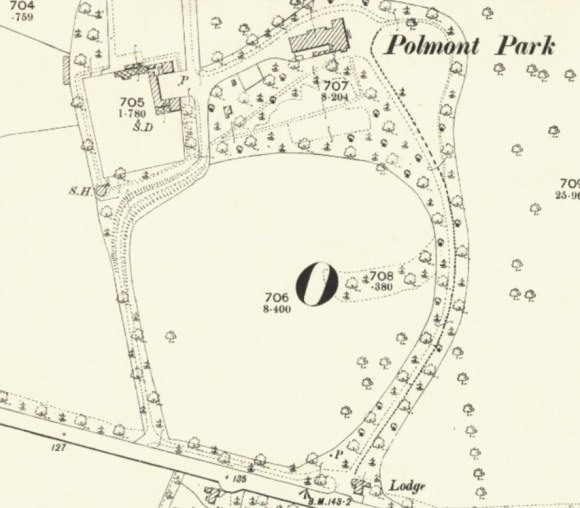
In order to obtain artificial gravitation water, a small dam was placed across the Polmont Glen near Cassel’s Bridge and a 4-inch cast iron pipe took the water a distance of 50yds or so on the level to a 3ft overshot wheel. A small inch double-acting plunger was placed on the crank shaft of this wheel to draw clear water through a ¾-inch lead pipe from a spring tapped in one of the fields at about 94ft OD, forcing it to the top of the hill near the house at 140ft OD, into a concrete tank capable of containing 11,000 gallons of water. This tank was kept overflowing, and had a gravitational power to meet every requirement in the mansion. The self-acting mechanism only required to be looked at once every three months. The possibility of hydro-electric power from the Polmont Burn for lighting was also considered, but the power was insufficient. Many of neighbouring properties had private gas works, some getting gas from the distillation of coal and some from petroleum, but these were expensive and required much maintenance. After due deliberation, a sun gas machine capable of supplying 120 lights was bought from John Finlay & Co, ironmongers, Glasgow. It occupied a small out-house in which were also stored a three month’s supply of gasoline, which would not freeze at the lowest temperatures. When the gas was turned off in the mansion house, the whole apparatus was perfectly still and, when one burner was turned on, only sufficient gas for that one burner was made by the machine and when two or three or more lights were in use the machine automatically adapted itself to the amount of work required (Falkirk Herald 24 February 1892, 5).
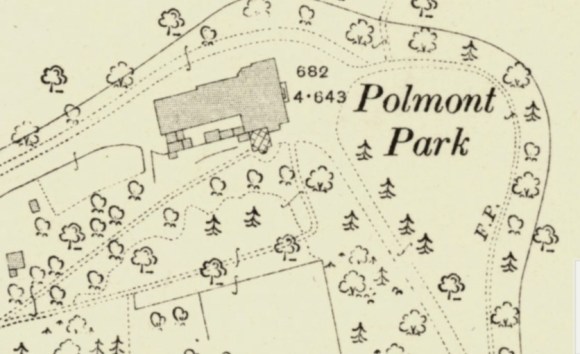
A new drive was also created from the west side of the mansion passing through a cutting along the south side of the walled garden and the summer house to return to the lodge on the main road, thus avoiding problems with having vehicles passing one another. McKillop also set about maintaining the amenity of his grounds by keeping the public out of the western fringe of the estate. Over the previous years local people had started to take a short cut from the Polmont Road to the Beancross Road along the eastern bank of the burn in the Polmont Glen. This was particularly useful for the men working in Grangemouth, but in the summer months the glen had also become a place of recreation. McKillop erected fences and gave the public due notice:
“NOTICE. MR M’KILLOP, of Polmont Park, begs to give Notice that he is prepared to give Leave to any Respectable Persons who may apply for it to USE A PRIVATE FOOTPATH which he is about to form through POLMONT GLEN at Cassells Bridge, Polmont. Anyone found using the footpath without leave will be prosecuted by way of interdict or otherwise. Applications may be made by letter to James M’Killop, Binniehill House, Slamannan; or personally to William Turner, gardener at Polmont Park.” (Falkirk Herald 21 December 1889, 1).
In some instances such permission was applied for but, as a general rule, the people continued as formerly to resort to the glen for walks in the summer time and to use a pathway leading through it as a short cut. Fences were erected. The public were not inclined to allow themselves to be deprived of what they regarded as a right-of-way. The fences were demolished and for a while all appeared quiet. Then at the end of November 1891 McKillop had a trench 5ft deep by 7ft wide cut from the burn to the top of the hill which intersected the several footpaths made use of by the public. The following Saturday evening a large company, chiefly composed of youths from the Polmont district, visited the glen. Several of the party were provided with lamps and shovels and filled up the trench which crossed the centre and most frequently used path (Stirling Observer 9 December 1891, 3).
James M‘Killop served summons on Henry Dunsmuir and eleven labourers, as well as two clerks, all residing in Polmont, to prove their right-of-way. The case was heard by Lord Low in the Court of Session in March 1892 but before it drew to a close a private agreement was reached whereby the defenders admitted that they had no right-of-way and in return McKillop offered a concession of a road by the footpath over his lands from Cassels Bridge along Polmont Glen to the bridge on the Beancross road to be laid down by William Shanks, architect, Glasgow (Edinburgh Evening News 15 March 1892, 2). This concession was to be challenged in the 1980s by the owners of the Klondyke garden nursery. Meanwhile McKillop and his family settled down to life in the mansion. James McKillop became the representative for the County Council for the western division of the parish, and subsequently a Member of Parliament. He wrote several books and made the grounds of Polmont Park available for charitable purposes for several days each year.
In February 1907 the estate was sold to John Colville who, upon entry, made further alterations and additions. He and his wife threw themselves into the local scene, helping to raise money for many good causes and opening fetes all over the area. The grounds at Polmont Park were used once again for the shows of the Polmont Horticultural Society. These now included exhibits of industrial work as well as flowers, fruits, vegetables, dairy and farm produce. In 1920 the big attraction was the presence of the big band from HMS Hercules. The family replaced its horse-drawn vehicles with motorised ones and in 1913 sold off
“The following carriages… in excellent order; 1 roomy landau (glass all round), 1 Victoria (superior design) for 1 or 2 horses, 1 four-wheel dog-cart (1 or 2 horses), Perth make; 1 Polo cart (Robertson’s make), up to 15 hands” (Falkirk Herald 26 April 1913, 10).
Polmont Park remained a family home. On 26 January 1918 Anne Smith, John Colville’s mother-in-law, died there at the grand old age of 101.
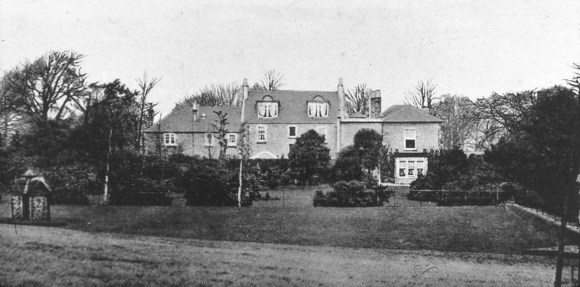
By 1922 the family had largely moved on and John Colville had interests elsewhere.
Consequently Polmont Park was put up for let:
“POLMONT PARK , POLMONT — To let ( furnished ), for the winter months, situated one mile-from Polmont Station ( half-way between Edinburgh and Glasgow); this is a very comfortable winter house, with central heating, acetylene gas, 4 public rooms (including billiard room), 8 bedrooms, and 3 dressing rooms, besides good servants’ accommodation, and 4 bathrooms.” (Scotsman 26 August 1922, 3).
John Colville died in his 81st year in April 1924 leaving three daughters and two sons. Both of the latter had served in First World War, the eldest holding the rank of colonel in the Royal Field Artillery, and being awarded the D.S.O. Once again the estate was up for sale and the furniture was auctioned off:
“POLMONT PARK , POLMONT . FOR SALE this DESIRABLE ESTATE which is pleasantly situated within a mile from Polmont Station , on the London and North Eastern Railway . It extends in all to about 89 Acres Imperial , the greater part of which is laid out as grass parks, the remainder consisting of woods, policy grounds, garden, & c.
The mansion house, which is a picturesque and desirable residence and has central heating, contains 4 public rooms, 8 bedrooms with 4 dressing rooms, 4 bathrooms, and ample servants’ accommodation, and other conveniences. The offices are suitable, and consist of chauffeur’s house, garage to hold 3 cars, also covered wash box, all with hot pipes, 3-stalled stable, and loose box, harness room, & c. The other houses on the estate consist of gate lodge, and a stone cottage. There is a large and well-stocked garden with conservatories, vinery, and peach house.
Gross rental 3324. Ground burdens nominal…” (Scotsman 3 May 1924, 4).
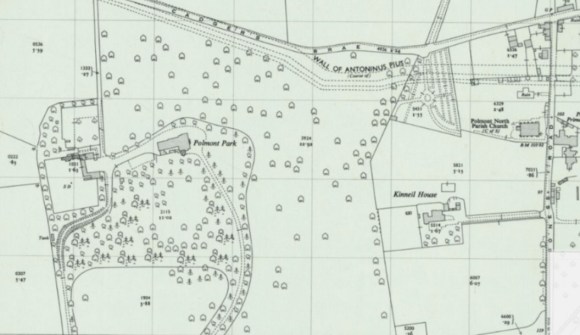
It took almost two years to sell the house. The new owners were Alfred Griffiths and his wife, Helen. A native of Wakefield, Dr Griffiths was a graduate of Edinburgh University and for a time had been engaged as Assistant Medical Officer at Stirling District Asylum. In 1891 he had started in private practice in Falkirk and for many years he was physician and surgeon to Falkirk Infirmary. During the war he had served with the Royal Army Medical Corps and retired in 1920. For 28 years he also served as the chairman of the Bonnybridge Silica and Fireclay Co. His daughter, Sybil, married Mr Forrester of Airth Castle; his elder son, Geoffrey, married Jillian Barker of Bearsden; and the younger son, Donald, married Charmian Innes of Earlsferry. Both sons took over the management of the brickworks at Castlecary. Dr Griffiths died at Polmont Park in January 1939, aged 74.
Polmont Park House was requisitioned by the Air Ministry in December 1940 for use as sick quarters for the Air Force personnel based at RAF Grangemouth. These quarters were subsequently moved to Avondale House and in August 1942 Polmont Park was used as officers’ billets. A year later, in August 1943, the officers moved out and WAAFs moved in (Bailey 2006, 67-68).
Dr Griffith’s widow survived him by eleven years, dying at her daughter’s home in Airth in November 1950. Polmont Park was inherited by Geoffrey and Donald. Neither of them had an interest in the house and so in 1959 it was demolished and the materials sold off:
“SALES BY AUCTION Demolition Auction POLMONT PARK MANSION HOUSE. TUESDAY, 7th April, 1959, 10,45 am.
2000 yds. fine flooring including, 650 ft oak parquetry; 680 ft pitch pine and 800 ft polished oak (3 in x 1 1/8 in); 150 windows; 11 doors richly panelled in natural oak with brass fittings and wood carved overlintels; 6 Victorian and Georgian locks; 90 pine and glass panelled doors; library book shelves in oak; 100 yds natural oak panelling; 60 ft natural pine ornamental staircase; 30 ft main staircase in heavily carved natural oak; central heating system of 8 radiators and all malleable piping; stoves – Rayburn, Tayco, Aga, Hotspur, & c; 2 stainless steel kitchen sink units; 12 fireplaces; ornamental wood chimneypiece of 18th century design; brass fenders; 5 baths; 6 low level toilets by Shanks; 6 washbasins; tub sinks; 4 copper storage tanks; 80 gallon copper storage tank with Dun/Low immerse… 18,000 slates, chiefly 16in x 8in; fabric of sarking, joists and stonework with 7 ½ ton lead and copper… R George, auctioneer.” (Scotsman 25 March 1959, 13).
Later that year a seven acre site to the west of the walled garden was sold and a large private house called Seven Gables was built. This was followed by the lodge on the main road containing two bedrooms, a living room, a kitchenette, pantry, and a modern bathroom. And in 1961 the cottage at the garden was sold. The fields to the south of this were sold to a developer and between 1962 and 1970 some 200 executive homes were built by K.J.M. Williamson Ltd in a cul-de-sac now called Polmont Park. Ground was set aside to the north of these for a recreational purposes.
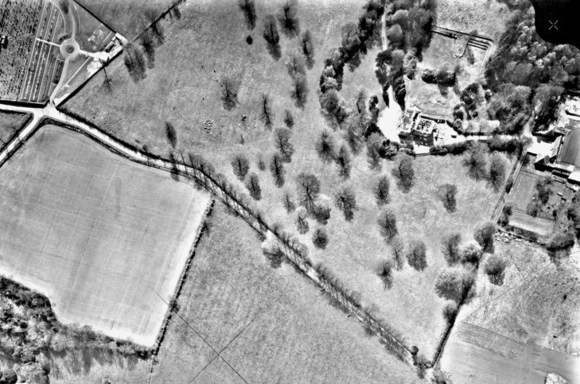
By coincidence the house was visited by the RCHAHMS just before the interior was gutted and their report is a useful record:
“Polmont Park… was added to twice in the course of the 19th century and had also been considerably altered inside. (This house has been gutted since the date of visit) The N. face of the original house is 45ft. in length and shows squared rubble masonry brought to courses, V-jointed quoins, a central entrance flanked by Venetian windows, three square-headed windows on the first floor, a moulded eaves-course, plain tabling and decorated skewputs. All the windows have backset margins. The door has a moulded architrave, and is flanked by columns with moulded bases and capitals supporting an ornamental frieze and a curving broken pediment. On the S. elevation some of the windows have been altered, and the large dormers are no doubt an addition. Internally, the front door seems to have opened into a lobby containing a stair, though the existing stair is a replacement. The large rooms lit by the Venetian windows, to E. and W. of the entrance, are evidently in their original condition, and the one to the E. has an arch-headed alcove in its back wall and an Adam-type fireplace. On the first floor a landing gives access, to E. and W. through plaster arches supported on fluted pilasters with floreated capitals, to passages, each of which admits to a room on N. and S. Opening directly from the landing is a smaller room, now a bathroom. On the floor above there is one large room to E. and another to W., now lighted by the South-facing dormers; at the head of the stairs is a small room lit by a skylight, also adapted as a bathroom. 10 March 1953” (RCAHMS 1963, 351).
Sites and Monuments Record
| Polmont Park House | SMR 823 | NS 9322 7916 |
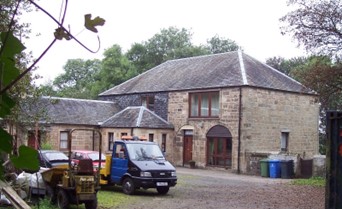
| Polmont Park Stables | SMR 2096 | NS 9311 7921 |
| Polmont Park Doocot | SMR 47 | NS 931 792 |
Bibliography
| Bailey, G.B. | 2006 | Grangemouth: from Airlines to Air Cadets – the story of the ‘drome’. |
| Boyd, F. | nd | The Speirs Family, 1714-1817. |
| RCAHMS | 1963 | Stirlingshire: An inventory of the ancient monuments. |
| Reid, J. | 1997 | ‘The Feudal Divisions of East Stirlingshire: The Barony of Abbotskerse – Part 2, Estates, Parcels and Portion,’ Calatria 11, 63-88. |
| Reid, J. | 2009 | The Place Names of Falkirk and East Stirlingshire. |
 Falkirk Local History Society