
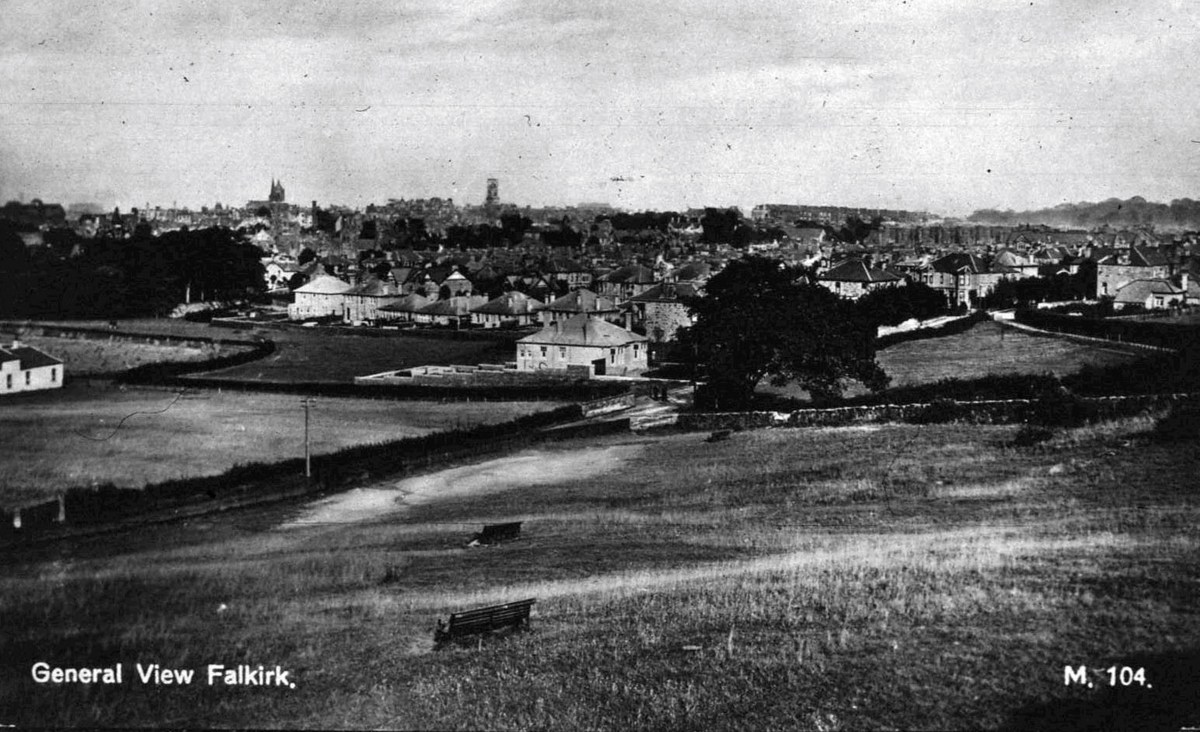
The fields at Blinkbonny had been acquired by the Feuars of Falkirk in 1807 as a result of the division of the Muir, and so in due course they became the property of Falkirk Council. They were cut off from the fields to the south by the construction of the Union Canal and then by the Edinburgh to Glasgow Railway. The Council let the fields for the production of hay. In September 1909 the tenant received notice from Falkirk Town Council that it would not be renewing the lease as it had been decided to turn the fields into a public park. The following year it was provided with suitable entrance gates and a large number of seats and proved to be very popular – much more so than Princes Park which was too far away. Blinkbonny became known to the locals as the “Low Park” and Princes Park as the “High Park.” Band concerts were well attended and lavatory accommodation was installed in 1910 in the form of a urinal costing £80. Land at the south-east corner of the park was sold off for the construction of Glenochil Terrace which was accessed from Drossie Road.
During the First World War allotments were provided in the park and these were retained for some years after the cessation of hostilities. Inevitably they proved too great a temptation for the football playing boys and not only was it necessary to retrieve the balls from these plots but vegetables were also liberated.
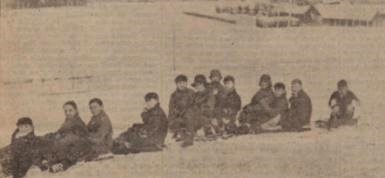
In 1934 Maggie Wood’s Loan/Gartcows Road was widened, necessitating the rebuilding of the retaining wall that formed the northern boundary of the park. At this time J G Callander, architect, applied to feu some of the land at the front of the park but was turned down. His bungalows line the north side of the road opposite the park.
The allotments returned in 1943 during the Second World War and are shown on the 1947 Ordnance Survey map.
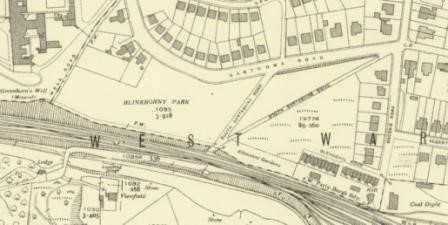
Over the following years the west end of the park was slowly feued. In 1969 a Scout hall was built at the southern end of Well Road and this was followed by housing.
National Grid Reference
NS 879 793
 Falkirk Local History Society