
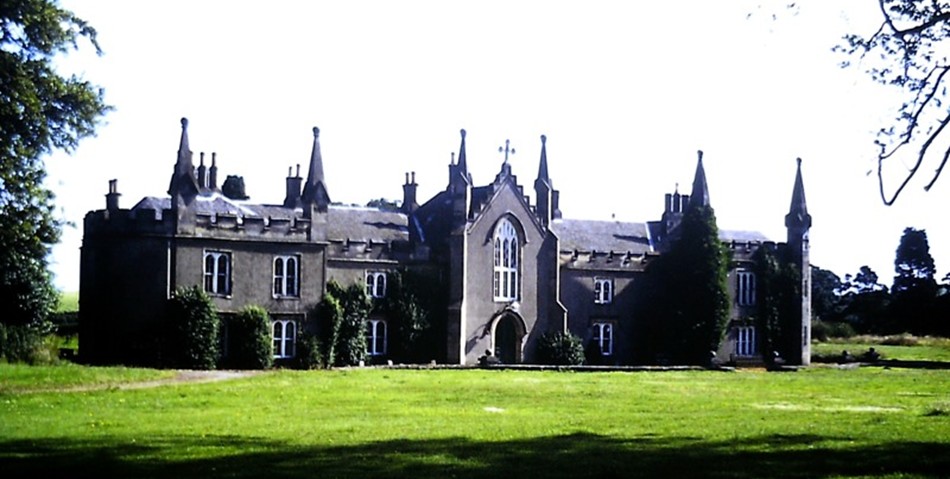
SMR 264 / NS 9547 7924
| a1626 | William Burn | 1671 |
| c1640 | Richard Burn (son) | |
| 1671 | James Burn (son) | |
| a1687 | John Burn (son?) | |
| a1719 | Richard Burn (brother) = Margaret Livingstone | 1733 |
| 1734 | Margaret Livingstone (marriage) | 1752 |
| 1752 | John (Mitchell) Livingstone (nephew) = Antonia Calder | 1786 |
| 1786 | Thomas (Mitchell) Livingston (son) | 1809 |
| 1809 | Alexander Learmonth Livingstone (nephew) = Jessie Learmonth | 1815 |
| 1820 | William Logan (purchase) = Janet Edmond | 1844 |
| 1845 | Major Archibald Menzies (purchase) = Euphemia | c1855 |
| c1855 | Gilbert J M Menzies | |
| A.H. Massey Menzies | 1879 | |
| 1879 | Thomas Livingston Learmonth of Parkhall (purchase) | 1896 |
| 1897 | Robert Clarkson (purchase) | 1920 |
| 1922 | Henry A Salvesen (purchase) | 1924 |
| 1924 | Major Ralph H Salvesen (son) = Mary Turner | 1951 |
| 1951 | Mrs R.M. Milligan (purchase) | 1988 |
| 1988 | Goalday Ltd (of Oldham) (purchase) | c1994 |
| c1994 | B Nelson Meredith (purchase) |
The large estate of Avondale, anciently known as Clerkston (or Clarkston), lay in the eastern extremity of the Barony of Abbotskerse. Geographically its position in that barony is a little odd and it would have been more at home in the barony of Manuel. This led John Reid to speculate that Clerkston had in fact been granted by an owner of Manuel to the Abbey of Holyrood at an early date (Reid 1997, 68). The name Clerkston appears to be derived from a family called Clerk and it is known that an important family of that name lived in the Falkirk area in the 14th century (ibid).
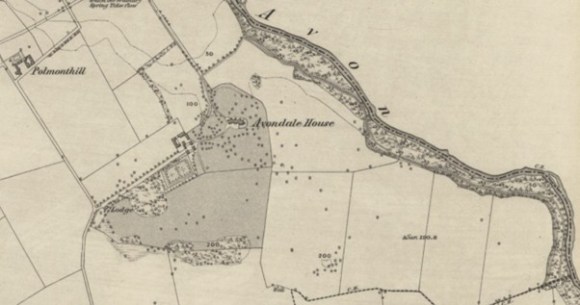
The estate is situated on the dryfield overlooking the rich carse lands and the Forth Estuary to the north. It was bounded on the east by the River Avon which here runs in a deep gorge with an important crossing point to the north of Clerkston at a place appropriately known as “Steps.” This ford lay on the main road between Falkirk and Bo’ness and corresponded with its Roman predecessor on the Military Way which ran along the south side of the Antonine Wall. On the south-east the parish boundary forms the limit of the estate and on the south the public road from Linlithgow to Falkirk. A minor road branches off this road to the aforementioned ford and separates Clerkston from Polmonthill.
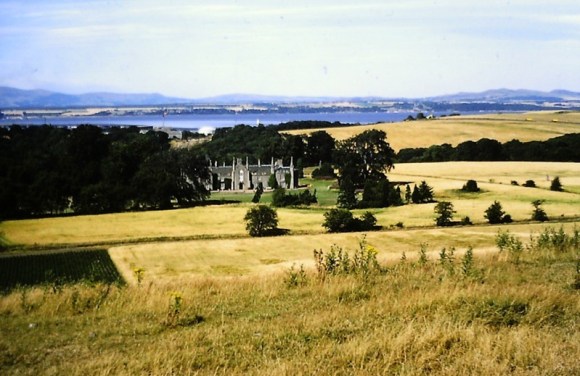
Robert Stewart, an illegitimate son of James V, was made commendator of Holyrood, with the pope’s blessing, at the age of just six years. In 1542 he then feued off parts of the barony of Kerse, including Clerkston, to James Hamilton, the Earl of Arran, who had acted as regent of Scotland. This grant was confirmed by Mary, Queen of Scots, in 1552. In 1587 the superiority was granted to Sir Lewis Bellenden.
Who possessed the land at this early period is not known but by the end of the 15th century the family of Burn had acquired the neighbouring lands of the Hill (Hill of Polmont) and were soon also tenants of Clerkston. In 1626 William Burne bore the title “of Clerkiston” showing that by then they had feued the estate (Reid 1997, 69). Richard Burne had the title in 1640. In 1679 James Burn of Clerkston sat on the assize which condemned five women and one man, all from Bo’ness, to death for witchcraft. His son (?), Richard, seems to have been the last of the family to possess Clerkston. Richard married Margaret Livingstone, the fifth daughter of Alexander Livingstone of Parkhall, in 1699 and when he died in 1733 she inherited. In 1752, being childless, she assigned her interest in Clerkston to her nephew, John Livingstone. The mansion at Clerkston was often used as the family home of the Parkhall Livingstones before Parkhall was rebuilt in 1825. John’s son, Thomas Livingston was killed at Clerkston on 11 March 1809 while hunting otters beside the Avon. The hunting and shooting on the estate was rich and the steep valley slopes were thickly wooded. At an earlier period rabbits were evidently kept in an artificial warren as is attested by the name “Kinninknows” which appears a little to the south-east of “Clarkston on Roy’s map of 1755.
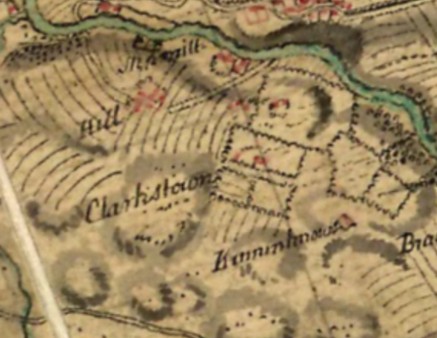
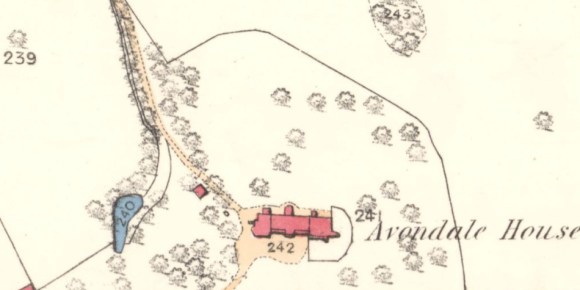
At that time the mansion stood in a rectangular enclosure with a west/east drive in front of it. Two smaller enclosures lay to the south of this drive and the home farm was located some distance to the north. We can presume that there was a lectern style doocot nearby.
The house had started as a relatively modest two storey building with chimneys atop each of the gables. The walls were made from roughly squared quarried sandstone. It appears to have had three bays set slightly asymmetrically to the central doorway. In the thick east gable was a huge fireplace, refurbished at a later date with a low arch with neatly backset margins. This in turn was infilled in the 19th century and an interior grate inserted.
At some time in the mid eighteenth century a rather curious block was added to its west.
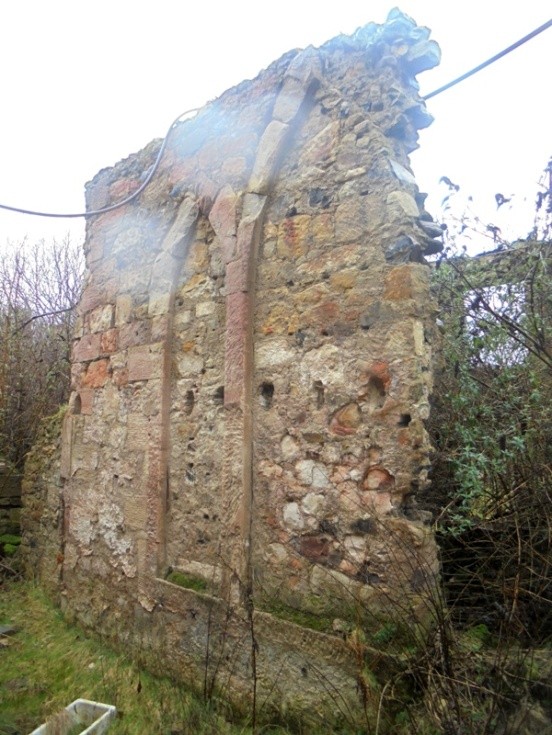
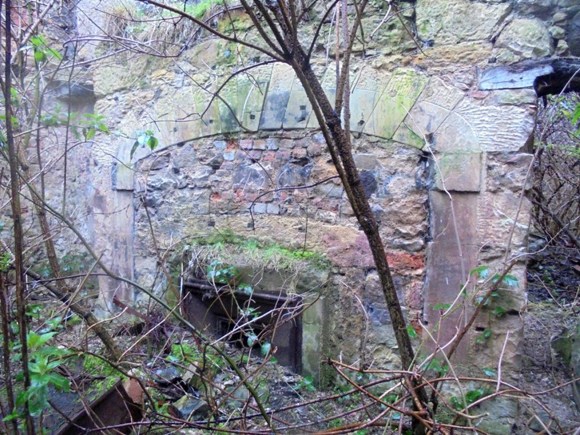
Illus: The two surviving blank pointed arches of the 18th century façade punctured by joist holes for the later corridor.
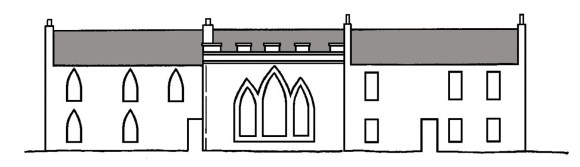
It was the same width but shorter than the original block. Its south façade was dominated by three large blank pointed or Gothic arches with backset margins, similar in style to those of the stable block (see SMR 265). The wallhead of this block was removed during later extensions but we can assume that like the stables it was battlemented. This is an early occurrence of the revival of the Gothic style in Scotland and it has a reflection of the newly introduced taste for the architecture of India. It is reminiscent of the Fyrish Monument in Easter Ross which was built in 1782 for Sir Hector Munro who had served as a general in India. That folly with its three pointed arches was a representation of the gate of Negapatam near Madras which General Munro captured. The south-west corner of the new block was finished with a backset margin and part of the harling between the dressed features remains.
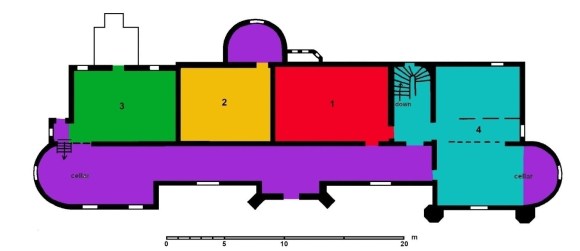
Before long another block was added to the west. It was plain but also had backset margins at the outer angles. A Gothic-arched window still remains in its gable but the south wall has subsequently been radically altered and so it is not possible to know what form it took. The presence of the Gothic arch in the gable suggests that it continued that style to compliment the bock to its east and the stable complex.
The fourth major phase of expansion took place at the east end around 1800 when a projecting wing was constructed. Between it and the previous building a grand lobby contained a spiral stair able to serve both the old and new blocks. The north-east corner of this wing survives intact and is typical Georgian with chamfered quoins.
In the 1790s Thomas Livingston had a folly (SMR 266) built on the hill to the south of Avondale House. Its design was based upon Inveravon Castle.
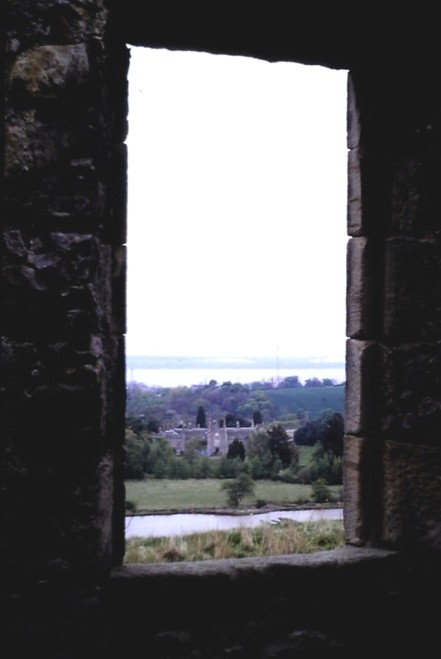
Thomas Livingstone had run the estate heavily into debt, partly due to his construction works. He was unmarried and left Parkhall and Clerkston to his nephew, Alexander Learmonth Livingstone. The possibility arose of having to sell Clerkston to pay off some of the debt. This was probably the reason why, in 1815, Jean Laurie (wife of John Laurie, mason, Linlithgow), a descendent of the Burn family, took Alexander Livingstone to court to determine if the transfer of the Clerkston estate to the Livingstones had been done in a legal manner. By a deed, dated 17 July 1761, made by the ancestors of Jean Laurie, the right of reversion was renounced, and conveyed in favour of the Livingstones; and in the year 1766, a charter of adjudication, upon which infeftment followed in 1768, was executed.
The court determined that these two deeds had established a sufficient right and this was backed up by the House of Lords. However, Alexander Livingstone was unable to recover the fortunes of the estate and died on 29 June 1815 when his eldest son, John Livingstone, was just six years of age. On 2 April 1818 the creditors obtained a summons of ranking and sale and Parkhall was sequestered, and finally sold by public auction. The judicial sale of Parkhall and Clarkston was held on 20 December 1820 within the Parliament or New Session House of Edinburgh, under the authority of the Lords of Council and Session, and in presence of the Lord Ordinary officiating on the bills (details of the lands for sale may be found in the Caledonian Mercury of 12 July 1819). Clarkston left the family, but was bought back by Thomas Livingston-Learmonth of Parkhall from A.H. Massey Menzies in 1879.
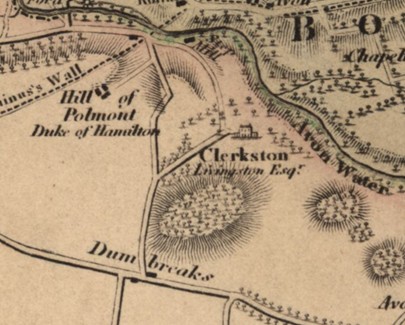
Clerkston was bought in 1820 by William Logan who had made his fortune in Canada as a baker and then in real estate. He had returned to Scotland at the time that the sale of Clerkston was first mooted and is believed to have taken up residence there around 1818, eventually taking possession. William Logan tilled the fields surrounding the house, and even tried to grow Canadian apples – unsuccessfully. His son, William Edmond Logan, had been born in Montreal in 1798 and was sent to Edinburgh University to study. He eventually went on to become the founding father of the Geological Survey of Canada, and was knighted for his services. He retired in 1869 at the age of 71 and died at Castle Malgwyn in Wales, the home of his sister, Elizabeth Gower, on 22 June 1875 (Elizabeth had married Abel Gower in 1828). Another of his sisters, Margaret, married Rev. John Ker, the minister of Polmont Parish Church.
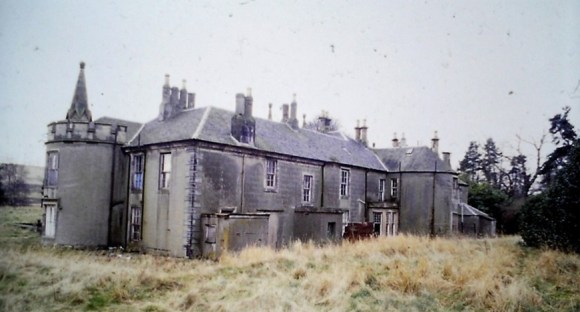
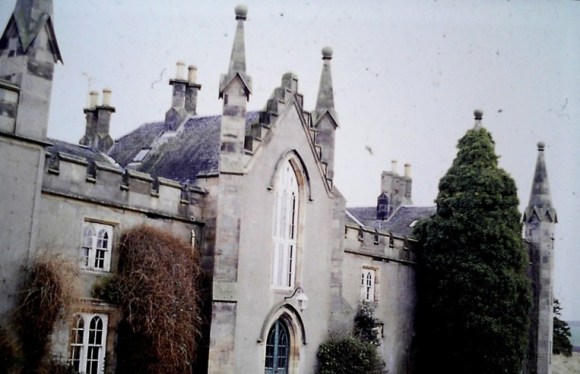
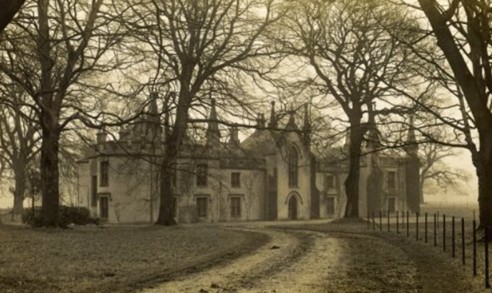
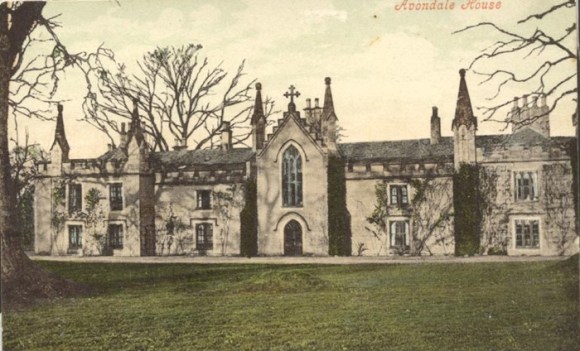
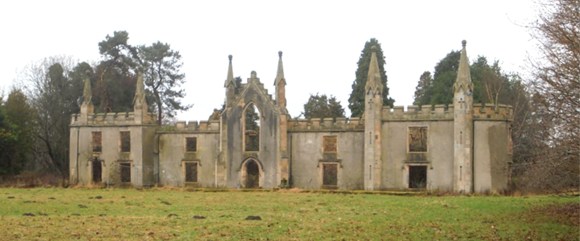
It must have been William Logan who greatly enlarged the house by adding a new façade on the south elevation, separated from the previous one by a broad corridor on each of the two floors. The existing wing was also reworked and matched by another on the west. The new style was the Tudor form of the Gothic which was then coming into vogue and is exemplified by the extravagant new mansions at Dunmore and Dalmeny. That at Avondale was more homely and retained the use of rendering on the walls. The design by the architect responsible is sometimes attributed to James Gillespie Graham, but this is far from certain. The work produced a long two-storey battlemented spread, the centrepiece of which was a projecting crowstepped gable clasped by pinnacle diagonal buttresses. It contained a pointed door under a tall pointed window, both hood-moulded.
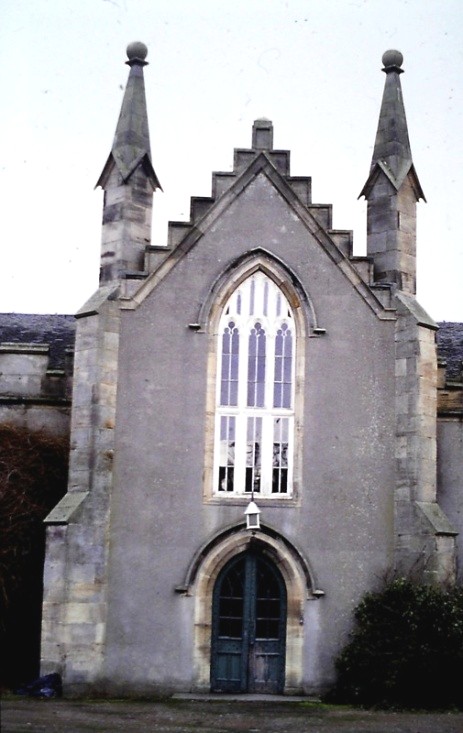
To either side of this were recessed link bays. The existing east wing was modified by having pinnacle octagonal buttresses placed at its corners and a large bow bay added to its east. The new west wing was similar, but here the pinnacles stood on the corners of the new walls. When first built the fenestration of the two wings was similar giving a symmetrical appearance to the whole façade; but the paired windows of the east wing were subsequently replaced by larger central ones. For yet further accommodation, a bow-end back wing was added to the north, placed off centre.
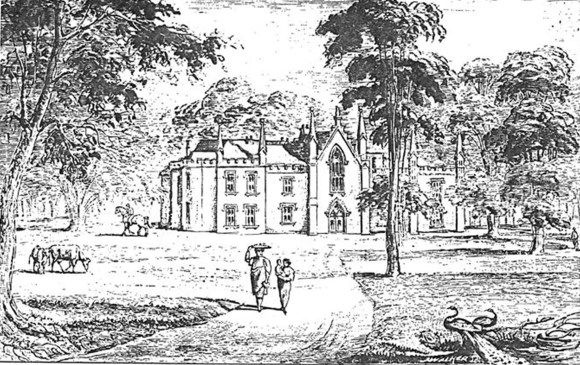
Together with the massive lawn in front of the house this extensive façade gave the dwelling an exotic colonial setting. It is interesting to note that in the sketch of the house, said to have been made by William Logan’s son, not only are there peacocks, grazing animals and specimen trees, but also a toga-clad gentleman with a broad-rimmed hat accompanied by a young lady carrying a baby.
The man has his right arm raised to the hat giving him the appearance of a native bearer.
An idea of the elegance of the house may be gained from the sale of the furniture which took place after the death of William Logan:
“Extensive sale of valuable, substantial, and elegant household furniture, pianoforte, mirrors, books, pictures, china, down beds, Silver-plated articles, and milch cows, at Clarkstone.
JAMES NEILSON begs to intimate, that he is instructed the Heirs of the late William Logan, Esq. of Clarkstone, to Sell by Public Auction, without Reserve, on MONDAY 18th, TUESDAY…
The whole of the very elegant, substantial, and valuable household furniture, and other valuable effects therein contained – comprising 2 mahogany sideboards, 1 dum wine-cooler, 18 mahogany dining-room chairs, set of capital mahogany ding tables, a grand pianoforte, 2 satinwood drawing-room couches, drawing-room, loo, tea, card, and sofa tables, in rosewood and mahogany, a very handsome mahogany winged cabinet, a beautiful large drawing-room mantle-piece mirror, in a richly ornamented gold-gilt frame, drawing room, dining-room, and bedchamber window curtains and cornices, in many varieties of beautiful workmanship and pattern; mahogany pillar and claw, and Pembroke tables, 1 large writing of consulting table.
3 mahogany posted and 8 tent bedsteads, several of which are richly and elegantly hung in drab and blue moreen and chintz curtains, 7 remarkably fine down and feather beds, with bolsters and pillows, 27 hair and straw mattresses, 19 pairs of fine English blankets, and 9 Marseilles bedcovers, 2 mahogany wardrobes, 9 chests of mahogany and other drawers, 1 large mirror with gilt frame, 9 dressing-glasses, 18 double and single washing stands and toilette tables, with ware complete; several dozens of bed-chamber and dressing-room chairs.
Brussels dining and drawing room carpets, with 12 bed-room and other carpets and hearth rugs to match, also lobby, passage, and stair carpets and large wax cloths, an eight-day clock and an upright barometer, a large and full set of beautiful dinner china, of a chaste and elegant pattern, 1 china dessert set, 2 sets of breakfast and 2 sets of tea china, 2 cut crystal claret jugs, 8 pairs of cut wine decanters. With several dozens of wine, ale and liqueur glasses, water tumblers, rummers, &c. crystal fruit dishes, custard cups, jelly glasses, and finger bowls, 6 dozen of ivory-handled knives and forks.
A magnificent bronze suspending lamp, wit globes and chains, a silver tea urn, silver mounted and very ornamental silver-plated branched candlesticks, plated, an egg epergne, with cups and spoons, gold gilt, bread basket, silver mounted, coffee pot, liqueur and cruet frames, and many other silver-plated articles; a few fine old engravings on frames, and a part of the library of books, and the book-cases.
16 brass, steel, and iron register and other grates., with 18 fenders and sets of fire irons complete.
Also an unique brass Gothic grate, and a hot air stove; kitchen range, laundry and hall grates, ovens, hot plates, &c. with kitchen furniture, block tin dish covers, and cooking utensils, mangle and napery presses, & c. with a never-ending variety of useful and valuable effects, which would go far beyond the limits of any advertisements…” (Stirling Observer 7 November 1844, 4).
The walled garden continued to be developed and was noted for the growing of grapes:
“Among the experiments which have been instituted by horticulturalists in this quarter, to ripen the fruit of the vine without shelter, we have this season been gratified by the sight of the blackcluster variety, in Clarkstone garden, the property of William Logan, Esq. This plant was brought from Northamptonshire about three years ago by the ingenious gardener, David Dow; and although it has been trained against a wall with an easterly aspect, it is now covered with numerous well-formed clusters perfectly ripe. Mr Dow is confident, that in favourable years, this hardy kind, planted with a southern exposure, would ripen its fruit by the first week in September.” (Scotsman 14 October 1829, 6).
Janet Logan died at Clerkston on 7 March 1838 and William on 14 June 1841. Both were buried against the west wall of the churchyard at Polmont where they were later joined by their daughter Margaret. Their tombstone read:
773. Head. Rev. John Ker minister here, born 4 July 1800 died 6 January 1872, died in the 47th year of his ministry, wife Margaret born 20 February 1800 died 12 December 1886 (daughter of William Logan of Clarkstone), their only child James born 6 July 1843 died 9 March 1863.
774. Head, triangle, 1.30 x 0.80 x 0.14m. SACRED/ TO THE MEMORY OF/ MARY LOGAN/ DAUGHTER OF/ WILLIAM LOGAN AND JANET/ HIS WIFE/ WHO DIED ON THE 7 DAY OF MARCH/ 1838/ AGED 32 YEARS.
775. Head, square pediment, 1.50 x 0.80 x 0.14m. SACRED/ TO THE MEMORY OF/ JANET EDMOND/ WIFE OF/ WILLIAM LOGAN/ OF CLARKSTONE,/ WHO DIED/ ON THE 15TH JANUARY 1835/ AGED 67 YEARS./ ALSO OF/ WILLIAM LOGAN/ OF CLARKSTONE IN THIS PARISH/ WHO DIED ON THE 14TH JUNE 1841/ AGED 81 YEARS.
The house seems to have been tenanted by Major R Gardner, H.E.I.C.S, and his wife, until 1844 when Logan’s heirs put the estate up for sale:
“ESTATE IN STIRLINGSHIRE FOR SALE. TO BE SOLD, BY PRIVATE BARGAIIN, THE ESTATE OF CLARKSTONE, situated in the Parish of Polmont, about half way between Linlithgow and Falkirk, consisting of about 230 acres imperial, of which about 36 acres are under thriving and ornamental plantations.
The Land is all enclosed, and sub-divided into suitably-sized fields, well fenced and watered. Having been for many years in the natural possession of the proprietor, it is in the highest order. The buildings are in good repair. The House is commodious; and the offices are well suited to both the accommodation of a resident proprietor, and the purposes of a farm. The Garden is well walled, productive, and abundantly stocked, besides being provided with hot-houses, supplied with a variety of prolific and excellent vines.
The House is about two miles from the Polmont Station, and between three and four miles from the Linlithgow Station of the Edinburgh and Glasgow Railway, and is at once accessible and retired; and the place in general possesses remarkable beauty and amenity as a residence.
Robert Stirling, at the Lodge, will show the House and Grounds; and for particulars…” (Glasgow Herald 18 March 1844, 3).
It changed hands that September and the farm stock and implements were sold off, followed a couple of months later by the household furniture. The house appears to have been refurnished, but the estate and house were re-advertised for sale in August 1848 at the reduced upset price of £15,250. This was reduced still further to £14,750 that October. The extent of the refurnishing can be gauged by the sale of the contents in May 1850:
“THE VALUABLE AND ELEGANT HOUSEHOLD FURNITURE, LIBRARY OF BOOKS, &c. &c, AT THE MANSION-HOUSE OF AVONDALE, On Monday the 27th, and Tuesday the 28th May. JAMES NEILSON begs to announce that he will Sell by Public Roup, without reserve … The whole of the beautifully-carved fine oak, maple, mahogany, and rosewood furniture, and other valuable and excellent effects, within the large Gothic Mansion-House of Avondale, near Polmont, and which has only been in use betwixt four and five years. The furniture is in fine taste and style, and is not easily to be surpassed; and which comprises:
A set of beautiful large telescope dining tables, in rich flickered oak; a carved oak sideboard with cabriole trusses; 12 handsome oak dining-room chairs in green Morocco; 2 easy chairs to match; 2 conversation chairs; a drawing-room pier table most elaborately carved and gilt, and fine white marble top; 2 beautiful oak sofas in scarlet damask; a piano-forte; 1 drawing-room Loo table in finest oak; 1 oak sofa table; 1 rosewood card table; 2 sets of rich crimson damask window curtains with brass cornices; 2 sets of drawing-room window curtains and superbly carved and gilt cornices; 1 magnificent large oak duchess bedstead most gracefully mounted and hung in rich damask, and valuable spring bed attached to it; 5 French and 2 tent bedsteads in oak, maple and mahogany with damask and other curtains, hair and straw mattresses, bedding &c &c; 2 oak wardrobes; 4 chests of French-polished bed-room drawers in maple, oak and mahogany, also painted drawers; 12 double washing stands and dressing tables most handsomely made and furnished with china ware &c; also dressing glasses to match, bedside stands, &c.
Beautiful drawing-room Brussels carpet and rug; also, the dining-room and the whole of the bed chamber, stair, and lobby carpets, very large waxcloths, &c; sets of oak bed-room chairs, and easy chairs; beautiful oak lobby furniture in the Elizabethan style, viz. lobby table, hat and coat stand, lobby sofa and chairs; splendid Berlin dining and drawing-room grates with fenders to match, and cut steel fire irons; 11 Kinnaird and hot-water grates with fenders and fire irons; large kitchen range with ovens and hot plate; dinner set of stoneware;
Crystal wine decanters; hock, claret, champagne, port, and sherry wine glasses; finger bowls and wine coolers; a handsome suspending bronze three-light lamp; 4 bronze table lamps; ivory-handled knives and forks; silver-plated candlesticks; butlers’ and other trays; a double-barrelled gun; and a numerous variety of other excellent and valuable effects, besides the kitchen furniture and cooking utensils.
Likewise, a handsome oak consulting table; a capital wainscot bookcase, and library of books, and which comprises – the Waverly novels in 48 volumes; Alison’s History of Europe 11 volumes; 23 4to volumes of new works published by the Woodrow Society; Hogarth’s works and plates; Fielding’s works; Calvin’s Commentaries 4 vols; Goldsmith’s works; Hakewill’s Tour of Italy with plates; a book of plates, representations of the style of the old Masters; Lyle’s Geology; the Koran; and upwards of 150 vols of other books; also, a number of French and Spanish books…” (Falkirk Herald 9 May 1850, 3).
Clerkston was bought by Major Archibald Menzies, late of the 42nd Regiment. He had been wounded at Burgos in 1812 and received a pension as compensation. He continued in the army and was more severely wounded at Quatre Bras in 1815, two days before the Battle of
Waterloo, in which battle he distinguished himself (Keltie 1879, II 396). As well as the money from his army career he had inherited the effects of his brother, Robert Menzies W.S. in 1838. The name of the estate was changed from Clerkston to Avondale.
Up until now the land had been worked from the estate farm adjacent to the stables by the proprietor. Increasingly the fields and farm were let to tenants. The grass parks included those called Policy, Haugh, Castle and Small. Archibald Menzies sons followed his profession and served in the army. Captain Robert Menzies died of cholera in Bagalore in 1860 whilst serving in the 1st Madras Fusiliers.
Captain Gilbert Innes Murray Menzies served in the 42nd Royal Highlanders before inheriting Avondale about the year 1855. He then served as a Commissioner of Peace for the county of Stirling. In 1874 the 238 acre estate had an annual value of £539.
In 1859 the Ordnance Surveyors described the house as
“A large and handsome mansion house situate in the west of the parish. It is two stories in height, slated and in good repair. There are numerous offices attached which are one storey in height, slated and in good condition also, together with ornamental ground which is skilfully and tastefully laid out with grass plot, shrubbery & c. Property and residence of G.J. Murray Menzies.”
Major Menzies was very active in various Christian societies in the area and became an elder of Polmont Parish Church. Each Sunday the family would walk along the public roads to the church, followed by some of their servants. As a residing heritor he stood up for the rights of that elite group of people, and asserted their control of the churchyard over the governance of either the minister or the kirk session. However, by the late 1860s the Menzies family were spending more of their time in Edinburgh and Avondale House was put up for let, unfurnished. The house was described in 1870 as having
“three public rooms, seven bedrooms, two dressing rooms, servants’ rooms, &c. There is a lawn of ten acres, and a garden of about one acre. There are also the usual outhouses, and shooting over about 230 acres…” (Falkirk Herald 24 February 1870, 1).
It was let to R. K. Muirhead on a lease of seven years.
The walled garden continued to be productive and in the early autumn of 1873 two farm servants from Bearcrofts stole 12 lbs. of grapes, 6 lbs. of apricots, 6 lbs. of lemons, and a quantity of apples it. They were sentenced to pay a fine of 40s or suffer 20 days’ imprisonment each (Falkirk Herald 30 August 1873, 2). The garden at this time extended to about an acre and a half, and was well-stocked with fruit trees. The whole estate was put up for sale in January 1877. As well as the garden there were 200 acres of arable, and twenty of woodland and ten of lawn/policy. The offices included a three-stalled stable, coach-house and harness-room.
Muirhead moved out at the end of his lease in 1878 and his furniture and poultry were sold off:
“Sale of Household Furniture, Fern case, greenhouse plants, iron fencing, force pump, sheep, prize poultry, &c. at AVONDALE HOUSE, On SATURDAY, 11th MAY. Thomas BINNIE begs to intimate that he is instructed by R. K. Muirhead, Esq., who is removing, to Sell by Public Auction, at AVONDALE House, near Polmont, on Saturday, 11th May 1878, the following effects:
Walnut couch, rosewood couch, 6 rosewood chairs, rosewood card table, rosewood chiffonier, mahogany sofa in haircloth, 7 mahogany chairs in haircloth, 1 half tester bedstead with spring mattress, feather bolster and pillows, 1 French bedstead with 2 mattresses, bolster, and pillows, 1 French bestead with 2 mattresses, bolster and pillow, 1 iron folding bedstead with hair mattress,; feather bed and bolster; a mahogany wardrobe; 2 mahogany chests of drawers (1 with napery press in top), 1 mahogany marble-topped basin stand with ware; 3 other basin stands; 1 large dressing glass, in mahogany frame with marble slab.
Brussels carpets for drawing-room, dining-room, parlour, and bed-rooms, with hearth rugs; stair carpets and rods, lobby matting, &c; fenders, fire-irons, costly paraffin lamps.
1 very handsome fern case in beautifully inlaid wood and plate glass – model of 1851 exhibition – 6 x 3ft, and 7ft high; about 200 greenhouse plants in pots, consisting of camellias, fuchsias, geraniums, cactus, ferns, &c; 150yds of bar iron and other wire fencing, iron grates &c; a double-cylinder force pump with 2 fly wheels 4ft diameter. Also, 11 cross hogs, 30 head of poultry including some pure dark Brabma prize birds, wooden hen house 6 x 6ft; dog’s kennel, garden vases, &c..”. (Falkirk Herald 2 May 1878, 4).
The new owner was Thomas Livingston of Parkhall and the house was let to James Cochrane. He and his wife soon settled into the community with the usual routine of opening shows and fetes, helping with fund raising, and sitting on the committees of various clubs. Mrs Cochrane was particularly active and each year youth groups made a pilgrimage to the pleasant grounds of Avondale for their annual picnic. In August 1890 it was the turn of the Blackbraes, Shieldhill, Reddingmuir, and Polmont Bands of Hope. They
“met at their respective meeting houses, formed in procession, and, with banners flying, arched to Redding Bridge. Here they embarked on board boats, kindly given by Mr Campbell, Redding Colliery, and were conveyed along the canal to Parkhall Jetty, where they disembarked, and again formed into procession and marched to Avondale grounds” (Falkirk Herald 16 August 1890, 7).
As was common at this time, the Cochranes also introduced an annual supper and ball at the New Year for the servants of the estate together with their friends. There was dancing till the early hours of the morning in the laundry. Their head gardener was James Paterson. Peter Main looked after the nursery and lived in the lodge. He was allowed to sell surplus garden produce to the general public and started to advertise in the local newspaper. Initially the items were for gardeners, including such things as cauliflower plants from 1s 6d per hundred, bedding plants such as geraniums, asters and marigolds,; but fruit and vegetables were also sold. The result of this activity was that in the early 1890s Peter Main leased 6½ acres, with the hothouses, for £80 a year as a market garden. The garden thrived and extra staff were taken on for seasonal work – young men for the digging and women to pull the fruit. By 1913 there was 600ft of glass.
Thomas Livingstone had probably overstretched his resources and in 1895 he decided to retain most of the agricultural land which was contiguous with Parkhall, but to sell Avondale House with 32 acres of land:
“For sale, by private bargain, the desirable residence of Avondale, in the parish of Polmont, consisting of Mansion House, lodge, stabling, walled garden (1½ acres, with conservatory, & c), a separate market garden (6½ acres, with hothouses, at present let on lease), and pasture land adjoining. The whole extends to fully 85 acres, but the proprietor can arrange to give off a smaller area if preferred.
The property is about 1½ miles from Polmont Station, on the Edinburgh and Glasgow Railway, and is beautifully situated on the River Avon, with extensive views of the Ochils and Perthshire Hills. The mansion house, which has a southern exposure, is surrounded by fine old trees, and there is a magnificent lime avenue about 350 yards in length. The house is heated with hot water pipes, and its drainage is complete. It contains 4 public rooms, 8 bedrooms, dressing rooms, bathroom, kitchen, scullery, servants’ and other accommodation.” (Falkirk Herald 20 July 1895, 1).
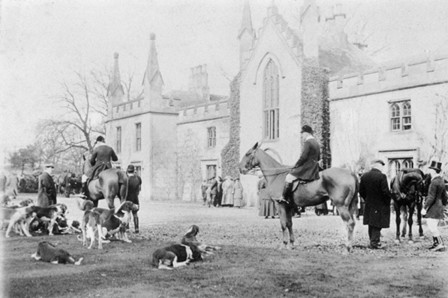
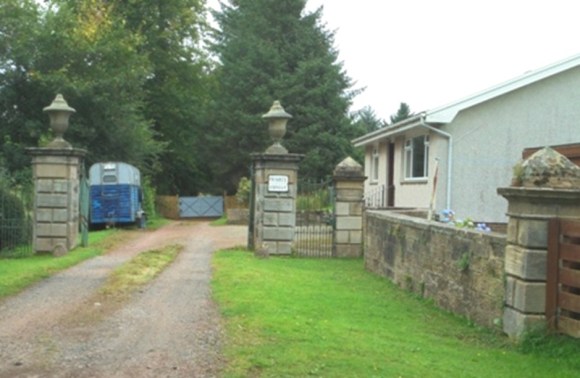
The three daughters of Robert Clarkson did sterling work amongst the local community and were fondly remembered long after their departure. The main gateway to the house was rebuilt at this time in a classical style and still forms the formal public face of the estate.
The following year it was bought by Robert Clarkson. Fox hunting was very popular amongst the landed class in this part of Scotland and the Linlithgow and Stirlingshire hunt often met at Avondale. Women were amongst the riders and this tradition continued well into the 1930s.
Robert Clarkson died in 1920 and Norman MacLeod was appointed by the Court of Session as the Judicial Factor on his estate. Assets, including the furniture were sold off to pay debts and once again we have a list of the contents of Avondale House at this stage:
“At the mansion House of Avondale, Polmont… Important Public Sale of Superior Antique and Modern House furniture and plenishing… comprising fine toned grand pianoforte by C Bechstein, Berlin, in rosewood case and duet stool; antique dark carved oak six feet enclosed sideboard with mirror and panelled back and canopy; set to very old dark oak Scotch chairs with carved backs and loose upholstery seats; 2 finely carved oak Queen Anne arm chairs (odd); elaborately carved black oak extending dining table; dark oak sideboard; antique convex wall mirror in carved gilt frame surmounted by spread eagle, black marble bracket and Dresden china clocks and ornaments; fine old skeleton chiming clock with 8 bells; expensive Persian turkey and Indian carpets and rugs, Axminster, Wilton and Brussels carpets, skin rugs, linoleums; antique dark carved oak 4ft 6ins hall cabinet with panelled back and hinged top’ antique carved oak writing tables (various); two-door panelled hall wardrobe; carved oak hall settle; pair Glastonbury arm and pair high back hall chairs with gilt embossed leather seats; antique mahogany corner cupboard with glazed astragal panel; collection deer, stag and a buffalo horns; oil paintings, etchings, coloured prints, engravings, and autotypes, antique 16in bronze dinner gong on carved oak stand and beater; Library of books, including Aldine poets 52 vols; Scott’s Waverley novels 48 vols Edinburgh 1829; Scott’s poetical works 12 vols London 1833; Dickens’ works 13 vols; Strickland’s Lives of the Queens of England 8 vols; and works in travel, poetry, novels, etc.
Light oak 8-feet four-door glazed bookcase with panelled underpresses; mahogany and other settees, couches, sofas, easy, arm and hand chairs, in various upholsterings, Pembroke, Circular, Sutherland and side tables (various); antique Sheraton mahogany and inlaid 3ft 3in writing cabinet with falling front, sliding desk and interior and exterior drawers with lion mask ring handles; pier, wall and mantelpiece mirrors (various); silk, damask and tapestry curtains; antique 5-feet dark oak dower chest with carved vine pattern top panels; small French mahogany upright display cabinet with ormon mounts and Vernis martin panels; Moorish duet stool; mahogany tea pot; Italian walnut three-door display cabinet; table and decorative china and crystal;
Substantial bedroom plenishing including Spanish mahogany four, three and two door wardrobes; Cheval dressing mirrors; pedestal basin stands; commodes, Italian walnut 4ft 6in suite with bedstead; mahogany and oak chests drawers; toilet tables, dressing glasses, mahogany, ash, pine and iron bedsteads and bedding; blankets and napery; toilet ware; plenishing of kitchen and servants’ quarters, 24in two-roller mangle; 2 lawn mowers, tennis net, posts and marker; 19 tins “Shell” petrol; hand power haycutting machine; 6 hen coops, dog kennel, and sundry effects.” (Falkirk Herald 12 March 1921, 4).
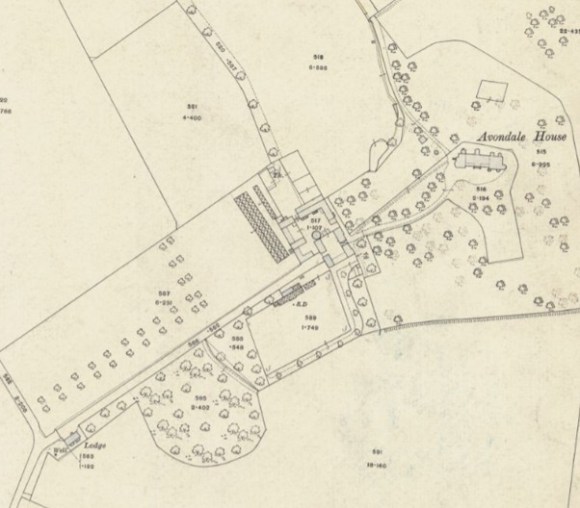
The house and grounds were also put up for sale. The house had been modernised and extended and now contained
“lounge, hall, four sitting-rooms, seven bedrooms, one dressing-room, one bathroom, cloakroom, lavatories, &c. with kitchen, kitchen offices, servants’ hall, two servants’ rooms, servants’ bathroom, washing-house, &c. The house is lighted by acetylene gas, the plant for producing which
is fitted up in a small detached building. The offices are extensive, and comprise garage, coachhouse, two stables, harness room, byre, milkhouse, &c. There are also a chauffeur’s house, another dwellinghouse, at present vacant, and an entrance lodge occupied by the gardener.” (Scotsman 30 March 1921, 3).
Mrs Clarkson and her two unmarried daughters moved to London were they lived on a much reduced scale of grandeur. The daughters, Margaret Mary and Adah, ran a guest house at Lancaster Lodge, Putney. They were both killed in February 1944 during the German bombing of the city.
In March 1921 the upset price was fixed at £8,550, but was considerably reduced by July 1922 to £3,500, at which price it was snapped up by Henry Adolph Salvesen of Lathallan, a Grangemouth shipowner and timber merchant. Lathallan lay immediately to the south of Avondale and the purchase consolidated his holdings in the area. At the time the 138 acre farm was tenanted by James Bowie. Peter Main and Son still occupied the market garden. Henry Salvesen did not have long to enjoy the amenities of Avondale as he died on 13 May 1924 and was succeeded by his son, Major Ralph H Salvesen.
James Bowie gave up the tenancy of the farm in July 1927 and Peter Main retired from the market garden in March 1928 when his son took up a career in engineering. The garden was then taken on by John Peddie who in 1948 had 60 bee hives at Avondale, making him the largest bee-keeper in the district.
During the Second World War Avondale House was requisitioned for the RAF at the nearby airfield. The summerhouse beside the pond was used as a makeshift morgue. After the war, in August 1946, Major R. H. Salvesen was reappointed as the French Consular Agent in Grangemouth, the post having been allowed to lapse when France fell in 1940. It was found, however, that the house had suffered from the rigours of the military occupation and Salvesen decided to dispose of it. Mrs Milligan and her family acquired it and moved in. The family had farmed in Mull and Mrs Milligan was well-known for breeding black-faced sheep. She won many prizes for her flock at Avondale. Mr Macgregor was appointed as manager of the cattle kept there, which included a small dairy and beef herd.
The late 1960s saw the construction of the M9 motorway through the south margin of Avondale estate and a roundabout was placed at the junction of Avondale Road and Linlithgow Road. In 1988 Avondale was sold to Goalday Ltd of Oldham near Manchester. The company intended to exploit its economic potential and in 1989 applied for planning permission to build a service station, motel and restaurant on a 3.3 acres site adjacent to motorway roundabout. This was refused. Instead, the site was used for the extraction of sand and gravel. This opencast operation was conducted by Lloyd Hamero Sand Ltd and was separated from Avondale House by the hill upon which the folly stood and so would not have been visible from it. The intention was to convert the house into flats or a nursing home, but by 1991 it was evident that Goalday had no interest in undertaking that work themselves and the building was placed on the Buildings at Risk register. The Macgregor brothers remained on as caretakers, living in one section of the house.
Goalday’s economic exploitation concentrated upon the quarry and once this was nearing exhaustion the resulting hollow provided an opportunity to utilise the site for landfill. To maximise its potential a project was designed not only to fill in the void but to raise an artificial hill. At first this proposal was opposed by Falkirk Council and the Polmont community. However, alternative disposal methods were limited and the scheme was eventually given planning permission. Avondale House was made wind and watertight at a cost of around £10,000 and around 1993 it was sold to a London-based architect, B Nelson Meredith, who intended to restore it and retire there. Unfortunately he died before any work was done and the house stood empty for a large number of years. Then, in August 2017, vandals set it on fire and the building was gutted.
Bibliography
| Keltie, J.S. | 1879 | A History of the Scottish Highlands, Highland Clans and Highland Regiments. |
| Livingston, E | 1920 | The Livingstons of Callendar and their Principal Cadets. |
| Reid, J. | 1996 | ‘The Barony of Abbotskerse,’ Calatria 10, 39-52. |
| Reid, J. | 1997 | ‘The Feudal Divisions of East Stirlingshire: The Barony of Abbotskerse – Part 2, estates, parcels and portion, ’Calatria 11, 63-88. |
| Reid, J. | 2009 | The Place Names of Falkirk and East Stirlingshire. |
NEWSPAPERS
- Caledonian Mercury 18 March 1809, 4:
Died: At Clarkston, Stirlingshire, on the 11th inst. THOMAS LIVINGSTON, Esq. of Parkhall. - Perthshire Courier 4 April 1816, 2:
House of Lords Many March 25 – Scots Appeals. Jean Laurie v Alexander Livingston.- The question at issue between the parties in this appeal regarding the estate of Clarkston lying in the barony of Polmont, in the county of Stirling, which, as early as the year 1633, belonged to the family of the appellants. By a deed, dated 17th July 1761, made by the ancestors of Jean Laurie, the right of reversion was renounced, and conveyed in favour of the ancestors of the respondent; and in the year 1666, a charter of adjudication, upon which infeftment followed in 1768, was executed. The dispute therefore between the parties was, whether these two deeds had established a sufficient right in the respondent to this estate. The interlocutor of the Court of Session had found such title to be vested in the respondent, and the appellant now appealed to their Lordships, contending: 1st, that from the tenor of the renunciation of 1761, it did not affect any right of reversion competent to the ancestors of the appellant: 2nd, that no title to the reversion had been made up, the necessity of which is laid down by Erskine, b.2. tit.8, p.21: 3rd, that the deed was granted by tutors in law for two infants who were parties to the deed of 1761, and in as far, therefore, as regarded their shares, the renunciation was fanditus inept and void; and 4th, with respect to the deed of adjudication of 1766 and the infeftment following, no prescriptive title could be set up, because the whole 40 years did not run against persons of full age and because the title itself was full of nullities and objections. The respondent on the contrary contended, that by the deed in question, the statutory prescriptive title of charter and sasine, as well as the negative prescription, were clearly and indisputably made out, and that it was now too late to interrupt the respondents in their possession… judgement was deferred sine die.
- Caledonian Mercury 12 July 1819, 1:
Judicial sale of Parkhall and Clarkstone. TO be sold by public roup, within the Parliament or New Session House of Edinburgh…- Lot III – the LANDS of CLARKSTONE, those parts of the lands of POLMONTHILL, acquired in excambion from the Duke of Hamilton, and those parts of STEPMILL and DRUMBRECKS, acquired in excambion from Lord Dundas, and the North Part of the Lands of GILSTON, and the Lands called EASTER BURNBRAE, and the Superiority of those parts and portions of the Barony and Lands of KERSE (under the exception of Maukinlees, contained in lot 1st)…
- Morning Post, 8 September 1828, 4:
Married – On the 2d inst., Abel Lewes Gower, Esq. of London, to Elizabeth, youngest daughter of William Logan, Esq. of Clarkstone, Stirlingshire. - Scotsman 14 October 1829, 6:
Among the experiments which have been instituted by horticulturalists in this quarter, to ripen the fruit of the vine without shelter, we have this season been gratified by the sight of the blackcluster variety, in Clarkstone garden, the property of William Logan, Esq. This plant was brought from Northamptonshire about three years ago by the ingenious gardener, David Dow; and although it has been trained against a wall with an easterly aspect, it is now covered with numerous well-formed clusters perfectly ripe. Mr Dow is confident, that in favourable years, this hardy kind, planted with a southern exposure, would ripen its fruit by the first week in September. - Caledonian Mercury 2 October 1834, 4:
Falkirk Horticultural Society – Grapes, the best two bunches, two varieties, first, Mr George Knox, gardener to William Logan, Esq. of Clarkston. - Perthshire Courier 29 January 1835, 2:
Deaths – At Clarkstone House, Stirlingshire, on the l5th January, Janet, wife of William Logan of Clarkstone. Esq. - Caledonian Mercury 22 March 1838, 3:
Deaths – At Clarkston, Stirlingshire, on the 7th current, MARY, third daughter of William Logan, Esq - Caledonian Mercury 21 October 1839, 3:
Married – At Clarkstone, Stirlingshire, on the l6th current, the Rev. John Ker, minister of the parish of Polmont, to Margaret, daughter of William Logan Esq of Clarkstone. - Caledonian Mercury 24 June 1841, 3:
Deaths – At Clarkstone House, Stirlingshire, on the 14th current, WILLIAM LOGAN , Esq. of Clarkstone. - Glasgow Herald 18 March 1844, 3:
ESTATE IN STIRLINGSHIRE FOR SALE. TO BE SOLD, BY PRIVATE BARGAIIN, THE ESTATE OF CLARKSTONE, situated in the Parish of Polmont, about half way between Linlithgow and Falkirk, consisting of about 230 acres imperial, of which about 36 acres are under thriving and ornamental plantations.- The Land is all enclosed, and sub-divided into suitably-sized fields, well fenced and watered. Having been for many years in the natural possession of the proprietor, it is in the highest order. The buildings are in good repair. The House is commodious; and the offices are well suited to both the accommodation of a resident proprietor, and the purposes of a farm. The Garden is well walled, productive, and abundantly stocked, besides being provided with hot-houses, supplied with a variety of prolific and excellent vines.
- The House is about two miles from the Polmont Station, and between three and four miles from the Linlithgow Station of the Edinburgh and Glasgow Railway, and is at once accessible and retired; and the place in general possesses remarkable beauty and amenity as a residence.
- Robert Stirling, at the Lodge, will show the House and Grounds; and for particulars…
- Stirling Observer 5 September 1844, 4:
Births – At Clarkstone House, Stirlingshire, on the 31st ultimo, the lady of Major R Gardner, H.E.I.C.S, of a daughter. - Stirling Observer 12 September 1844, 1:
Extensive sale, Farm stocking, horses, fat cattle, cows, queys, hay, and farming implements, at Clarkstone… Roup, SATURDAY the day 1644, at CLARKSTONE, near Polmont, ll – whole of the Fine CATTLE, HORSES. FARM STOCKING, and valuable IMPLEMENTS of HUSBANDRY, &c belonging to the Heirs of the late William Logan, Esq. of Clarkstone, comprising 3 very fine three-year-old…- As the Estate of Clarkstone is now disposed of, the whole will be put up in Lots, sold without reserve,..
- Stirling Observer 7 November 1844, 4:
Extensive sale of valuable, substantial, and elegant household furniture, pianoforte, mirrors, books, pictures, china, down beds, Silver-plated articles, and milch cows, at Clarkstone.- JAMES NEILSON begs to intimate, that he is instructed the Heirs of the late William Logan, Esq. of Clarkstone, to Sell by Public Auction, without Reserve, on MONDAY 18th, TUESDAY…
- The whole of the very elegant, substantial, and valuable household furniture, and other valuable effects therein contained – comprising 2 mahogany sideboards, 1 dum wine-cooler, 18 mahogany dining-room chairs, set of capital mahogany ding tables, a grand pianoforte, 2 satinwood drawing-room couches, drawing-room, loo, tea, card, and sofa tables, in rosewood and mahogany, a very handsome mahogany winged cabinet, a beautiful large drawing-room mantle-piece mirror, in a richly ornamented gold-gilt frame, drawing room, dining-room, and bedchamber window curtains and cornices, in many varieties of beautiful workmanship and pattern; mahogany pillar and claw, and Pembroke tables, 1 large writing of consulting table.
- 3 mahogany posted and 8 tent bedsteads, several of which are richly and elegantly hung in drab and blue moreen and chintz curtains, 7 remarkably fine down and feather beds, with bolsters and pillows, 27 hair and straw mattresses, 19 pairs of fine English blankets, and 9 Marseilles bedcovers, 2 mahogany wardrobes, 9 chests of mahogany and other drawers, 1 large mirror with gilt frame, 9 dressing-glasses, 18 double and single washing stands and toilette tables, with ware complete; several dozens of bed-chamber and dressing-room chairs.
- Brussels dining and drawing room carpets, with 12 bed-room and other carpets and hearth rugs to match, also lobby, passage, and stair carpets and large wax cloths, an eight-day clock and an upright barometer, a large and full set of beautiful dinner china, of a chaste and elegant pattern, 1 china dessert set, 2 sets of breakfast and 2 sets of tea china, 2 cut crystal claret jugs, 8 pairs of cut wine decanters. With several dozens of wine, ale and liqueur glasses, water tumblers, rummers, &c. crystal fruit dishes, custard cups, jelly glasses, and finger bowls, 6 dozen of ivory-handled knives and forks.
- A magnificent bronze suspending lamp, wit globes and chains, a silver tea urn, silver mounted and very ornamental silver-plated branched candlesticks, plated, an egg epergne, with cups and spoons, gold gilt, bread basket, silver mounted, coffee pot, liqueur and cruet frames, and many other silver-plated articles; a few fine old engravings on frames, and a part of the library of books, and the book-cases.
- 16 brass, steel, and iron register and other grates., with 18 fenders and sets of fire irons complete.
- Also an unique brass Gothic grate, and a hot air stove; kitchen range, laundry and hall grates, ovens, hot plates, &c. with kitchen furniture, block tin dish covers, and cooking utensils, mangle and napery presses, & c. with a never-ending variety of useful and valuable effects, which would go far beyond the limits of any advertisements…
- National Advertiser and Edinburgh and Glasgow Gazette 19 August 1848, 4:
THE ESTATE of AVONDALE, formerly called CLARKSTONE, lying in the Parish of Falkirk, and County of Stirling. This Estate contains 229 acres imperial measure or thereby, whereof about 197 are arable, 27 are under thriving plantation, and 5 are occupied by the Mansion-house, offices, gardens, and approach. The Lands are of excellent quality, fir for all kinds of husbandry, are in the hands of the proprietor, and are in the best condition. There are separate and ample farm-offices. The Mansion-house is very commodious, and in perfect repair, as well as the offices attached to it. The garden is large, and contains an excellent vinery. The grounds are beautifully skirted by the rover Avon, and are well fitted for being feued out for villas. The Mansion-house is situated about two miles north of the Polmont Station of the Edinburgh and Glasgow Railway. The public burdens are moderate, and the teinds valued. Reduced upset price £15,250. - Edinburgh Evening Courant 5 October 1848, 1:
same advert – price reduced to £14,750. - Falkirk Herald 9 May 1850, 3:
THE VALUABLE AND ELEGANT HOUSEHOLD FURNITURE, LIBRARY OF BOOKS, &c. &c, AT THE MANSION-HOUSE OF AVONDALE, On Monday the 27th, and Tuesday the 28th May. JAMES NEILSON begs to announce that he will Sell by Public Roup, without reserve … The whole of the beautifully-carved fine oak, maple, mahogany, and rosewood furniture, and other valuable and excellent effects, within the large Gothic Mansion-House of Avondale, near Polmont, and which has only been in use betwixt four and five years. The furniture is in fine taste and style, and is not easily to be surpassed; and which comprises:- A set of beautiful large telescope dining tables, in rich flickered oak; a carved oak sideboard with cabriole trusses; 12 handsome oak dining-room chairs in green Morocco; 2 easy chairs to match; 2 conversation chairs; a drawing-room pier table most elaborately carved and gilt, and fine white marble top; 2 beautiful oak sofas in scarlet damask; a piano-forte; 1 drawing-room Loo table in finest oak; 1 oak sofa table; 1 rosewood card table; 2 sets of rich crimson damask window curtains with brass cornices; 2 sets of drawing-room window curtains and superbly carved and gilt cornices; 1 magnificent large oak duchess bedstead most gracefully mounted and hung in rich damask, and valuable spring bed attached to it; 5 French and 2 tent bedsteads in oak, maple and mahogany with damask and other curtains, hair and straw mattresses, bedding &c &c; 2 oak wardrobes; 4 chests of French-polished bed-room drawers in maple, oak and mahogany, also painted drawers; 12 double washing stands and dressing tables most handsomely made and furnished with china ware &c; also dressing glasses to match, bedside stands, &c’
- Beautiful drawing-room Brussels carpet and rug; also, the dining-room and the whole of the bed chamber, stair, and lobby carpets, very large waxcloths, &c; sets of oak bed-room chairs, and easy chairs; beautiful oak lobby furniture in the Elizabethan style, viz. lobby table, hat and coat stand, lobby sofa and chairs; splendid Berlin dining and drawing-room grates with fenders to match, and cut steel fire irons; 11 Kinnaird and hot-water grates with fenders and fire irons; large kitchen range with ovens and hot plate; dinner set of stoneware;
- Crystal wine decanters; hock, claret, champagne, port, and sherry wine glasses; finger bowls and wine coolers; a handsome suspending bronze three-light lamp; 4 bronze table lamps; ivory-handled knives and forks; silver-plated candlesticks; butlers’ and other trays; a double-barrelled gun; and a numerous variety of other excellent and valuable effects, besides the kitchen furniture and cooking utensils.
- Likewise, a handsome oak consulting table; a capital wainscot bookcase, and library of books, and which comprises – the Waverly novels in 48 volumes; Alison’s History of Europe 11 volumes; 23 4to volumes of new works published by the Woodrow Society; Hogarth’s works and plates; Fielding’s works; Calvin’s Commentaries 4 vols; Goldsmith’s works; Hakewill’s Tour of Italy with plates; a book of plates, representations of the style of the old Masters; Lyle’s Geology; the Koran; and upwards of 150 vols of other books; also, a number of French and Spanish books…
- Falkirk Herald 27 February 1851, 1:
GRASS PARKS. To be Let by Public Roup, for Grazing for the Season, on Monday the 3d day of March next, THE GRASS PARKS of AVONDALE. near Polmont. There is a good supply of Water; and the Parks are well Fenced and Sheltered. The Roup will commence at 12… - Falkirk Herald 29 November 1855, 3:
Births – At Avondale, on the 21st instant, the Lady of G. J. MURRAY Esq. (late of the Royal Highlanders), of a daughter. - Falkirk Herald 7 August 1856, 1:
FAMOUS OATS AT AVONDALE, On WEDNESDAY the 20th August. To be Sold Public Roup, on Wednesday the 20th August, 1856, on the Lands of Avondale, near Polmont, possessed by James Towers, ACRES MOST SUPERBLY FINE… - Falkirk Herald 27 November 1856, 3:
BIRTHS. On the 22nd instant, the Lady of G. I. Murray Menzies, Esq. of Avondale, of a son. - Falkirk Herald 7 January 1858, 3:
New Commissioners of Peace for the county of Stirling – include Gilbert James Murray Menzies of Avondale. - Falkirk Herald 4 February 1858, 3:
BIRTHS. Avondale, on the 27th ult., the lady G. Menzies. Esq.. of daughter. - Falkirk Herald 21 April 1859, 3:
At Avondale, Falkirk, on the l3th inst., the lady of G.J. Murray Menzies, late 42d Royal Highlanders, of a daughter, prematurely. - Falkirk Herald 4 October 1860, 3: Avondale, Polmont, on the 30th ult., the wife of G. Murray Menzies, Esq., Avondale (late Royal Highlanders) a son.
- Montrose Standard 28 September 1860, 4:
Captain Robert Menzies, 1st Madras Fusiliers, died of cholera on 14th August aged 30 at Bagalore. Son of Major Archibald Menzie of the Royal Highlanders. - Caledonian Mercury 11 December 1860, 3:
At Charlotte Square, the 8th inst., Euphemia, relict of Major Archibald Menzies, of the 42d Royal Highlanders. - Falkirk Herald 7 February 1861, 2:
AVONDALE GRASS PARKS, MONDAY, FEBRUARY. To be Let by Public Roup, on Monday the February, 1861, THE Fine FEEDING PASTURE GRASS on the Estate of Avondale, near Polmont, belonging to G. I. Murray Menzies… - Falkirk Herald 23 April 1863, 5:
Major Menzies and his family and servants used to walk to Polmont Church each Sunday… - Falkirk Herald 14 May 1864, 3:
Dispute over who controlled Polmont Churchyard – heritors or kirk session and minister… - Falkirk Herald 20 October 1866, 3:
At Edinburgh, on the 18th inst., the wife of G. I. Murray Menzies, Esq. of Avondale, of a daughter. - Falkirk Herald 24 February 1870, 1:
POLMONT. TO LET, UNFURNISHED, For such Term as may be arranged, The MANSION HOUSE OF AVONDALE, beautifully situated, and commanding a magnificent view of the surrounding country. The House, which is distant about two miles from the Polmont Station, contains three public rooms, seven bedrooms, two dressing rooms, servants’ rooms, &c.- There is a lawn of ten acres, and a garden of about one acre. There are also the usual outhouses, and shooting over about 230 acres…
- Falkirk Herald 30 August 1873, 2:
Daniel Berrie and John Sibbalds, farm servants at Bearscroft, pled guilty of stealing 12 lbs. of grapes, 6 lbs. of apricots, 6 lbs. of lemons, &c, and a quantity of apples from Avondale Garden, Polmont. They were sentenced to pay a fine of 40s or suffer 20 days’ imprisonment each. - Falkirk Herald 21 May 1874, 6:
Gilbert Innes Murray Menzies, Avondale – 238 acres – annual value £539.- 1876 – James Muirhead Esq of Avondale.
- Falkirk Herald 13 January 1877, 1:
STIRLINGSHIRE. ESTATE OF AVONDALE, NEAR FALKIRK. THIS DESIRABLE PROPERTY, extending to 228.684 Acres, or thereby, as shewn by the Ordnance Survey Map, with Mansion-House and offices, is for sale, with entry at Martinmas 1877… - Falkirk Herald 5 April 1877, 1:
To be exposed for Sale by public roup… THE ESTATE of AVONDALE, in the Parish of Polmont, extending to 232½ Acres Imperial or thereby, of which about 200 Acres are Arable, and the remainder chiefly wood.- For the last few years the Estate, with the exception of one field, which is to be sown down in grass with crop 1877, has been let as grass parks.
- The Mansion-house is commodious, and is beautifully situated on the south bank of the Rover Avon, in a Policy of 11 acres or thereby, and there is some fine old timber on the fields and policy. The garden extends to about an acre and a half, and is well-stocked with fruit trees, & c in good order. The offices are commodious, and consist of three-stalled table, coach-house, harness-room, &c.
- The House, with the offices, garden, policy, and shootings, is let on a seven years’ lease, which expires at Whitsunday 1878. There is a suitable farmsteading, which, however, is in need of repair, and is at present unlet…
- Falkirk Herald;
“To exposed for sale by public roup, within Dowell’s Rooms, No. 18 George Street, Edinburgh, on Wednesday the 27th day of June next, at two o’clock pm, the estate of Avondale in the parish of Polmont, extending to 232 1/2 acres Imperial or thereby, of which about 200 acres are arable, and the remainder chiefly wood. For the last few years the estate, with the exception of one field, which is to be sewn down in grass with crop 1877, has been let as grass parks. The mansion house is commodious, and is beautifully situated on the south bank of the River Avon, in a Policy of 11 acres or thereby, and there is some fine old timber on the fields and Policy. The garden extends to about one acre and a half, and is well stocked with fruit trees, & c, in good order. The offices are commodious, and consist of three-stalled stable, coach-house, harness-room, & c. The House, with the Offices, garden, Policy, and shootings, is let on a seven years’ lease, which expires at Whitsunday 1878. There is a suitable farmsteading, which, however, is in need of repair, and is at present unlet… Mr James Kirkwood, Avondale, Polmont, will show the property to enquirers on receiving a day’s notice; and the House can be seen by card on Tuesdays and Thursdays…” [FH 4 April 1877]- “To be let, unfurnished, for such terms as may be agreed on, the mansion house of Avondale, with entrance lodge, coach house, stable, and other offices, pleasure grounds, gardens, and shootings, all as advertised in this paper on 21st March 1878…” [FH 12 Sep 1878, p.1]
- Falkirk Herald 28 February 1878, 1:
STIRLINGSHIRE. TO LET, for such term as may be agreed on, the MANSION HOUSE of AVONDALE, with Entrance Lodge of 3 Rooms, Coach House, Stable, and other Offices, Pleasure Grounds, Garden extending to about l ½ acres, shootings.- The House is distant about a mile from Polmont Station, and contains dining and drawing rooms, music roo, and parlour, entrance hall and corridor, 8 bedrooms, 2 dressing rooms, nursery, bath room, kitchen, scullery, servants’ room, and other accommodation, and the offices are commodious.
- Entry to the house, offices, &c at Whitsunday next, and to the gardens as at Candlemas last…
- Falkirk Herald 2 May 1878, 4:
Sale of Household Furniture, Fern case, greenhouse plants, iron fencing, force pump, sheep, prize poultry, &c. at AVONDALE HOUSE, On SATURDAY, 11th MAY. Thomas BINNIE begs to intimate that he is instructed by R. K. Muirhead, Esq., who is removing, to Sell by Public Auction, at AVONDALE House, near Polmont, on Saturday, 11th May 1878, the following effects:- Walnut couch, rosewood couch, 6 rosewood chairs, rosewood card table, rosewood chiffonier, mahogany sofa in haircloth, 7 mahogany chairs in haircloth, 1 half tester bedstead with spring mattress, feather bolster and pillows, 1 French bedstead with 2 mattresses, bolster, and pillows, 1 French bestead with 2 mattresses, bolster and pillow, 1 iron folding bedstead with hair mattress,; feather bed and bolster; a mahogany wardrobe; 2 mahogany chests of drawers (1 with napery press in top), 1 mahogany marble-topped basin stand with ware; 3 other basin stands; 1 large dressing glass, in mahogany frame with marble slab.
- Brussels carpets for drawing-room, dining-room, parlour, and bed-rooms, with hearth rugs; stair carpets and rods, lobby matting, &c; fenders, fire-irons, costly paraffin lamps.
- 1 very handsome fern case in beautifully inlaid wood and plate glass – model of 1851 exhibition – 6 x 3ft, and 7ft high; about 200 greenhouse plants in pots, consisting of camellias, fuchsias, geraniums, cactus, ferns, &c; 150yds of bar iron and other wire fencing, iron grates &c; a double-cylinder force pump with 2 fly wheels 4ft diameter. Also, 11 cross hogs, 30 head of poultry including some pure dark Brabma prize birds, wooden hen house 6 x 6ft; dog’s kennel, garden vases, &c…
- Falkirk Herald 17 October 1888, 2:
appear, and the charge against him was tried in his absence. Wm. Headley, gamekeeper, in the employment of Mr Cochrane of Avondale, said he was out with a shooting party on that estate on 25th September, and saw Cunningham in a field called Polmont Park… - Falkirk Herald 16 August 1890, 7:
The Blackbraes, Shieldhill, Reddingmuir, and Polmont Bands of Hope had a demonstration and pic-nic on Saturday last. The various Bands of Hope met at their respective meeting houses, formed in procession, and, with banners flying, arched to Redding Bridge. Here they embarked on board boats, kindly given by Mr Campbell, Redding Colliery, and were conveyed along the canal to Parkhall Jetty, where they disembarked, and again formed into procession and marched to Avondale grounds, which were granted for their use by Mr Cochrane. The company here partook of an excellent repast, after which short and pithy temperance addresses were delivered… - Falkirk Herald 7 January 1893, 6:
POLMONT. Supper and Ball at Avondale. The servants at Avondale had their annual ball on Friday night, kindly given by Mr and Mrs Cochrane. The party consisted of the servants and their friends. The dancing started at eight o’clock, and was opened by Mr and Mrs Cochrane. At ten o’clock the company was entertained to supper. Mr Paterson, head gardener, presided. After supper the chairman made a few remarks, and proposed the health of Mr and Mrs Cochrane, which was heartily pledged. Thereafter the company again proceeded to the laundry, where dancing was kept up till well on in the morning. - Falkirk Herald 24 June 1893, 8:
The children attending the Linlithgow E.U. Church Sabbath School had their annual outing on Saturday last. The destination was the beautiful grounds of Avondale, belonging to Mr Learmonth of Parkhall, and at present tenanted by Mr Cochrane. The young folks, with their teachers and… - Falkirk Herald 12 May 1894, 8:
FINE Cauliflower Plants from ls 6d per 100; also, Bedding Plants, Geraniums, Asters, Marigolds, etc — Peter Main, Avondale Orchard, Polmont. - Falkirk Herald 5 January 1895, 6:
POLMONT. Supper and Dance.—The servants and friends of Mr and Mrs Cochrane, Avondale, had their annual supper and dance on Wednesday evening last, when there was the usual large company present. After an excellent supper had been done full justice to, the party engaged in dancing and games, which were kept up with great spirit till the early hours of the morning. Early in the night the host made a few remarks and trusted that those present would all have an enjoyable evening. - Falkirk Herald 20 July 1895, 1;
“For sale, by private bargain, the desirable residence of Avondale, in the parish of Polmont, consisting of Mansion House, lodge, stabling, walled garden (1½ acres, with conservatory, & c), a separate market garden (6½ acres, with hothouses, at present let on lease), and pasture land adjoining. The whole extends to fully 85 acres, but the proprietor can arrange to give off a smaller area if preferred.- The property is about 1½ miles from Polmont Station, on the Edinburgh and Glasgow Railway, and is beautifully situated on the River Avon, with extensive views of the Ochils and Perthshire Hills. The mansion house, which has a southern exposure, is surrounded by fine old trees, and there is a magnificent lime avenue about 350 yards in length. The house is heated with hot water pipes, and its drainage is complete. It contains 4 public rooms, 8 bedrooms, dressing rooms, bathroom, kitchen, scullery, servants’ and other accommodation.”
- Falkirk Herald 9 May 1896;
“STIRLINGSHIRE (Near POLMONT).- To be Sold by Public Roup, within the Faculty Hall, Glasgow, on WEDNESDAY,27th May 1896 at 2 o’clock, The MANSION-HOUSE of AVONDALE (containing 4 Public and 10 Bed Rooms, Bath-Room, and other Accommodation ), with Policy Ground, Large Walled Garden and Conservatory, Offices and Small Field. A separate Market Garden, with Hothouses, &c., let on Lease at £80 is included. Extent of whole, 31.5 Acres or thereby Immediate Entry. This Property is beautifully situated about 1.75 miles from Polmont Station, and forms a most attractive residence. The purchaser will have the option of acquiring in addition about 52 Acres of fine Pasture Land and Woods adjoining the Mansion-House Apply to JOHN & W.K GAIR & GIBSON, Writers, Falkirk” - December 1897 0 Mr Clarkson, Avondale. Mr and Mrs Clarkson, and the Misses and Mr Charles Clarkson Avondale. J.P.
- Falkirk Herald 12 March 1898, 4:
BINNIE begs to intimate that he has been instructed by Robert Clarkson, Esq. of Avondale, to Let by Public Auction, for the Season’s Grazing,.. - Falkirk Herald 11 March 1899, 4:
Grass parks to let… At Avondale, the property of Robert Clarkson, Esq, of Avondale, 3 enclosures, viz,, The Haugh, Castle Park, and Small Park. Roup to begin at the New Gateway, near the Lodge at 4 o’clock… - Falkirk Herald 15 July 1899, 1:
Wanted, a Few Women to Pull Fruit; no Early Morning Work.— Apply P. Main, Avondale Orchard. Polmont. - Falkirk Herald 26 May 1900, 8:
POLMONT AND DISTRICT. Presentation. On Monday evening Mr Walker, coachman, Avondale, was, by friends, presented with a Gladstone bag, bearing a suitable inscription, while Mrs Walker was the recipient of a Morocco leather scissor case and scissors, mark … - Falkirk Herald 31 August 1901, 5: …
I am also collecting clothing and comforts, or money to purchase them, for No. 8 Troop, South African Constabulary, and will be grateful for any help. Mrs Clarkson, Avondale, Polmont will also be glad to receive anything for the benefit of this troop. —Yours. etc„. M. M. M’D. SCEALES. Thornhill House, Falkirk… - Falkirk Herald 23 April 1904, 4:
IMPORTANT AUCTION SALE of EXCELLENT HOUSEHOLD FURNITURE, Removed from Avondale and other Residences, embracing— COTTAGE PIANOFORTE, by the Eminent Makers, Collard & Collard, VERY HANDSOME OAK SIDEBOARD… - 1904 – Avondale the property of Robert Clarkson
- Falkirk Herald 2 December 1905, 7:
FOXHOUNDS. —The Linlithgow and Stirlingshire pack had their meet Saturday at Avondale. There was large field, which included a goodly number of ladies. The day was raw and rather cold, and rain also fell at intervals… - Falkirk Herald 10 March 1906, 4:
grass parks to let… At AVONDALE, The Property of Robert Clarkson. Esq, of Avondale, 4 ENCLOSURES. viz. The HAUGH, CASTLE PARK, SMALL PARK, and POLICY PARK. Roup to begin at the New Gateway… - Falkirk Herald 11 January 1913, 2:
Peter Main, market gardener, Avondale, Polmont, appealed against his assessments total rental of his property is £80, and maintained that he was entitled to have property treated as agricultural subjects to be assessed on three-eights only of the annual value. – six acres with thee greenhouses for the cultivation of tomatoes, etc. Roughly 600ft of glass…- Donations of money to Wallside Auxiliary Hospital.
- Falkirk Herald 23 June 1920, 1:
Norman MacLeod, chartered accountant, appointed by the Court of Session as Judicial Factor on the estate of the deceased Robert Clarkston… - Falkirk Herald 12 March 1921, 4:
At the mansion House of Avondale, Polmont… Important Public Sale of Superior Antique and Modern House furniture and plenishing… comprising fine toned grand pianoforte by C Bechstein, Berlin, in rosewood case and duet stool; antique dark carved oak six feet enclosed sideboard with mirror and panelled back and canopy; set to very old dark oak Scotch chairs with carved backs and loose upholstery seats; 2 finely carved oak Queen Anne arm chairs (odd); elaborately carved black oak extending dining table; dark oak sideboard; antique convex wall mirror in carved gilt frame surmounted by spread eagle, black marble bracket and Dresden china clocks and ornaments; fine old skeleton chiming clock with 8 bells; expensive Persian turkey and Indian carpets and rugs, Axminster, Wilton and Brussels carpets, skin rugs, linoleums; antique dark carved oak 4ft 6ins hall cabinet with panelled back and hinged top’ antique carved oak writing tables (various); two-door panelled hall wardrobe; carved oak hall settle; pair Glastonbury arm and pair high back hall chairs with gilt embossed leather seats; antique mahogany corner cupboard with glazed astragal panel; collection deer, stag and a buffalo horns; oil paintings, etchings, coloured prints, engravings, and autotypes, antique 16in bronze dinner gong on carved oak stand and beater; Library of books, including Aldine poets 52 vols; Scott’s Waverley novels 48 vols Edinburgh 1829; Scott’s poetical works 12 vols London 1833; Dickens’ works 13 vols; Strickland’s Lives of the Queens of England 8 vols; and works in travel, poetry, novels, etc.- Light oak 8-feet four-door glazed bookcase with panelled underpresses; mahogany and other settees, couches, sofas, easy, arm and hand chairs, in various upholsterings, Pembroke, Circular, Sutherland and side tables (various); antique Sheraton mahogany and inlaid 3ft 3in writing cabinet with falling front, sliding desk and interior and exterior drawers with lion mask ring handles; pier, wall and mantelpiece mirrors (various); silk, damask and tapestry curtains; antique 5-feet dark oak dower chest with carved vine pattern top panels; small French mahogany upright display cabinet with ormon mounts and Vernis martin panels; Moorish duet stool; mahogany tea pot; Italian walnut three-door display cabinet; table and decorative china and crystal;
- Substantial bedroom plenishing including Spanish mahogany four, three and two door wardrobes; Cheval dressing mirrors; pedestal basin stands; commodes, Italian walnut 4ft 6in suite with bedstead; mahogany and oak chests drawers; toilet tables, dressing glasses, mahogany, ash, pine and iron bedsteads and bedding; blankets and napery; toilet ware; plenishing of kitchen and servants’ quarters, 24in two-roller mangle; 2 lawn mowers, tennis net, posts and marker; 19 tins “Shell” petrol; hand power haycutting machine; 6 hen coops, dog kennel, and sundry effects..
- Scotsman 30 March 1921, 3:
Sale by public roup… the desirable, small residential estate and mansionhouse of Avondale, Stirlingshire, situated on side road leading northward from the main Edinburgh and Glasgow road to Bo’ness, &c. and bounded on the north-east by the River Avon.- The Mansionhouse, situated 1 ½ miles east of Polmont village and 2 ½ miles from Polmont Railway Station, is of Gothic design and attractive appearance. It contains lounge, hall, four sitting-rooms, seven bedrooms, one dressing-room, one bathroom, cloakroom, lavatories, &c. with kitchen, kitchen offices, servants’ hall, two servants’ rooms, servants’ bathroom, washing-house, &c. The house is lighted by acetylene gas, the plant for producing which is fitted up in a small detached building.
- The offices are extensive, and comprise garage, coachhouse, two stables, harness room, byre, milkhouse, &c.
- There are also a chauffeur’s house, another dwellinghouse, at present vacant, and an entrance lodge occupied by the gardener. Large walled garden with two glass-houses.
- The whole estate extends to just over 84 acres, of which full eight acres are planted and about seven acres are let as a nursery. The remainder of the land comprises policies, avenue, and grass parks.
- Assessed rent, £300.
- Feu-duty £1.10s.
- Upset price, £8550…
- Falkirk Herald 29 July 1922, 5:
SALE OF STIRLINGSHIRE ESTATE. There was sold on Wednesday [26th] at Dowell’s Rooms, Edinburgh, for the upset price of £3500, the residential estate and mansion-house of Avondale, Stirlingshire, near Polmont. The estate extends to 84 acres, fully 8 acres of which are planted, and about 7 acres are let as a nursery. The mansion-house, which is of Gothic design, contains a lounge, a hall, four sitting rooms, and seven bedrooms. There are extensive offices, a chauffeur’s house, an entrance lodge, and another dwelling-house. The assessed rent of the estate and house is £300, and the feu-duty £1, 10s. - Falkirk Herald 31 March 1923, 2:
AVONDALE GRASS PARKS GRAZING.— Apply Mrs Salvesen, Polmont.- Major Salvesen.
- Falkirk Herald 17 May 1924, 5:
THE LATE MR H. A. SALYESEN, D.L, OF LATHALLAN AND AVONDALE. NOTABLE BUSINESS AND PUBLIC CAREER. It is with sincere regret that we record the death which took place at his residence, Lathallan, Polmont, on Tuesday night [13th], of Mr H.A. Salvesen, shipowner and timber merchant, Grangemouth…- Henry Adolph Salvesen was born at Weedingshall, Polmont, and was educated at Blairlodge School and the Collegiate School, Edinburgh…
- Falkirk Herald 24 April 1926, 9:
Major Ralph H. Salvesen, Avondale … - Falkirk Herald 2 July 1927, 2:
To let, with Entry at Martinmas, 1927, for such period may agreed, the Farm of AVONDALE, in EAST STIRLINGSHIRE, occupied by Mr. James Bowie, who is giving up his tenancy and will not be an offerer. The Farm, which is of excellent dryfield soil, with good exposure, exceeding to 138 ½ acres or thereby… - Falkirk Herald 17 March 1928, 6:
SALE OF MARKET GARDEN IMPLEMENTS, SURPLUS HOUSEHOLD FURNITURE, ETC.. AVONDALE ORCHARDS, POLMONT. On FRIDAY FIRST. 23rd MARCH. THOMAS BINNIE. LIMITED, have received instructions from Messrs P. Main & Son, to SELL, by Public Auction, as above, on FRIDAY … - Falkirk Herald 30 October 1935, 4:
In the Court of Session… defended action of divorce at the Mary Batho or Turner or Salvesen, residing at Sherborne, Dover House Road, Roehampton, London, against Major \ Salvesen, Avondale, Polmont, Lord Wark granted decree of divorce on the ground of infidelity. His Lordship said that the evidence with regard was not very… - Falkirk Herald 14 February 1940, 5:
LONDON WEDDING Salvesen-Gibson Mr Ralph Neville Salvesen, son of Major R. H. Salvesen, of Avondale, Polmont, was married quietly in London on Saturday to Miss Amelie Sheila G. m, daughter of the late Hon. Victor Gibson, and of the Hon. Mrs Gibson, of… - Falkirk Herald 26 February 1944, 5:
… Miss Margaret Mary Clarkson and her sister, Miss Adah Clarkson, of Lancaster Lodge, Putney. The Misses Clarkson were daughters of the late Robert Clarkson. Avondale, Polmont, and sisters of Dr R. D. Clarkson, formerly of Falkirk, and for many years medical superintendent of the Colony until he retired … killed at their guest house by enemy action. Mrs Massey their sister still alive. - Falkirk Herald 10 August 1946, 4:
Major R. H. Salvesen, Avondale, has been reappointed French Consular Agent in Grangemouth. The post was allowed to lapse when France fell in 1940, but with the… - Falkirk Herald 18 September 1948, 5:
Mr John Peddie, Avondale, the largest bee-keeper in the district, has over 60 hives, - Falkirk Herald 3 November 1951, 3:
Hunter trials at Avonbank… Col. Forbes, his staff and the many helpers, specially mentioned Mr J. Johnston, the tenant of Avonbank, and Mrs Milligan, Avondale, over whose lands the course was laid. She also thanked those who had entered horses and said the trials were in the nature… - Falkirk Herald 19 September 1953, 8:
POLMONT BLACKFACE BREEDER PAYS £1,050 FOR SHEARLING Since taking over Avondale House and Farm at Polmont two years ago, Mrs R. M. Milligan has come rapidly to the front as a breeder of Blackfaced sheep of the highest quality. Her entries at this l - Falkirk Herald 25 December 1954, 2:
Byreman (married), keen on rearing beef calves, hand-milk 6 to 8 cows; able assist with tractor and sheep work an advantage; modern house and good wages. Apply M’Gregor, Manager. Avondale, Polmont; phone 207. - Falkirk Herald 20 April 1989, 3:
A Manchester firm has applied for permission to build a service station motel and restaurant on the north side of Lathallan roundabout at Polmont… Peel Estates Ltd… 3.3 acre site,,,- In February, the firm applied for permission to extract sand and gravel from nearby land adjoining an extraction site owned by Scottish Aggregates. Planning permission has not yet been given.
- The company also bought Avondale House, a listed building, and intends converting it, possibly into flats or a nursing home. The house will be separated from the mineral extraction site by 15 acres of landscaped garden.
- [LLOYD HAMERO SAND Ltd]
- Falkirk Herald 17 October 1991, 4:
Avondale House placed on the Buildings at Risk Register. Occupied by a caretaker and owned by Goalday Ltd who are willing to sell. - Falkirk Herald 25 June 1992, 22:
Oldham-based Goalday Ltd put Avondale House up for sale for around £150,000. They had recently spent £10,00 fixing the roof and making the building wind and watertight. Signs of subsidence at west end of house. An English architect who had lived in Zambia had shown an interest.- The holes left by the sand and gravel extraction to be used as a landfill site and an artificial hill raised.
 Falkirk Local History Society