
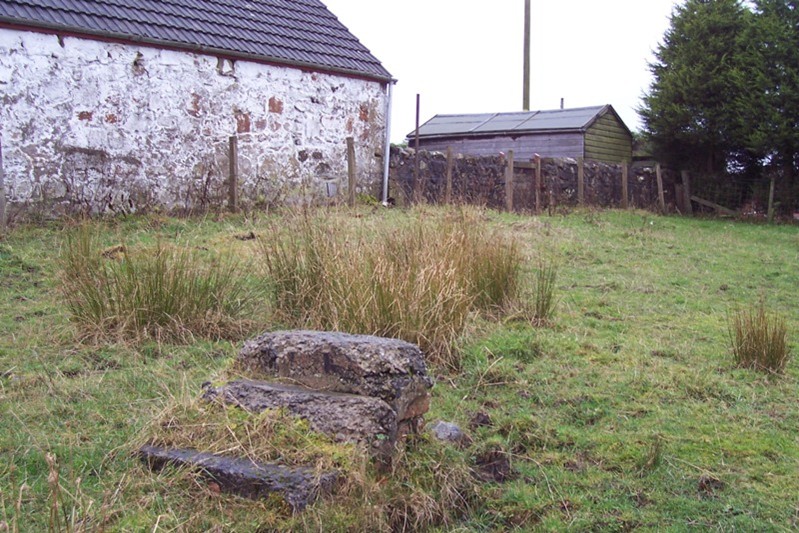
SMR 1679 / NS 8472 7278
Early in the Second World War a searchlight battery was established at Brownrigg at the west end of the village of Slamannan as part of the outer ring of Anti-Aircraft defences for Glasgow. It is probable that the regular army unit arrived in lorries that housed the searchlights and their generators, and initially lived in tents. They seem to have been part of the 57th Searchlight Regiment with other sections at Shotts, Murdostoun (near Cleland) and Bothwellhaugh. The NCO at Slamannan was called Dykes, a Jew. David Findlay was occasionally sent there. By July 1942 the unit was 423 Searchlight Battery RA and three Nissen huts were erected along the south side of the road, and probably the same number on the north side to the west of Brownrigg Cottage, with a canteen behind that dwelling. The road at this point was lined with tall hawthorn hedges dotted with trees and this helped hide the huts which were covered with camouflage netting. There was a large searchlight of about 5ft diameter and two smaller ones of 3ft. The lights were powered by large generators. In all there were probably 20-30 men manning the battery. The searchlight battery used a sound reflector to direct the search-beams. This device had four parabolic metal dishes mounted on a trailer. It could be pointed towards the source of the sound and amplified it. One night they used this before turning on the lights. To their surprise there was a German bomber caught in the beam when they did turn it on. On another night several members of the Slamannan Home Guard were watching from the Welfare Hall when a German plane was caught in the beam of a searchlight. A night fighter homed in on it and before long the enemy plane was spiralling to the ground, followed all the way by the beam of light until it passed beyond the horizon in the direction of Bathgate. The Guard cheered all the time.
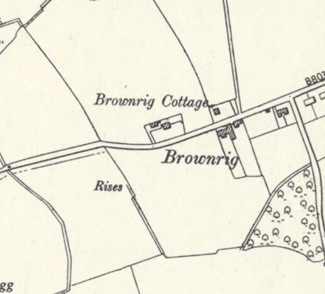
The soldiers were welcomed down in the village, where they bought items from the shops, and soon became a familiar sight. A Glaswegian bombardier from the site often visited the ice cream shop in Main Street. The soldiers mixed with the people of the village and attended social events like the dances and concerts in the church hall. The children, however, were told to stay away from the battery. Some of the young women from the village sat on the dyke talking to them. Many of the soldiers married local women. Joe McGarry, an Irishman, married a Harvey and lived in Limerigg. Johnny Kissoch, an Englishman, married a Penman. One of the men from the battery was an Englishman called Eddie who wore thick lenses in his glasses.
As a young teenager, Nancy Kerr would get up at 6am each day to deliver bread rolls on her bicycle from Menzie’s bakery next to the post office. The war provided her with an extra customer. Before she went anywhere else, she had to take six dozen rolls to the soldiers manning the searchlights at Brownrigg. Their main food supplies were brought in by lorry and a local woman was hired as a cook.
The searchlight always seemed to be one of the first to be turned on. The searchlight battery was busy on the nights of the Clydebank Blitz. For the first two nights the air raid sirens had sounded and the ARP, including the fire services had turned out. On the third night all was quiet and the ARP where pleased to be able to get some sleep. The inhabitants stood outside and watched the searchlights crossing the dark sky. Now, it was common practice for a plane in such a situation to jettison its cargo of bombs in order to gain speed to escape and thus avoid the night fighters that would soon be on its trail. Sure enough, down came several bombs. The locals heard a land mine explode at Barebreichs and along with most of Slamannan went to see the crater the following day. The villagers were agitated by the night’s events. Most of the residents in Blinkbonnie Terrace had left their homes in the night to seek temporary refuge elsewhere. Thereafter there were a few dissenting voices concerning the location of the searchlight. Why could it not have been located further out of the village?
The men of the battery had little to do with the Slamannan Home Guard, but there is a suggestion that they would have guarded the western entry into the village, leaving the Home Guard free to deploy along the other roads. Some of the Home Guard were annoyed that there should be a source of light, but no Anti-Aircraft gun, as they felt it left them a little vulnerable. However, the proximity of RAF Grangemouth meant that the deployment of guns in this area was avoided to allow the night fighters to do their work.
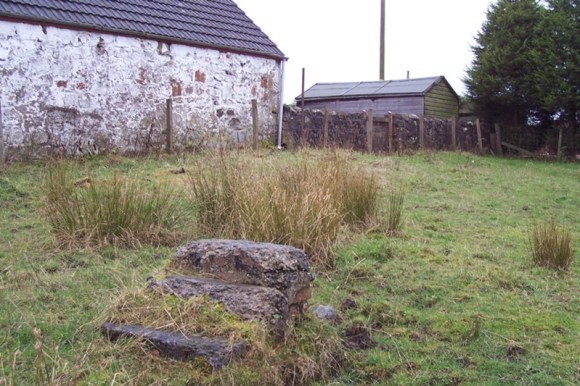
Behind Brownrigg Cottage are three concrete steps that once led to the entrance of a wooden hut, probably used as the canteen. The wall to the east of the searchlight battery at Brownrig, has glass set into the cement capping. This was reputedly to stop the local lasses sitting on the wall and talking to the battery crew.
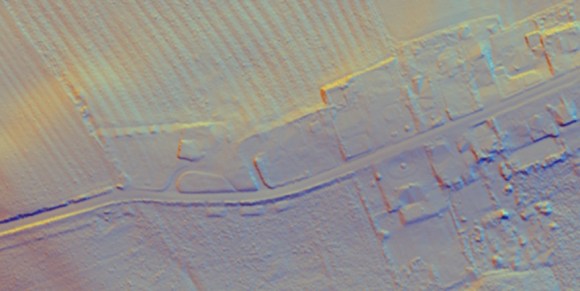
The brick and concrete platforms for three of the Nissen huts can still be seen along the south side of the road opposite to Brownrigg Cottage. The concrete floors are about 0.4m above the field level and show up well on a Lidar survey. On the other side of the road, the construction of a large bungalow for Dr Arthur in the 1960s and the landscaping of its grounds has removed the hut platforms there.
Sources
- MRS BECK nee Hay
- Mrs Beck was only 8 years old when the war began and lived at Binniehill until she was 10 years old. Her family then moved to Blinkbonny Terrace. Here they were quite close to the searchlight battery at the west end of the village. There were two searchlights, though they were not used frequently. Four Nissen huts at the battery provided accommodation for the unit stationed there. Many of them married local women. Joe McGarry, an Irishman, married Harvey and lived in Limerigg. Johnny Kissoch, an Englishman, married a Penman.
- [WWII A1]
- HECTOR MAXWELL
- The Home Guard had nothing to do with the soldiers at the searchlight battery at Brownrigg. Here there were six or so Nissen huts, a large searchlight and two or three smaller ones. The lights were powered by large generators. In all there were probably 50 to 60 men manning the battery. The villagers too ignored the battery. The soldiers were welcomed down in the village, where they bought items from the shops. The searchlights may have drawn the enemy bombers’ attention to the area, as several bombs were dropped nearby.
- [WWII B1]
- CHARLIE WHYTE
- It is possible that the searchlights at Slamannan were moved a little away from the village as a result of this incident.
- [B1]
- DAVID FINDLAY
- Rations were delivered by lorry each day in a metal box. Meat ration was about 4oz per man, and this was roughly calculated and cut off for them. Drinking water arrived in petrol cans. Dried fruit was easy enough to boil up. Milk was obtained, probably from May Coral.
- Other units of the 57th Searchlight Regiment went to Slamannan, Shotts and Murdostoun (near Cleland) and Bothwellhaugh. The NCO at Slamannan was called Dykes, a Jew. David was occasionally sent there.
- During the first week of the war, during the daylight, a German Heinkel 111 flew over the battery. David was keen to fire the Lewis gun at it, but was told not to waste ammunition. An air raid trench was dug in the field beside the farm. This was simply an open slit trench and it soon filled up with water. They soon settled down into a routine and were only required to turn on the searchlight once or twice. It was powered by the motor on the lorry and this was regularly maintained. During the winter months it would be turned on for ten or so minutes each hour. At Bothwellhaugh they had a Lister generator next to a dwelling, and so this procedure must have been annoying for the occupants. At night seven men would sleep, leaving the remainder for the air watch. Troop officer Lieutenant Scott of the HQ staff was responsible for six or so detachments and called periodically to see that all was well. HQ was at Gartshore House in Kirkintilloch.
- The whole of that first winter was spent in the tents.
- [C1]
- JOHN MATTHEWS
- A searchlight battery consisting of two 3ft lights and one 5ft light was located at the west end of the village where Ian Arthur’s house now stands. It was part of the outer ring of AA defences for Glasgow and was manned by a regular army unit (probably ten men from the Royal Artillery) billeted in Nissen huts on the site. It was busy on the nights of the Clydebank Blitz. For the first two nights the air raid sirens had sounded and the ARP, including the fire services had turned out. On the third night all was quiet and the ARP were pleased to be able to get some sleep. The searchlight battery used a sound reflector to direct the search-beams. This device had four parabolic metal dishes mounted on a trailer. It could be pointed towards the source of the sound and amplified it. One night they used this before turning on the lights. To their surprise there was a German bomber caught in the beam when they did turn it on. Now, it was common practice for a plane in such a situation to jettison its cargo of bombs in order to gain speed to escape and thus avoid the night fighters that would soon be on its trail. Sure enough, down came several bombs.
- [G1]
- MATHEW PENMAN
- There was also a searchlight battery at Brownrigg (behind Dr Arthur’s house). The men who manned that were part of the regular army and lived in wooden huts and tents adjacent to the searchlights. The site was partially wooded, there being not as many houses in that area at the time. The structures could therefore be easily camouflaged with netting. The children were told to stay away from the site.
- [H1]
- two searchlights of different sizes at Blinkbonny.
- [Tam Menzies, 1 Manse Place, Slamannan] – H1
- TOM GARDINER
- There was also a searchlight battery out at Blinkbonny (Dr Arthur’s house is there now). Some of the HG were annoyed that there should be a light, but no AA gun, as they felt it left them a little vulnerable. The battery was operated by about 20 men, who lived in a couple of Nissen huts.
- [H1]
- ISABEL PEARSON
- There was a searchlight battery at Brownrig. The soldiers from the battery mixed with the Slamannan people and some married locally. Joe McGarry married a Slamannan woman [see Linda Grant, Mosscastle Road].
- [L1]
- There were army barracks for the searchlight battery at the top of Brownrig. Nissen huts occupied the area of Dr Arthur’s house. Tom McRobie, 1 Blinkbonny Terrace.
- [L1]
- JEAN MILLER nee FOWLER
- The black-out did not present too many problems and people became accustomed to it. Torches were essential, though it could be difficult to get batteries. By 1941 Jean and her family had moved to Blinkbonny Terrace. On the nights of the Clydebank Blitz they stood outside and watched the searchlights crossing the dark sky. They heard the land mine explode at Barebreichs and along with most of Slamannan went to see the crater the following day. Many believed that the bombs in the area were a consequence of a searchlight battery being situated at Brownrig. There were about 20 to 30 soldiers billeted in Nissen huts on either side of the main road there. A Glaswegian bombardier form the site often visited the ice cream shop in Main Street.
- [L1]
- CHARLES FINLAY
- There was a searchlight battery at Brownrig manned by 20-30 soldiers who stayed in Nissen huts at the side of it. The soldiers mixed with the people of the village and attended social events like the dances and concerts in the church hall. Mrs Arthur used the Masonic Hall for dance after 10pm to raise money for the Red Cross. One of the men from the battery was an Englishman called Eddie who wore thick lenses in his glasses. The searchlight always seemed to be one of the first to be turned on. One night Charlie and his fellow Home Guards were watching from the Welfare Hall when a German plane was caught in the beam of a searchlight. A night fighter homed in on it and before long the enemy plane was spiralling to the ground, followed all the way by the beam of light until it passed beyond the horizon in the direction of Bathgate. The Guard cheered all the time. Shortly after the Slamannan searchlight was turned on the sound of the AA guns could often be heard in the distance.
- On the first night of the Clydebank Blitz CO Ewan went round on his motor bike and brought extra men out on duty. However, they could only watch events and listen to the overhead drone of the German bombers. The searchlight was on long before the Guard got to their headquarters.
- Alice Kerr worked as a farm servant at Hillend Farm Slamannan. Her brother Robert (known as Rudy) was in the Home Guard. On the night of the Clydebank Blitz Alice’s mother heard four bombs whistling towards them followed by four thuds, but there were only two explosions. The first of these went off at Barebreichs, half on the main Falkirk road and half in the field. Within minutes motor cyclists from the searchlight battery were at the bomb site. The road was closed for a day or so afterwards and traffic had to go round via Shieldhill. ARP wardens saw to the necessary arrangement. The second thud was at next to Hillend and the bomb exploded soon afterwards sending moss into the farmyard. The third exploded at Shielknowes and the last detonated over towards Fannyside. The ARP spoke to Alice’s mother and instigated a search for the unexploded bomb, but found nothing. Mrs Kerr must have been mistaken. The next day at about 10 o’clock in the morning Alice was sent with some food and drink to the fields where the farmer and some labourers were planting tatties. As she passed by the edge of the woods she heard an explosion and looking round saw a wall of soil coming towards her. Jock Berm, the postman, had been on his way to the farm with letters and had just passed the group of workers. He had seen Alice walking towards them and witnessed the explosion. “Oh dear, Alice is dead!” he yelled. Fortunately, Alice had ducked behind a tree and escaped injury. The bomb from the night before had lain unexploded until then. It was thought that Alice might have triggered it off by walking so close to it. She was 22 years old at the time.
- The villagers were agitated by the night’s events. Most of the residents in Blinkbonnie Terrace had left their homes in the night to seek temporary refuge elsewhere. Thereafter there were a few dissenting voices concerning the location of the searchlight. Why could it not have been located further out of the village?
- [P1]
- NANCY MCCOMB nee KERR
- Before she had left school, Nancy got a job with Menzie the baker. He had a small bakery next to the post office and Mrs Menzie saw to the sales. Nancy would get up at 6am to deliver bread rolls round the village on her bicycle. Even after the war had started she continued to do this delivery round. Now there was an extra customer. Before she went anywhere else, she had to take six dozen rolls to the soldiers manning the searchlights at Brownrig. There were about 50 men living in six or so Nissen huts with wooden ends.
- [S1]
- BARNEY SCHONEWILLE
- There was a searchlight battery at Brownrig manned by the army, billeted in Nissen huts on the site. There was one master beam and two smaller ones. The men came from all over Britain and included English men. Some of the men married local girls.
- [U1]
- PETER MORGAN
- The wall to the east of the searchlight battery at Brownrig, Slamannan, has glass set into the cement capping. This was reputedly to stop the local lasses sitting on the wall and talking to the battery crew.
- [V1]
- There was a searchlight battery at Brownrig, manned by a company of around 20 men living on the site in Nissen huts. Some of the young women from the village sat on the dyke talking to them.
- [Dr Ian Arthur, Brownrig, Slamannan] – [F2]
- TOM MCCRACKEN.
- The men from the searchlight battery at Brownrig presumably guarded that road. Their camp occupied both sides of the road. [K2]
- Brownrigg, Slamannan 423 Searchlight Battery RA (17.7.1942)
- [M2]
 Falkirk Local History Society