
SMR 123 / NS 9440 7876
A small cemetery was discovered in 1963 immediately before the construction of the M9 motorway. It lay inside the annexe to the Roman temporary camp at Kerse Hill. The motorway now passes between the Polmont-Linlithgow Road and Millhall Reservoir and removed the annexe and the burials.
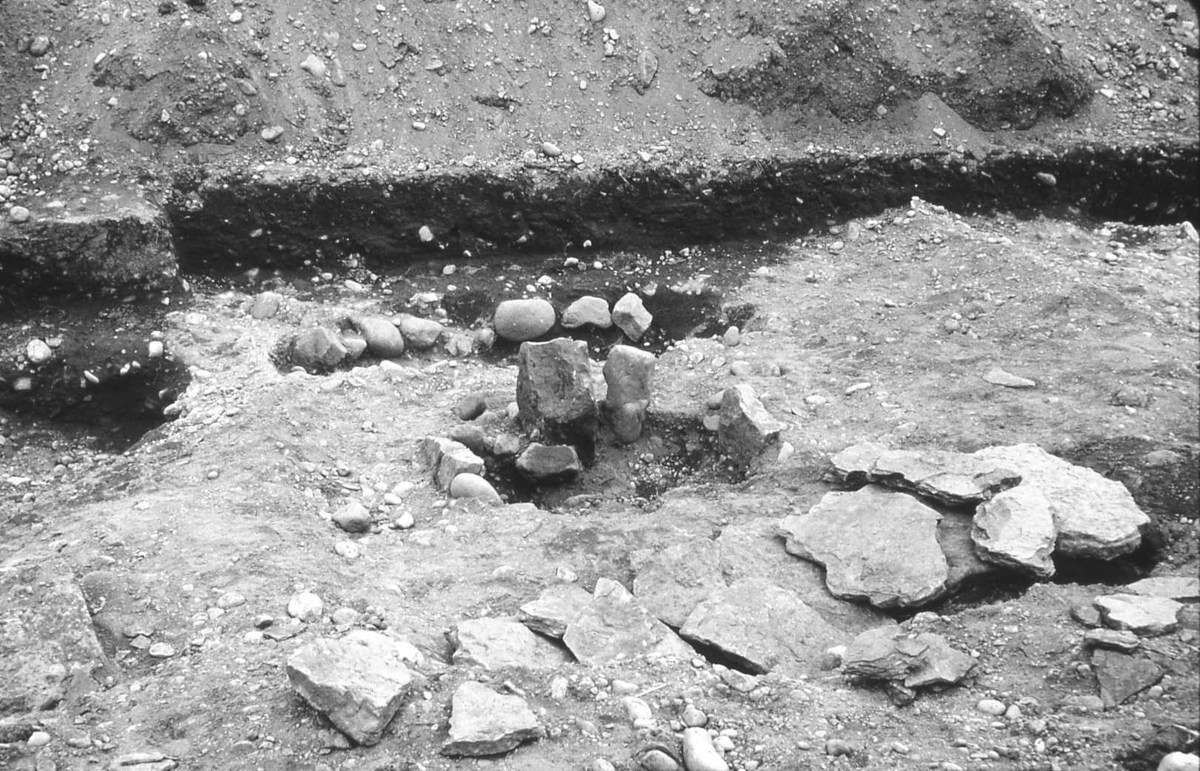
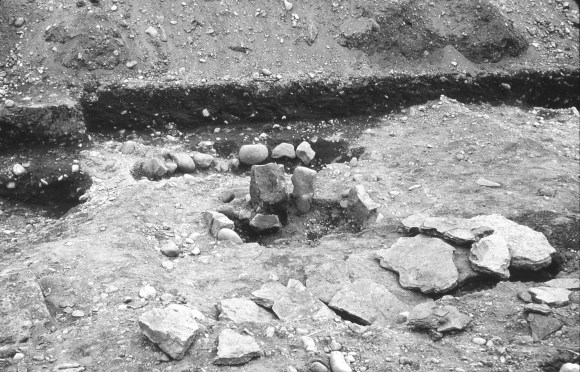
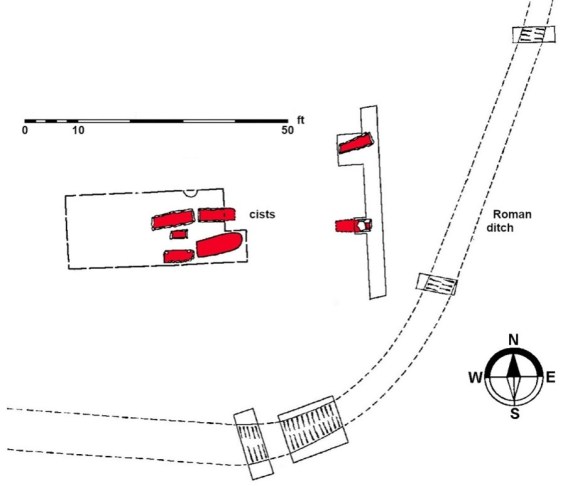
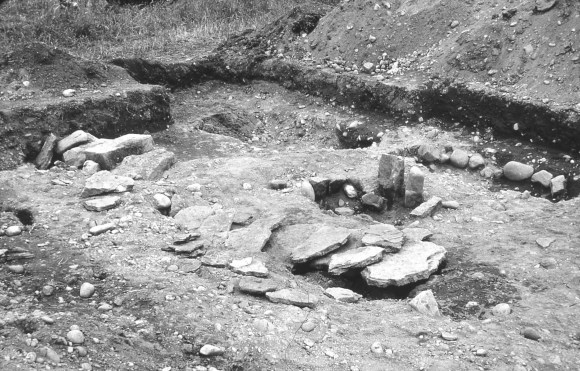
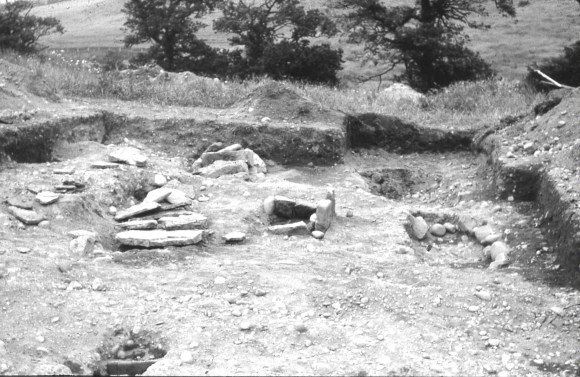
The limited archaeological excavation was undertaken to determine the line of the annexe ditch in advance of the motorway construction and did not examine the limits of the small cemetery. Seven graves and a pit were revealed, though in only two of the graves were traces of bones found. Four of the graves were lined with rounded cobbles and small slabs of split sandstone had been placed on the base of at least three. Some of the stone was dressed and must have been derived from an earlier building. The cists were of the “long” variety with the exception of one which was short and may have been for a child. Such long cists are usually 7th-10th century in date.
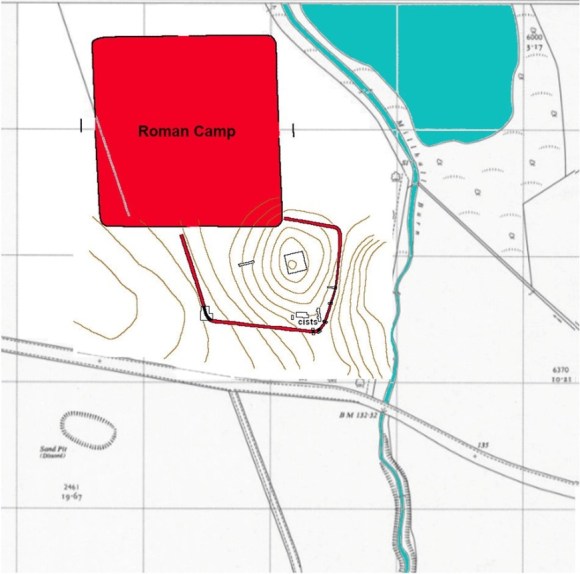
The site was on a small knoll on the west side of the Gilson Burn as it approaches Millhall. Here there were several natural springs which attracted the attention of the 19th century builders of Millhall Reservoir and which may have given rise to the area being called “Polmont” – the pool by the hill. On the flatter ground to the north the Romans constructed a temporary camp in the second century which can be associated with the construction of the Antonine Wall.
They enclosed the knoll within an annexe. Although all of the graves discovered lay within this enclosure that is due to the fact that the excavation trenches were confined to that area. It is not known if the old ditch was still open or if it formed the boundary of the graveyard. That is certainly a possibility as elsewhere there is evidence that most Roman camp ditches were left open upon abandonment. At Kintore it was suggested by the excavator that the Roman camp was avoided for residential settlement for some considerable time after the Roman withdrawal and it was hinted that the reason for that may have been that the Roman army was in the habit of reusing the same sites over and over again on its campaigns. It is therefore likely that the ditch was still recognisable when the cemetery was initiated.
The general date of such cists, the lack of grave goods, and their west-east alignment, has suggested to many that they are early Christian. This finds some support in the presence of such a cemetery at Ingliston (near Edinburgh Airport) of a cross carved on the Cat Stone. It is therefore possible that the burial ground at Polmont is associated with the Chapel of the Blessed Virgin Mary where the barony court of Abbotskerse met in 1527 to discuss the maintenance of the nearby mill complex at Millhall (Reid 1996, 44). At Castlehill, Blackness, the early medieval Chapel of St Ninian lay within an earlier burial ground which included short cists of the Bronze Age and later long cists.
The obvious location for such a chapel at Polmont would have been the summit of Kerse Hill, but the excavation trench there found no features. However, it is evident that the top of the hill had been truncated in antiquity. The Roman ditch diminished in size to the north as a consequence of this action, and even the cists that were found on the lower slopes were very close to the surface. The old church building is also the obvious source for the dressed stone which, according to the excavation report, was not of Roman style (McCord & Tait 1978, 368).
When it came to the creation of new parish in the early 18th century the Polmont area was considered to be the obvious geographic location for the new church building due to its centrality, though no mention was made at that time of the pre-Reformation or Papist church.
Further long cist burials have been found just 1.2km to the east-south-east at Avonglen (SMR 121).
Bibliography
| Bailey, G.B. | 1996 | ‘The Graveyards of the Falkirk District: Part I,’ Calatria 9, 1-34. |
| Discovery and Excavation in Scotland | 1963 | Council for Scottish Archaeology; p59 |
| McCord, N. & Tait, J. | 1978 | Excavations at Kerse, East Polmont, Stirlingshire, July 1963,’ Proc Soc Antiq Scot (109), (368-372). |
| Reid, J. | 1996 | ‘The Barony of Abbotskerse,’ Calatria 10, 39-52. |
 Falkirk Local History Society