
SMR 93 / NS 963 758
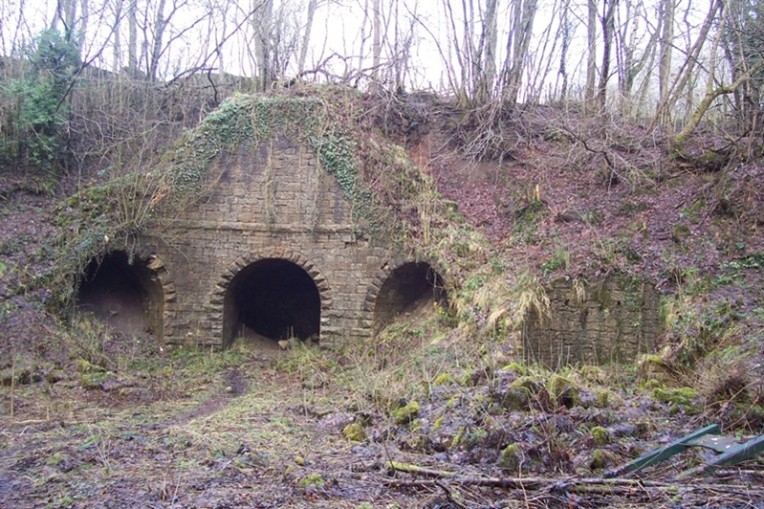
On the Muiravonside Estate conditions for the location of a draw kiln for producing lime seem to have been favourable. Coal was available on the estate, and the Castlecary Limestone outcropped in a seam just over 4ft thick on the banks of the River Avon adjacent to the Union Canal. A pair of large kiln pots was accordingly constructed against the natural hillside near to the limestone seam.
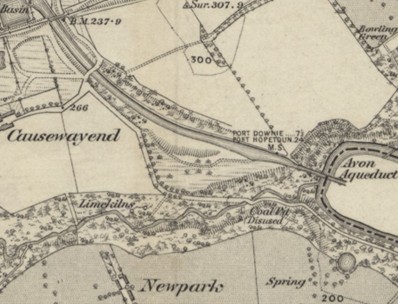
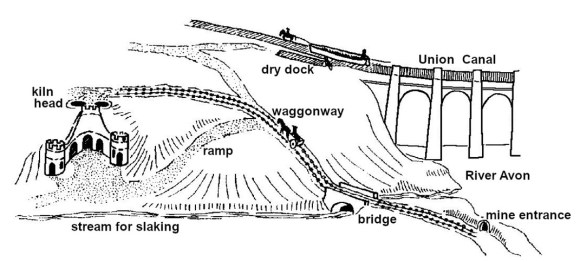
The capacity of the pots clearly indicates that it was intended to market the produce over a large area. The scale of the operation is also indicated by the construction of a wagon way from the mine adit to the kiln-head. The massive stone blocks bored with holes for the bolting-down of the chairs can still be seen along this route and were almost certainly salvaged from the Slamannan Railway. Firhill basin on the canal is close by and the lime was probably exported to Edinburgh for the construction of the new town there.
The actual date of construction of these kilns is unknown. They do not appear on an estate plan of 1787 and are noted on the first edition of the Ordnance Survey map, produced in the 1860s, as disused. It is not unreasonable to assume that they postdate the construction of the Union Canal in 1822, and the waggonway may suggest a slightly later date still.
They may thus, in all probability, be associated with Charles Stirling who acquired the estate in 1835 and is thought to have promoted the improved agricultural techniques of the age. He is known to have dabbled with sub-surface drainage. This connection would seem to be confirmed by a note in a mineral bore log of c1854 which states that “Mr Stirling” had found a seam of limestone just over 2 feet thick at the Avon aqueduct (N.L.S. dep 240, No 26).
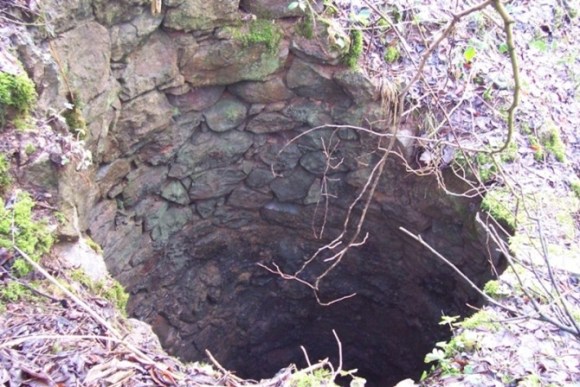
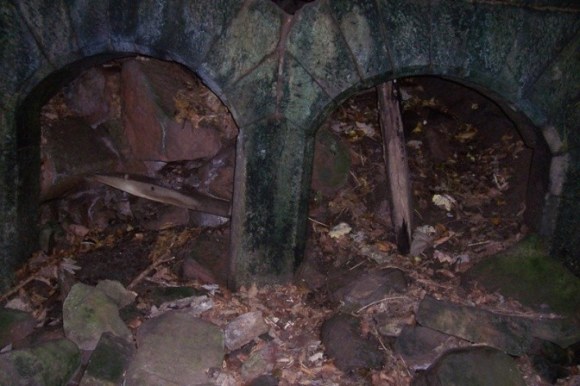
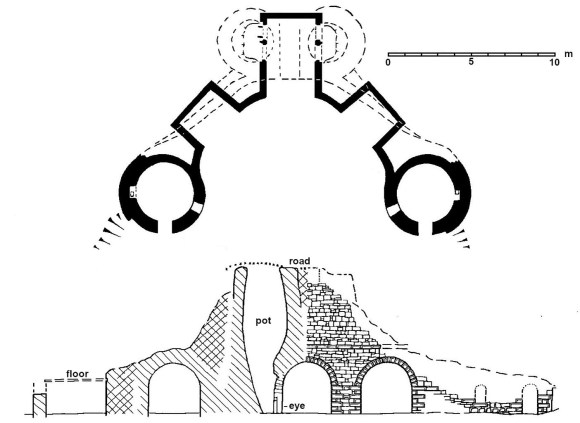
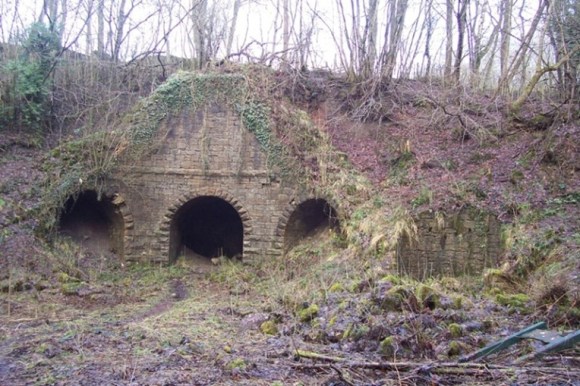
The reddened earth at the kiln head and the vitrified stone interiors of the pots show that they were extensively used during their comparatively short working lives. Financial difficulties connected with the estate and the reduced demand for lime seen to have shortened their use. In their heyday they would have been highly conspicuous at night. The limekilns at Muiravonside are unusually ornate, to suit their setting on the edge of a gentleman’s estate. The central chamber is a common feature of draw kilns and was here treated with a finely dressed stone arch. Additional arches on either side of this created a semicircular forecourt. By this arrangement the side arches buttressed the central block and produce a pleasing view. These secondary arches had blank end walls, now sadly tumbled, and could have been used for storage. Had expansion of the enterprise been considered they could have been adapted as chambers to new pots. On either side of these arches is a circular room containing a fireplace and window, and having a door opening away from the kilns. These are well constructed of large slabs of masonry, contemporary with the kilns themselves. In the walls of these rooms, at a height of 2m above the ground-floor level, can be seen the holes for timber joists for an upper storey.
Bibliography
| Bailey, G.B | 1992 | ‘Lime and Limekilns in the Falkirk District.’ Calatria 3, 63-88. |
 Falkirk Local History Society