
SMR 501 / NS 8561 7340
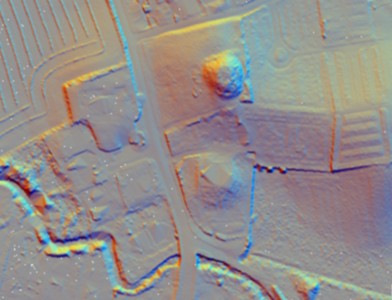
The Old Statistical Account of the parish written in the 1790s states that :
“there were anciently here, 2 cones of earth, about 50 yards distant from one another, which are supposed to have been raised as monuments of peace, like the 2 at Dunipace; the one of them still stands, and is evidently artificial; the other was levelled, and the church of St. Laurence built upon it”.
The minister must have been reporting a tradition as well as making his own judgement of the topographical setting. At the time the old church was still standing and the hill upon which it stood was more prominent than now, having been further truncated by the rebuilding of the church in 1810. This second mound would have been used as part of the bailey of the castle and its former enclosure is reflected in the almost oval wall of the later churchyard. A similar situation occurred at Dunipace.
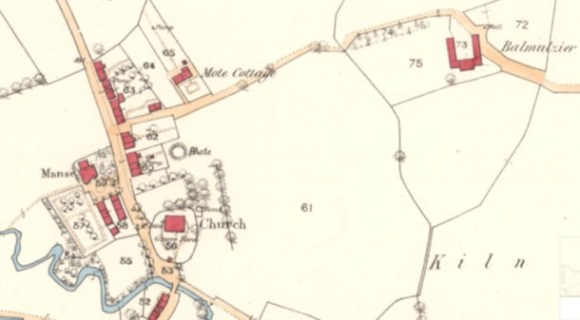
Such baileys held the ancillary buildings of the castle – such as kitchens, stables, workshops, housing of the retinue, and probably a small chapel.
Bibliography
Ordnance Survey Archaeology Sheet
“A mound, similar to the ‘Mote’ at Slamannan [Stirl. 35 NW 1 – supposed to have been a justiciary court seat] was levelled in 1810 when the parish church was built on its site. The parish church stands on a small mound; but this appears to be wholly natural.”
New Statistical Account
“Castle-hill; and a little to the eastward of this hill, there is another rising ground where there are still some remains of a trench, and which goes by the name of Kill-hills, because of the numbers which were supposed to have been slain there. Besides, there were adjacent to these, two cones of earth about forty yards separate, which are supposed to have been raised as monuments of peace, like the two at Dunipace. One of these still remain, and is evidently artificial: the other was levelled, and the church of St Lawrence built upon it; the former still goes by the name of the moat.” [p.274]
 Falkirk Local History Society