
SMR 597 / NS 8565 7308
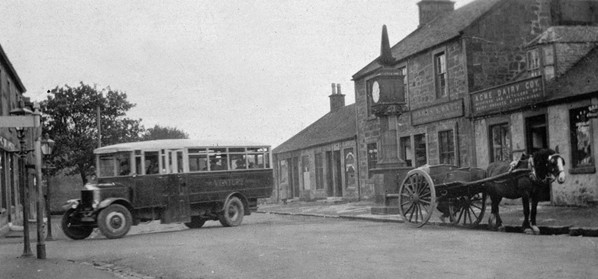
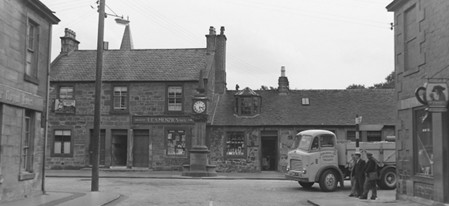
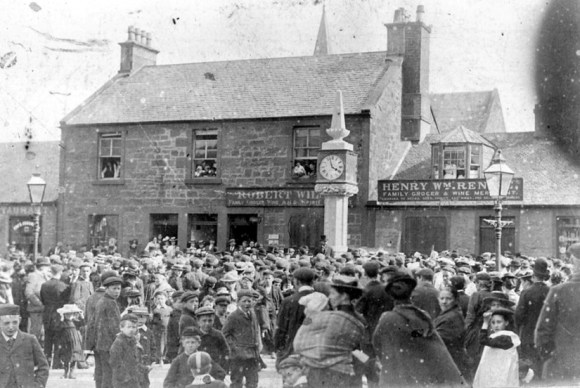
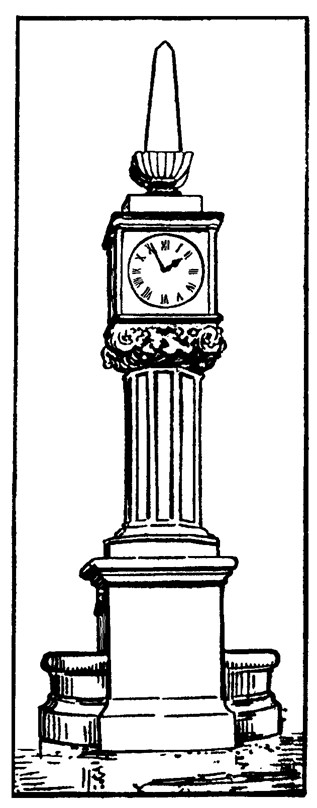
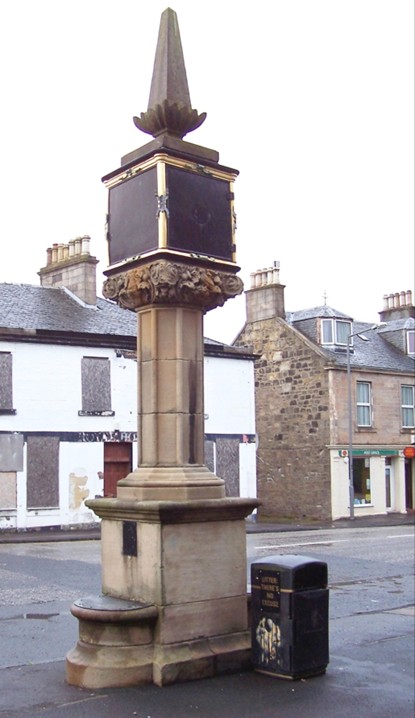
Erected at Slamannan Cross facing Main St in 1902 as the George Ralston Peddie Waddell Memorial, this monument takes the form of a combined clock and ‘fountain.’ The clock rests on a fluted column placed between the two apsidal drinking basins, and is topped by an obelisk finial reaching to a height of 10.7m (35ft). At the base of the column is a square plinth bearing an inscription on its north face fronting the road which reads:
“ERECTED/ BY THE TENANTRY AND/ INHABITANTS OF SLAMANNAN/ AND NEIGHBOURHOOD/ IN MEMORY/ OF THE/ PATRIOTIC DEVOTION/ OF/ GEORGE RALSTON PEDDIE WADDELL/ ONLY SON OF/ MR AND MRS PEDDIE WADDELL OF BALQUHATASTONE/ WHO VOLUNTEERED FOR/ ACTIVE SERVICE IN SOUTH AFRICA/ WITH THE/ LOTHIANS AND BERWICKSHIRE IMPERIAL YOEMANRY/ AND/ AFTER THE HARDSHIPS OF A YEAR’S CAMPAIGN,/ DIED/ AT GERMISTON TRANSVAAL/ ON 8TH FEBRUARY 1901 AGED 26 YEARS./ AMIABLE GENEROUS ESTEEMED BY ALL/ HE FREELY GAVE HIS SERVICES AND LIFE/ IN THE CAUSE OF THE COUNTRY THAT HE LOVED.”
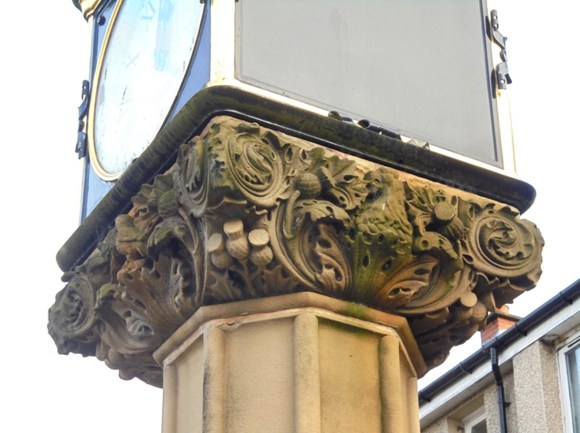
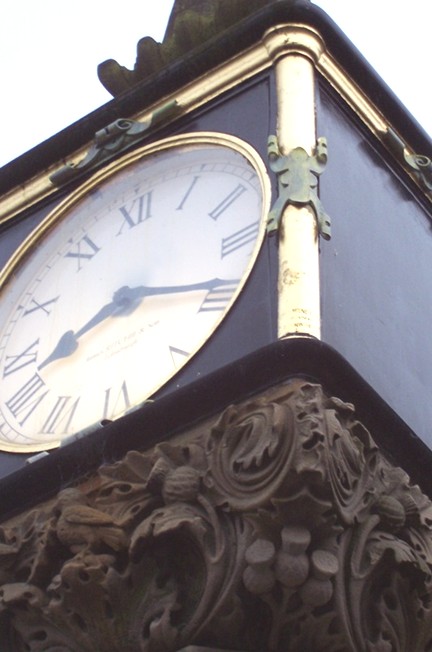
Between the clock and the column is an ornate capital of thistles and acanthus leaves. The centre of the west and east sides of the capital carry a griffin head, with a bird on the two remaining faces. A cubical metal clock case rests on the capital, with a slender column on each corner clasped by a frog-shaped bracket. Today the clock panels are painted black and the frame gold. The name of its Edinburgh manufacturer is stamped on the bottom of its NW corner.
Each water basin had a water outlet above it on the sides of the plinth. These seem to have taken the form of bronze plaques bearing a lion’s head in low relief, but are now covered by plain metal panels. As they were located a short height above the troughs they could be said to be “fountains.” At the time that the memorial was unveiled the drinking basins were dry and it was only in the following year, when water pipes were installed in the village, that it was connected to the Falkirk mains supplied from the Buckie Burn in the Denny Hills. The 14ins pipes were laid by a contractor for the County Council and were completed in May 1903. In the short interval before the water was connected the memorial seems to have been enclosed in an iron railing.
The designer was George Washington Browne, Edinburgh, who was also responsible for the British Linen Banks in Lumley Street, Grangemouth, and Vicar Street, Falkirk; the war memorial at Larbert; and Bo’ness Town Hall. The sculptor was Joseph Hayes of Edinburgh.
The arrangements connected with the erection of the memorial were carried through by a committee, of which James Smith was chairman, and James Liddell, jr., Binniehill House, secretary and treasurer. The public raised £70 of that sum while the balance was given by his father. It was unveiled by George Ure of Wheatlands, Bonnybridge on 24 July 1902.
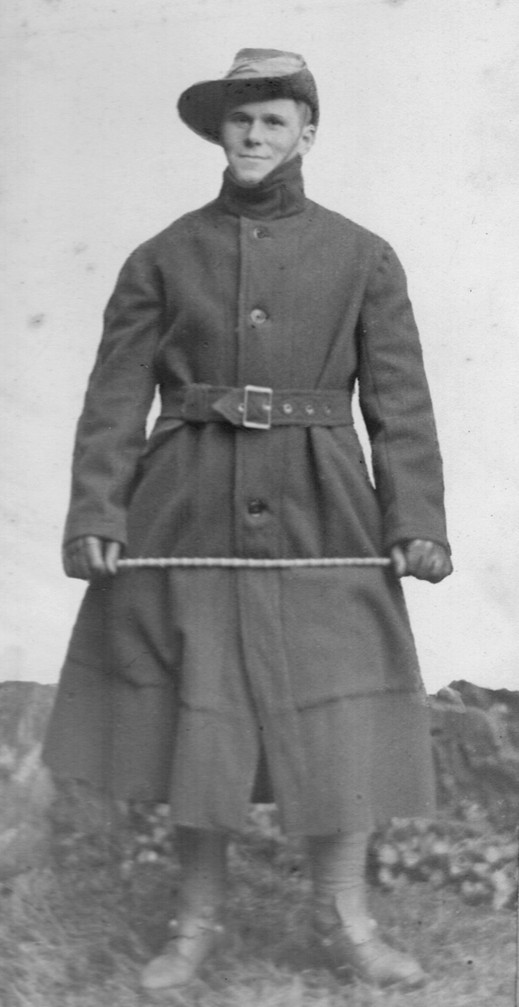
George Ralston Peddie Waddell was the only son of Mr A. Peddie Waddell of Balquhatstone.
In September 1968 the old buildings behind the memorial were demolished and it was moved to the Manse Grounds. In November of that year it was restored to its original site at the Cross.
Bibliography
| Waugh, J. | 1977 | Slamannan Parish through the Changing Years [p.21.] (quoted at Note 1 below) |
| Slamannan History Group | 1990 | Slamannan and Limerigg: Times to Remember. |
| Bailey, G.B. | 1994 | ‘Battle Monuments and War Memorials,’ Calatria 6, 1-60 [55-62] |
| Jaques, R. | 2001 | Falkirk and District, an Illustrated Architectural Guide [110] (quoted at Note 2 below) |
| The Falkirk Herald | Articles listed below. |
Notes:
- Slamannan Parish through the Changing Years [p.21.]
“Notes – Slamannan men were in the Boer War (1899-1902). When the local army reserves were called up the people rallied round the families who had been left at home without a weekly income. A committee was formed to raise funds to give these families a sufficient weekly sum of money to keep them free from destitution. Men from the district lost their lives in South Africa. One of them was George Peddie Waddell who was an officer in the Imperial Yeomanry. He died in South Africa while serving in the Boer War. The Slamannan people decided to erect a Memorial to him. A Memorial Clock and Drinking Fountain was erected at the Cross at a cost of £150. The public raised £70 of that sum while the balance was given by his father, Mr. Peddie Waddell. That Memorial remained in that position until September, 1968 when it was moved to the Manse Grounds. In November of that year it was restored to its original site at the Cross.” - Falkirk and District, an Illustrated Architectural Guide [110]
“Waddell Monument, 1902, JM Dick Peddie, Joseph Hayes, Sculptor. Ornate column, with exquisitely carved capital of birds in foliage, bearing clock by Barrie’s of Edinburgh and obelisk crown. A plaque records: In memory of George Ralston Peddie Waddle of Balquhatstone, died 1901, in the Transvaal, aged 26 years.”
Falkirk Herald 16 February 1901, 5
We deeply regret to announce the death at Germiston, South Africa, of Trooper George Ralston Peddie Waddell, 19th Company Imperial Yeomanry. The only son of Mr and Mrs Peddie Waddell of Balquhatstone, Stirlingshire, he was educated at Glenalmond and New College, Oxford, where he took the degree of B.A. Endowed with exceptional physical strength, he was always devoted to athletic exercises of all kinds, and as a half-back player at Rugby football made a name for himself second to few in Scotland. George Peddie Waddell had finished serving his apprenticeship as a W.S. when he determined to join the 19th (Lothians and Berwickshire) Company of the Imperial Yeomanry on its formation rather more than once at Bisley with the Glenalmond College eight – he had no difficulty on that score; and although not a practised horseman, he succeeded, by an exercise of the pluck and endurance which he brought to bear on everything on which his heart was set, in qualifying within a few days for passing the necessary riding tests. He left for the front at the end of last February, and in South Africa had his full share of hard work and hard fighting – ill at times, hungry and ragged with the rest, but uncomplaining always. After taking part in severe fighting in and around Frederiskstad last autumn, he was invalided and given the chance of coming home, but he chose rather to go into hospital at Johannesburg in the hope of ultimately seeing the war through with his company. Last week there came a letter from him saying that he was convalescent, and looking forward to rejoining his men; on the following day a telegram announced his dangerous illness of enteric fever, and on the 8th inst, he died. Frank, fearless, generous, singularly attractive in all his ways, his friends were all who knew him; and not only to them, but to many others round Balquhatstone and elsewhere, to whom he was but a familiar figure – an embodiment of youthful health, strength, and spirits – his death brings grief of a deep personal loss.
Falkirk Herald 26 July 1902
“THE GEORGE RALSTON PEDDIE WADDELL MEMORIAL. We give an illustration of the handsome drinking fountain and trough, erected at the Cross, Slamannan, in memory of the late Mr George Ralston Peddie Waddell, only son of Mr A. Peddie Waddell of Balquhatston, which was publicly unveiled on Thursday afternoon of last week by Mr Geo. Ure of Wheatlands. The monument is an artistic one, and it will be a useful ornament to the village. It stands about 35 feet high, and near the top, facing the front street, is a clock by Mr Barrie, Edinburgh, surmounted by a finely executed stone pillar. There are two drinking fountains, with basins – one at each side – to be used when the new water supply is introduced, and on the stone frontage there is the following inscription :- “Erected by the tenantry and inhabitants of Slamannan and neighbourhood in memory of the patriotic devotion of George Peddie Waddell, only son of Mr and Mrs Peddie Waddell of Balquhatston, who volunteered for active service in South Africa with the Lothians and Berwickshire Imperial Yoemanry, and after the hardships of a year’s campaign, died at Germiston, Transvaal, on 8th February, 1901, aged 26 years. Amiable, generous, esteemed by all, he freely gave his services and life in the cause of the country that he loved.” The designer was Mr. G. Washington Browne, Edinburgh; the sculptor was Mr Hayes, Edinburgh; and the arrangements connected with the erection of the memorial were carried through by a committee, of which Mr James Smith was chairman, and Mr James Liddell, jr., Binniehill House, secondary and treasurer.”
Falkirk Herald 4 March 1950, 6 & 16 September 1950, 7.
“Slamannan Clock – Once more the clock at Slamannan cross refuses to function, the hands having stuck at ten minutes past nine for several weeks. Attempts made to have repairs effected have met with no success. Apart from being a nuisance to local inhabitants, it is also a trap for the unwary visitor.
Slamannan memorial Clock came in for much discussion and it was finally agreed to obtain a report from the makers as it its condition with a view to repairs”.
 Falkirk Local History Society