
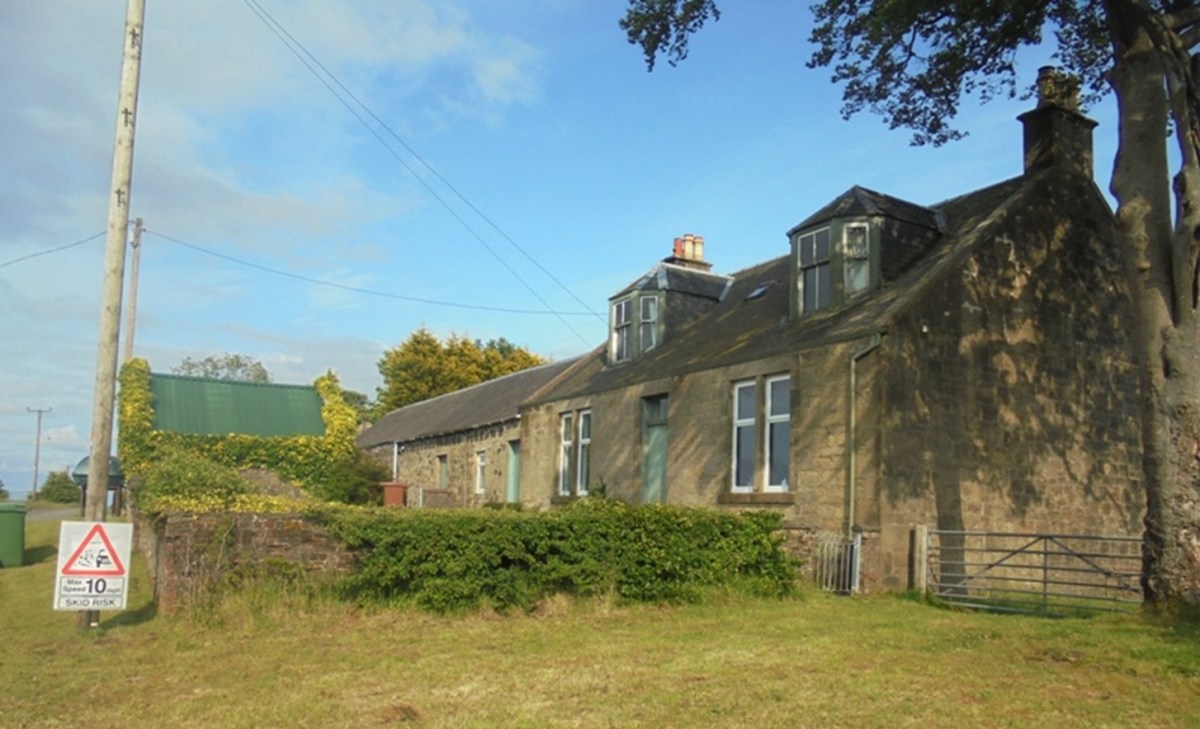
SMR 1392 / NS 8790 7005
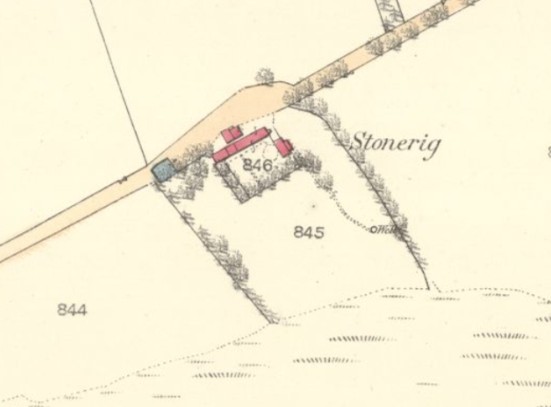
The farm of Stanerig sits on the ridge to the south-east of the Black Loch. It is typical of many of the farm buildings on the Slamannan plateau in having started life as a short narrow building, subsequently extended to the east and the west. The early building can be distinguished by the larger undressed field boulders which protrude from the basal course. The upper courses were of small cobbles, probably derived from field clearance, along and some quarried sandstone. The doorways were once moulded but are now heavily worn. It is here that the RCAHMS noted a lintel
“heavily weathered. The lintel appears to have borne initials and a date, but today the initials are illegible and the date has nearly disappeared. It is probably to be read as 1694, the last two digits being fairly clear.”
These are now so badly worn as to be indistinct.
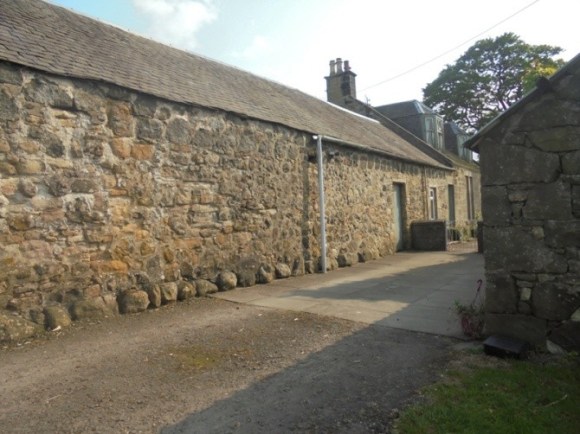
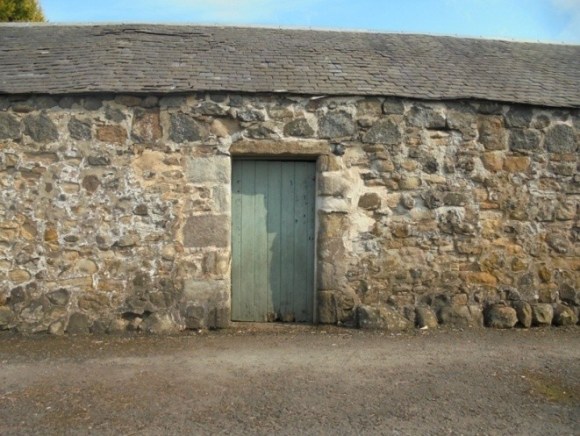
This range of rooms has been heightened at a subsequent date using faced whinstone blocks. Separate and to the east was a barn. It was set back a little and ran perpendicular to the main range. It was probably from here that the dated whinstone of 1720 derives, but was subsequently placed in the rebuilt east wing.
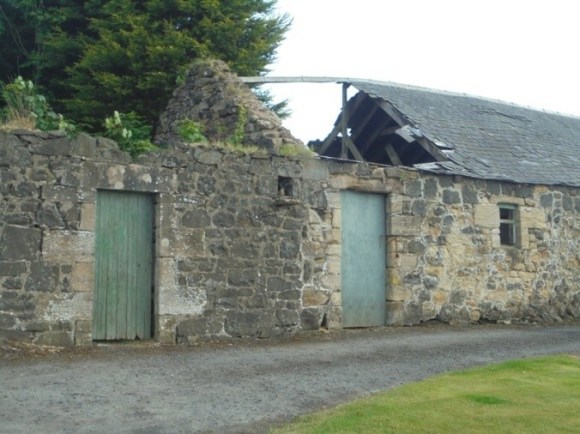
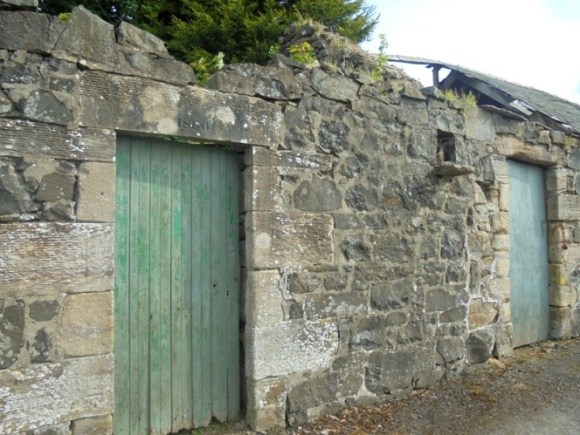
This wing was rebuilt in 1860 (date on another door lintel) and does not appear on the Ordnance Survey map surveyed that year. It was constructed with dressed whinstone with large blocks of dressed sandstone used for the margins and lintels. The northernmost opening on the east front has a broad low arched entrance for a cart.
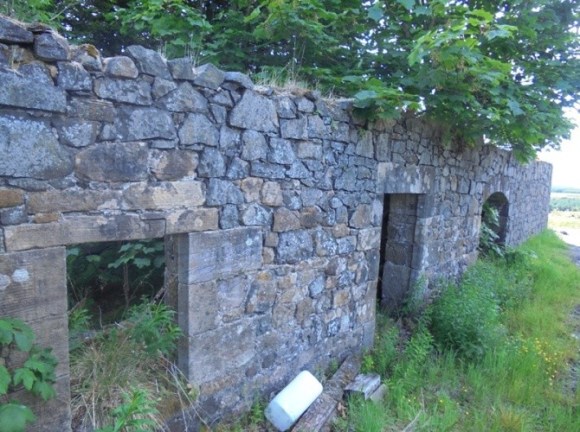
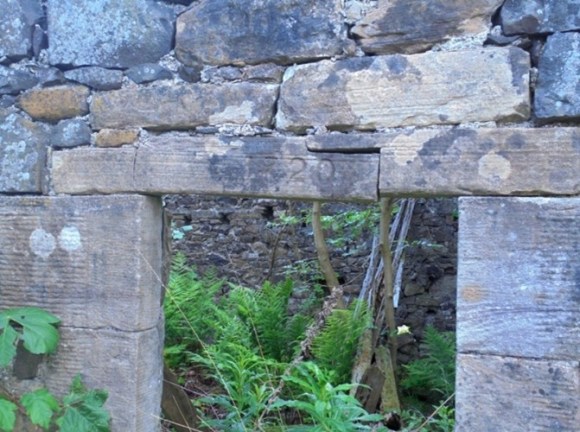
The “1720” lintel is now broken.
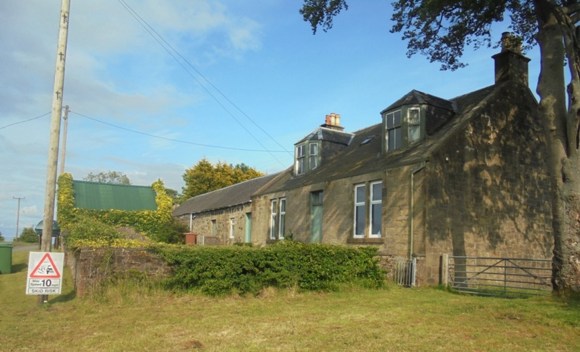
It may have been shortly afterwards that the west end of the main range was rebuilt as a single storey villa.
Bibliography
| RCAHMS | 1963 | Stirlingshire: An Inventory of the Ancient Monuments. (Quoted below) |
- “Old Building, Stoneridge. The doorway that gives entry to what is now the scullery of Stoneridge farmhouse has widely chamfered jambs and an inscribed lintel, all heavily weathered. The lintel appears to have borne initials and a date, but today the initials are illegible and the date has nearly disappeared. It is probably to be read as 1694, the last two digits being fairly clear. The doorway is no doubt in situ, but the building as a whole must have been greatly altered. The barn at the E. end of the steading bears the date 1720 on the lintel of its outer door, and both this door and its counterpart in the opposite wall have chamfers of the period and also internal lintels of wood shaped to a slightly arched form. 879700 NS 87 SE 1 April 1956” [p. 383]
 Falkirk Local History Society