
When the 1st Stirlingshire (Grangemouth) Artillery Volunteer Corps first mustered in 1860 they held their meetings in the New Hall in Grange Street, Grangemouth. This was a private hall which was also used as a school. An armoury was constructed to the rear of the building and a second store was erected at the gun battery on the coast.
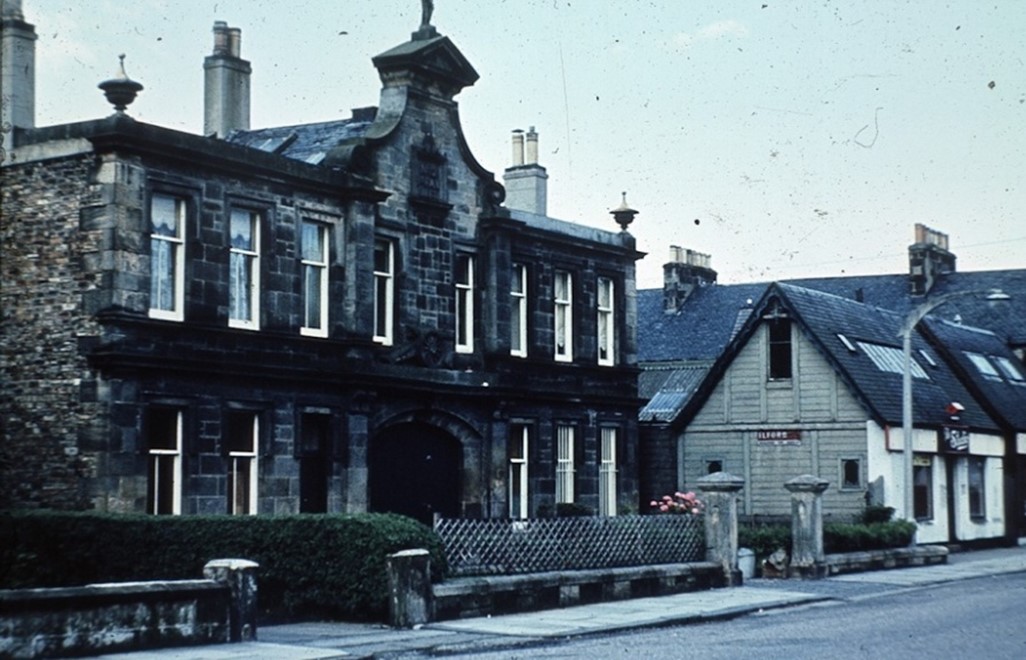
As time went on, however, the New Hall became very busy and it was a little cramped. Throughout Scotland many of the rifle companies had erected purpose-built halls for themselves without government help. So, for Queen Victoria’s Jubilee in 1887, Grangemouth, led by Major Mackay, set about raising funds and finding a site for a drill hall of its own. George Deas Page, architect, Falkirk, was asked to draw up plans and to provide an estimate. The cost was put at £1,300 and in September 1888 a site was found in the rapidly expanding road called Talbot Street, and tenders were invited. £500 had been raised from local sources, including the Earl of Zetland, Mr and Mrs Brodie of Gairdoch, and Miss Dawson of Powfoulis. The new Drill Hall formally opened on 28 March 1889. It consisted of a huge hall measuring 85ft by 52ft fronted by a two-storey brick building with a coursed sandstone façade facing the street. This façade had three bays composed individually of three, two and three windows, separated by pilasters. The two end bays had heavy moulded string and eaves courses with a very low-pitched roof. This contrasted with the central bay with its tall Dutch gable and wide segmental-arched carriage entrance. Above the string-course over this entrance was carved a gun on a carriage in high relief, along with a sponge and a ramrod. Set in the gable was a stone panel with the inscription “No. 12 1st F.A.V., 1887” – they had become the 12th (Grangemouth) Company 1st Fife Royal Garrison Artillery Volunteers in 1880.
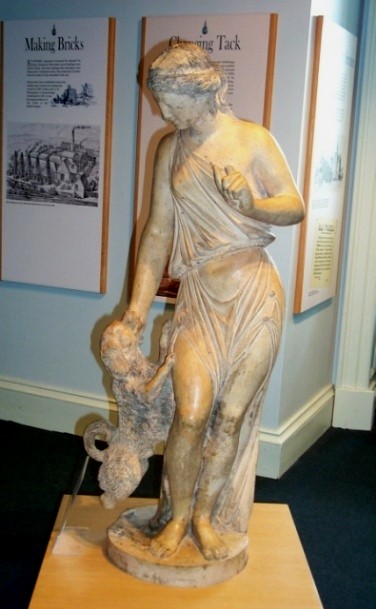
The two ends of the wallhead were surmounted by large terracotta vases, while in the centre was a statue representing Fidelity with her dog. These were supplied from the works of the Grangemouth Coal Company (and were rescued from the rubbish tip by the author in 1989). The ground floor rooms of this front building were used as offices for the officers and orderlies. The first floor contained living accommodation for the drill sergeant and had its own external entrance located just to the left of the main entrance. The armoury was also on this floor. Behind the highest point of the pediment was a large flagstaff, so arranged that the flag could be hoisted from the ground floor of the building. The roof of the hall was supported on strong iron principals, and lighted by glass skylights. Patent radiant gas lamps gave a good light. In the back gable of the hall was a wheel window set above a sliding doorway which gave access to a piece of ground which could be used for a repository drill and exercise.
The tradesmen engaged in the building work were: Henry Aitken, builder; D Rutherford, joiner; W Morrison, plumber and gasfitter; James Russel, plasterer; and Peter Baird, slater. Peter Brown superintended the work of construction. £700 had been raised by subscription leaving a debt of £600.
Now that the Drill Hall was available it was possible to start a gymnastics club in 1895. It was open to the young men of the district, as well as members of the company. It was so successful that two years later a junior class was formed and soon had a large membership. It was decided that the hall should be extended and improved for gymnastic purposes. Only £700 of the cost of the original hall had been paid off, meaning that to clear off the debt and make the proposed alterations the sum of £1,250 was required.
The answer was a three-day bazaar at the end of 1898 which, amazingly, took in £1,045. Unsold work was sold off the following year.

The 1908 reform of the volunteer forces and the creation of the Territorials meant the cessation of the Grangemouth unit. Fife would supply the proposed strength of the reorganised artillery forces. The officers and men of Grangemouth were gutted. They had expended a considerable effort in constructing the drill hall only to find that they were surplus to requirements. It was proposed that the Drill Hall could be converted into a public swimming pool. A condition was placed in the feu charter by the trustees for the 12th Battery 1st Fife Artillery Volunteer Corps stating that the drill hall would be conveyed to the Commissioners of Police (later to become the Town Council) for the benefit of the public should the army volunteers at Grangemouth be completely disbanded. However, many of the men in Fife refused to accept the terms now attached to the Territorial Force and in consequence the men of the Grangemouth Company were incorporated into it in order to maintain numbers and so the service continued in the town.
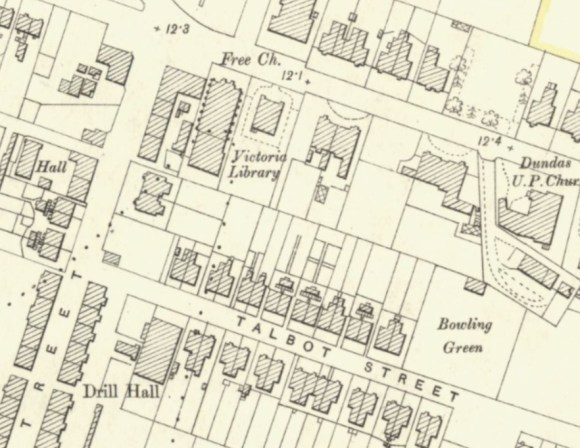
In 1917 the army was short of manpower on the Continent and needed a reserve force based in Britain in order to release men for the Front – not unlike the Home Guard of the Second World War. So, in March 1917, a Grangemouth Volunteer Company was resuscitated and immediately commenced drill in the Drill Hall. By the end of April they numbered over 100 and Captain William Simpson was placed in charge. There were too many to comfortably fit in the Drill Hall and so in dry weather drill was moved to the playground of Grange School. Along with the Falkirk Volunteers they then acted as a guard for the Docks. In October 1918 the Volunteers were relieved of their guard duty at the Docks and disbanded. The drill hall continued in use by the Territorial Force and was adopted as the base for the Grange Harriers.
A new firing range was installed in the drill hall in 1930 by the Stirlingshire Territorial Association and was made available to the Grangemouth and District Miniature Rifle Club. It had around a hundred members and as 12 of these were women a ladies’ section was formed. There were four targets at a range of 25yds. In the lead up to the Second World War activities increased and in August 1938 the Stirling and Clackmannan A.R.P. Joint Committee held an exhibition in the drill hall to illustrate the air raid precautions that had been prepared in the event of war breaking out. When the war came the hall was given over to the local Home Guard and after the war it formed its own rifle club there.
The Territorial Drill Hall was still a valuable asset and was spruced up and given a fresh coat of paint. The blackout arrangements that had been put in place on the skylights were removed. In September 1947 Alexander Anderson, glazier, who lived in Newmarket Street in Falkirk, was repairing one of the roof lights when it gave way and he fell about 25ft onto the concrete floor, receiving severe injuries. F Company of the 2nd Stirlingshire Cadet Battalion was now based at the hall.
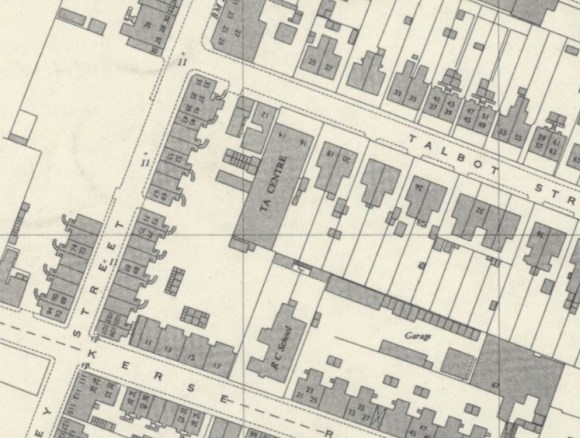
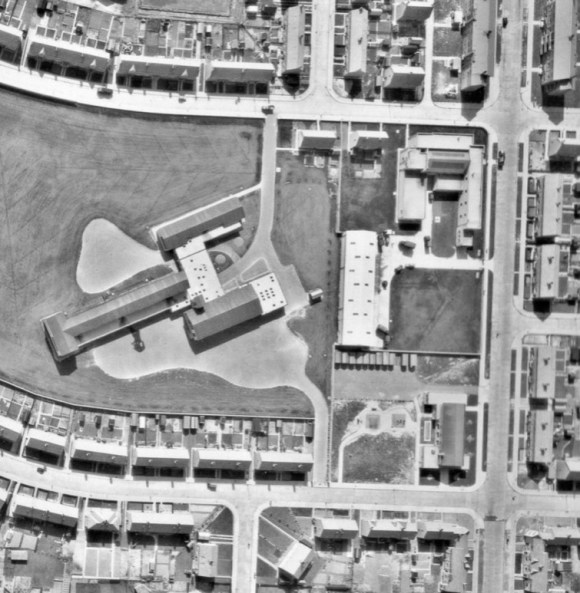
The building was no longer considered to be suitable for the modern Territorial Army and so in 1950 the Stirlingshire Territorial Army and Auxiliary Force Association decided to build a more appropriate headquarters elsewhere within the burgh. As it was the direct descendent of the 12th Battery 1st Fife Artillery Volunteer Corps the clause in the feu charter regarding ownership did not apply. Nevertheless it contacted the Town Council out of courtesy conveying its intention and was told that the Council would not contest the proposed sale. It was 14 September 1957 before the new Grangemouth Territorial Army Centre was opened by Lieutenant-General Sir Horatius Murray, the head of the Scottish Command. It was built at the corner of Central Avenue and Kenilworth Avenue at a cost of around £65,000. The main entrance to the Centre is from Central Avenue. In addition to a drill hall, there were two dwellinghouses and garages at the rear. The complex included a miniature range, armoury, stores, workshop, lecture rooms, offices and canteen, mess-rooms and rooms for cadets. In appearance it is not unlike the buildings of an industrial estate. Once the new centre was opened the old drill hall was demolished and the site is now occupied by the Talbot Street car park.
Sites and Monuments Record
| Talbot Street | SMR 1627 | NS 9271 8193 |
 Falkirk Local History Society