
SMR 616 / NS 931 756
William Humble Wilson founded the new Craigend Brickworks on the site of the colliery of that name (also known as Whiterig Colliery Number 1) in 1937. A lease of the site near Standburn was obtained from the Carron Company. It is probable that the coking ovens on the site, built for Carron Company c1907, were converted into brick kilns. This and the fact that the old pit bings contained clay which could be used to make building bricks cheaply determined the choice of site. The £6,000 capital for the private limited company was provided by John Stewart (builder) of Bonnybridge, Forbes-Hendry of Falkirk, the Wilson family and three other shareholders, with John Wilson as chairman and William Wilson as Managing Director.
Reconstruction nationwide following the end of the war saw demand increase, the company was re-financed and a 16-chamber Belgian kiln was built. Composition bricks were resumed and about 60 tons of fireclay were brought in from Whiterigg Mine each week to make Kestrel brand firebricks and the works became profitable.
Approaching the Second World War there was little demand for building bricks and during the war labour was scarce. When stocks reached one million bricks the Works temporarily closed in 1943. When the brickworks re-opened in 1946 with around 30 employees it was able to use manual labour provided by German POWs, some of whom were permitted to live in a hut at the site.
John Wilson died in 1950 and John Stewart became the chairman. In 1952 test bores at Carbrook near Torwood found high alumina clays which were used to make good quality refractory bricks. A loan of £25,000 from Charles Tennant & Co Ltd allowed a second Belgian kiln to be erected and secured bricks for Tennant’s own business. It came into production in July 1954. When John Stewart died the following January, his place as chairman was taken by Duncan Stewart and the company concentrated on producing alumina bricks and built up large exports. George Yuill was brought in as the managing director.
In 1962 the company became a subsidiary of Thistle Industrial Holdings of Edinburgh and the production of bricks was augmented by the use of a brick works at Jawcraig near Slamannan.
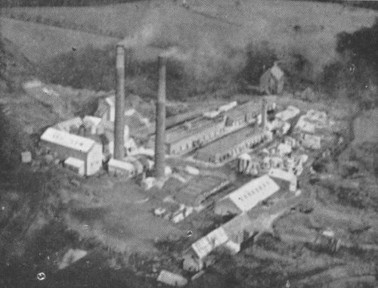
The firm now employed around 140 people. The Company’s name was changed to Craigend Refractories Ltd in February 1972 and then sold to Amalgamated Anthracite Holdings Ltd. George Yuill retired in 1975 and George Cairns became managing director. Bauxite was obtained from New Guinea. Increased mechanisation reduced the number working at the brickworks to about 40-48, with a further 20 at the mine.
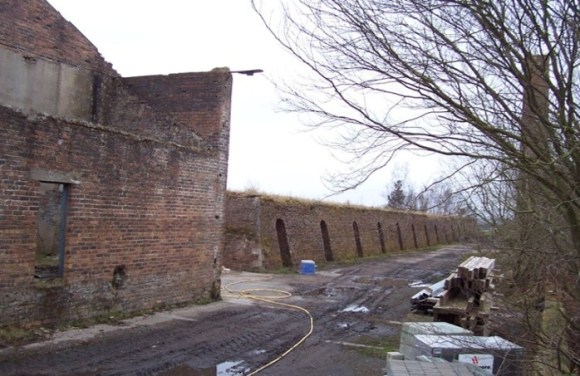
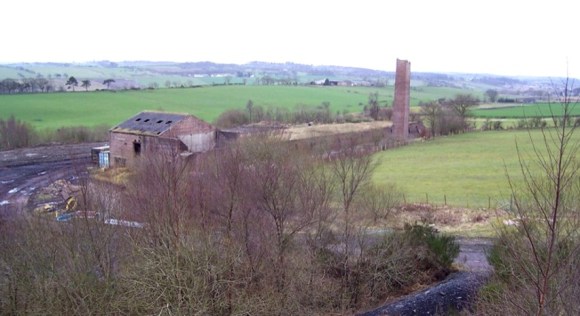
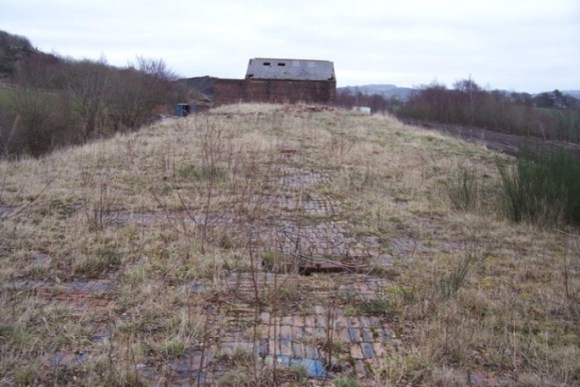
The 1982 survey by Falkirk Museum found that the equipment at the brickworks included a Bradley & Craven jaw crusher (mixing 30% charnot with 70% clay); dry press and plastic brick moulding machines; two impact hammer machines making special shapes of bricks; an electrically heated floor for drying bricks; a Belgium kiln, a thin-walled rectangular kiln, and an 18-chamber Hoffman kiln in almost continuous production.
The clay arrived by lorry from Carbrook Mine and was dumped over an area of flat open ground. It was then picked up by a mechanical digger and placed in the jawcrusher, from whence it was taken by conveyor belt to a large hopper to be fed into either a wet or a dry pan mill. After grinding it fell through the mesh at the bottom of the pan mill and was divided into that for the hand brick moulder and that for the moulding machines to which it travelled by another conveyor belt. After moulding the bricks were piled upon stillages and transported to the kiln chambers by a fork-lift truck. The setters arranged the bricks in the chamber so that there was space in between them to allow the heat to circulate. Heat from the firing of previous chambers helped to dry the bricks, and eventually that chamber was fired. After thirteen hours the temperature reached 1300 degrees Celsius and the fire was allowed to die back. The entire firing process took 11-14 days and then the bricks were removed and placed for delivery by lorry. Most were for export through Grangemouth Docks (Falkirk Museum Survey). The trade names of the firebricks included EAGLE, FALCON and KESTRAL.
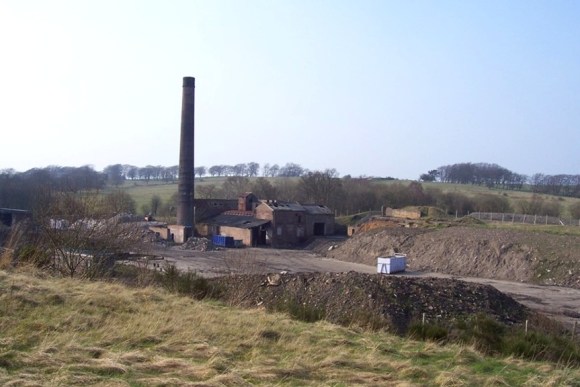
The works closed in 1983. One of the two tall chimney stalks was demolished, along with a few buildings. The site was subsequently used for processing coal and as a waste transfer station by Amalgamated Anthracite Holdings.
Bibliography
| Sanderson, K.W. | 1990 | The Scottish Refractory Industry 1830-1980. |
NEWSPAPERS
- West Lothian Courier, 29 February 1952, 2:
OVERLOADED LORRY Craigend Brick Co. Ltd.. Avonbridge. pleaded guilty through an agent to having on 5th February, on the road between Linlithgow and Edinburgh, overloaded a lorry to the extent of 2 tons 9cwts. A fine of £3 was imposed. - Edinburgh Evening News, 25 April 1957:
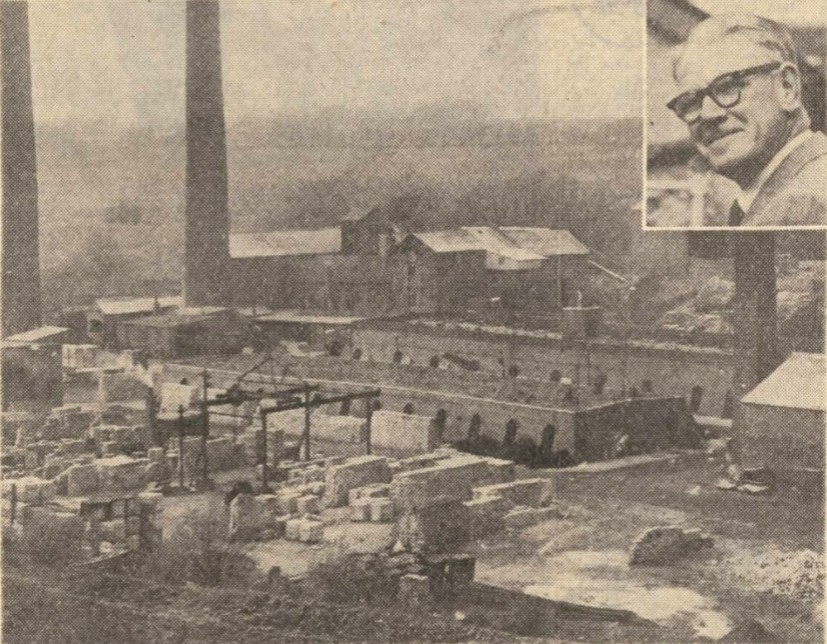
Bricks from Craigend are being shipped all over the world but labour for this and the Glenelrig Brickworks has to be transported from outlying districts. The managing director at Craigend, Mr William H. Wilson (inset) has done much to improve the village amenities.- Standburn wants to stay on the map – The death knell sounded for the thriving little community of Standburn more than 20 years ago … In the meantime, on the site of a worked-out colliery, one local concern is carrying the village’s name to the world market. From Craigend Brickworks, fire bricks are being shipped to furnaces, steel works and ovens throughout Europe, Canada, Australia and the Middle East, the Argentine and many other export customers. On the home market too, the Craigend firm, which started with 12 workers in 1938 distributes the Standburn product to British industry at home.
- 500,000 fire bricks (about 1200 tonnes) are loaded on railway sidings each day but to operate his works, managing director, William H. Wilson, who lives in Standburn, has to transport men from outside the village. Lorries travel to the Maddiston, Avonbridge, California and Whitecross areas to collect labour.
- In an effort to improve village amenities, Mr Wilson has had a bus shelter built for the local people, has donated playing fields and is providing ornamental garden plots. His urgent call however is for a stable labour force.
- Falkirk Herald, 11 May 1989, 19:
GOODS VEHICLE OPERATOR’S LICENCE. CALEDON COAL CO. LTD., CRAIGEND BRICK WORK, STANDBURN, FALKIRK FKI 2HZ, is applying for a licence to use Craigend Brick Works, Standburn, Falkirk FKI 2HZ, as an operating centre for Five goods vehicles and two trailers…

