
SMR 628 / NS 960 770
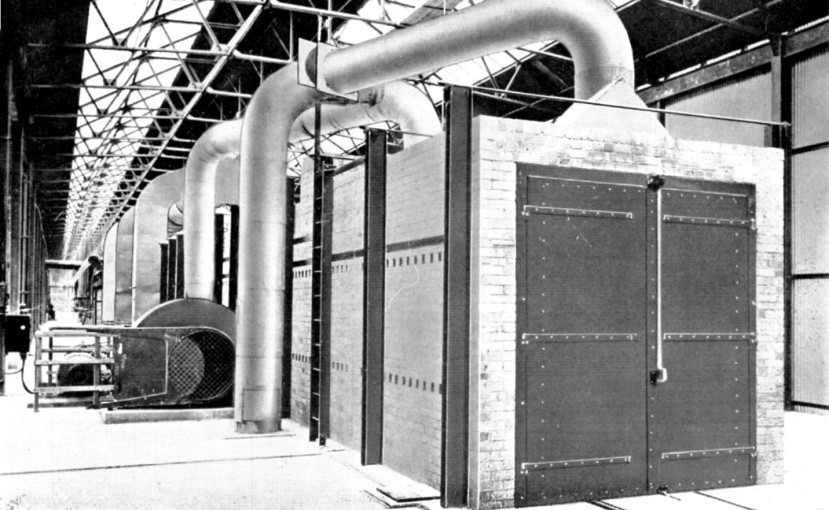
In the 1920s Steins of Bonnybridge was looking for new sources of refractory clay and in 1923 sank a mine at Manuel where they found a seam of Nettle clay with 42% alumina. It was also high in carbon which had to be burnt out before the main firing of the bricks to avoid cracking when in use. Colonel Stein was determined to overcome such problems. Experiments in America showed that a special tunnel kiln was required and in 1928 work began to prepare the site at Manuel for building which meant the removal of large quantities of peat. New railway sidings were constructed and a new mine dug. The tunnel kiln and gas producer plant, the latter shipped from America, were ready by April 1930 and the first bricks emerged on 10 April that year. It was the first tunnel kiln in Scotland. A second kiln was finished in June 1932 but lack of orders meant that it was not lit until October 1934. A third kiln came into service in April 1938 as part of the preparations for the Second World War.


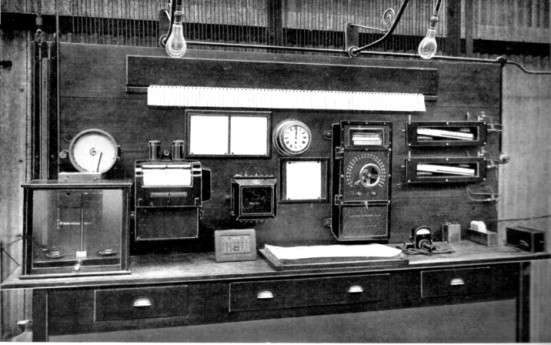
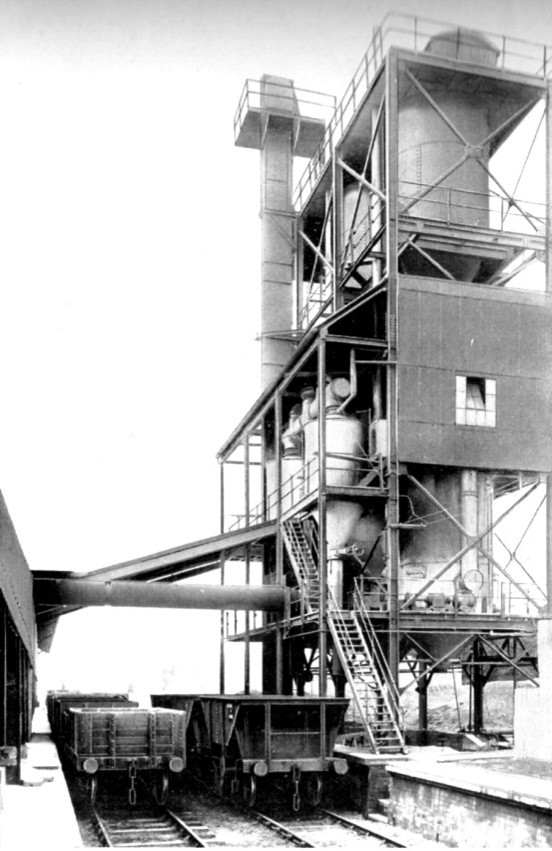
Further research improved the processing of the clay. The carbon was oxidised at under 750 degrees to produce a low temperature calcine which allowed a greater density of brick and faster kiln schedules. Iron was removed using strong magnets. This allowed the clay seams further south to be utilised and a new mine was sunk at Compston and another at Wallhouse near Torphichen.
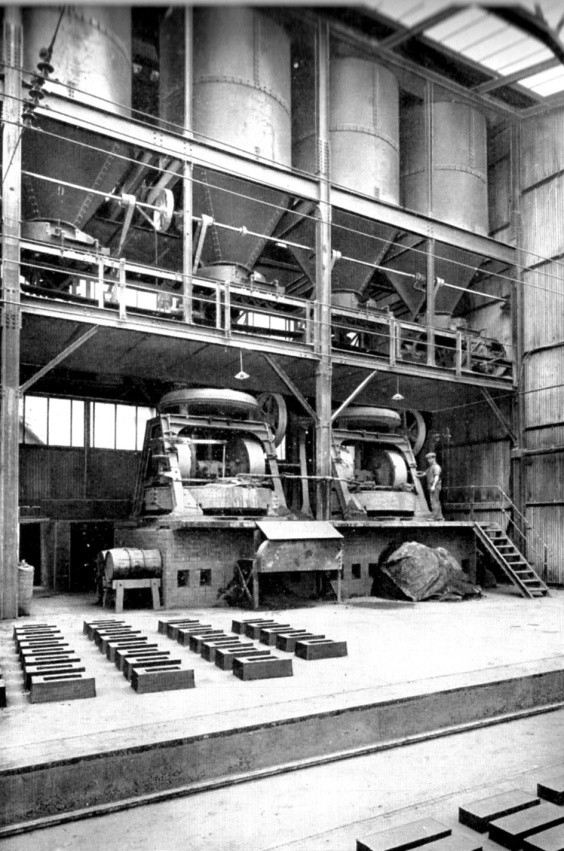
Wet Grinding Mills and Storage Bins.
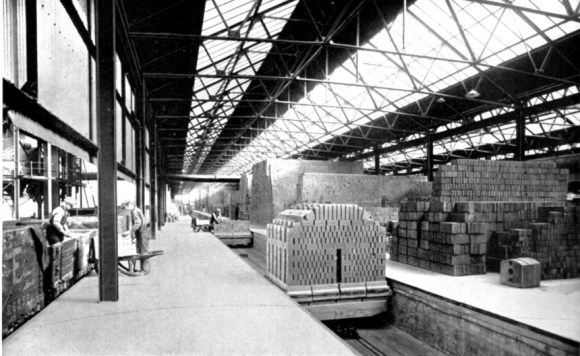
A range of high performance bricks was developed at Manuel made of sillimanite from Assam in India, kyanite from Kenya and South Africa. Prepared bauxite from Guyana was imported for the high alumina bricks and several 10,000-ton shiploads were used at Manuel and No. 4 kiln was built for them just after the war, and No. 5 started in September 1956. With the development of chrome and magnesite bricks to further specialised tunnel kilns were brought into production in 1963 and 1965.

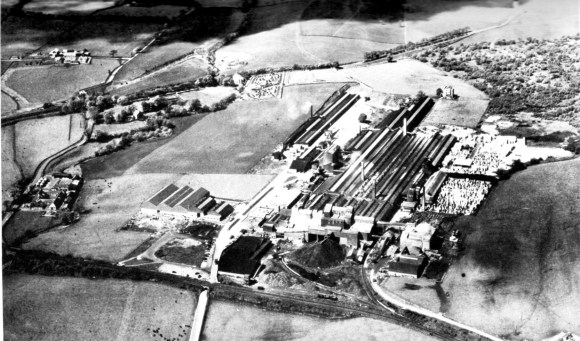
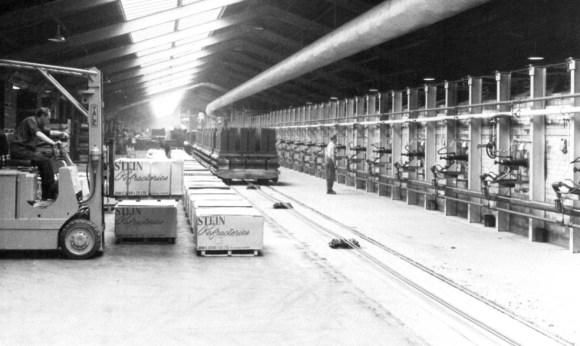
By 1965 the Manuel Works were the largest in Europe, and the second largest in the world. The 87 acre site contained about 20 acres of buildings and had a labour force of 1,000. At full production over 200,000 tons of bricks were produced each year, with a value at that time of over £4 million. However, costs increased and production declined with the demise of the local foundries.
General Refractories took over Steins in 1967 and it in turn by Hepworth Ceramic Holdings in 1969. The mine closed in the late 1970s. Developments in steel production led to the collapse of the firebrick and silica brick industry in the 1970s. The works at Manuel was able to continue at 25% capacity. In the new millennium it was taken over by Vesuvius, based in Derbyshire, The works closed in 2006.
Bibliography
| Douglas, G. | 1993 | Brick, Tile and Fireclay Industries in Scotland. p.76, 6 |
| Sanderson, K.W. | 1985 | Stein of Bonnybridge. |
| Sanderson, K.W. | 1990 | The Scottish Refractory Industry 1830-1980. |
| Stein & Co Ltd | 1932 | John G. Stein & Co Limited, Silica and Firebrick Manufacturers, Bonnybridge, Scotland. |

