
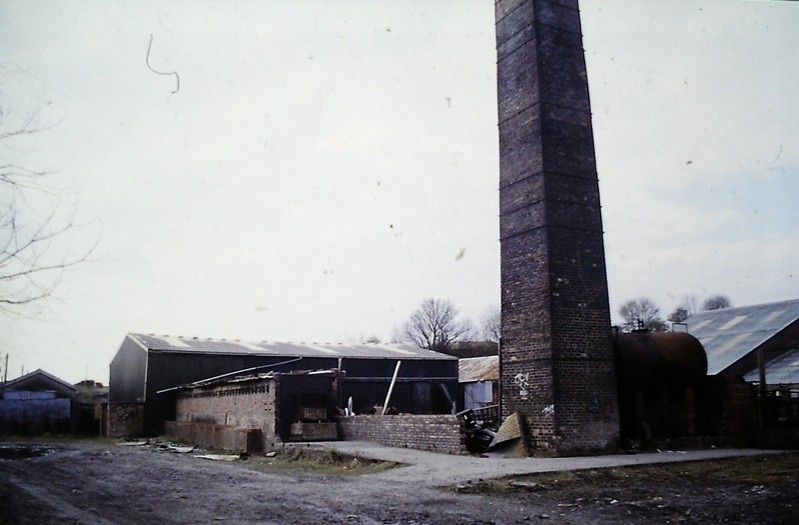
SMR 630 / NS 923 783
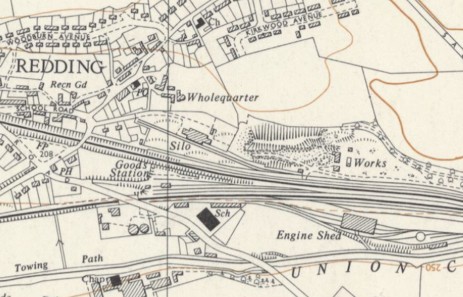
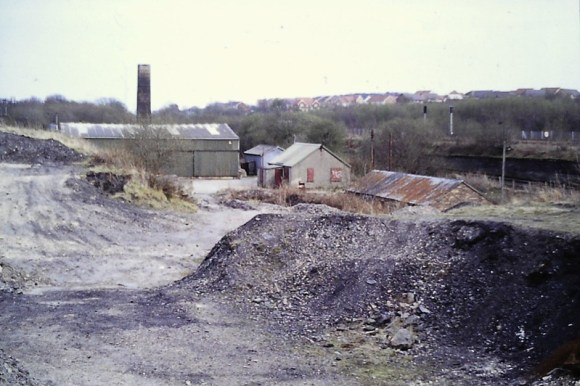
The Meadowbank Brickworks, also called Raewell Brickworks, was situated on the north side of the Polmont Railway Junction at Redding. It was erected by John Rae on the site of the Meadowbank Pit which had been owned by the Westquarter Estate. Rae, who had worked at the Grahamston works of J & A Towers, bought the site in 1947. The works were subsequently managed by his son, Alan Rae, who made baby bricks, firebricks and general-purpose blaes bricks amounting to about 50 tons a week. Bricks were stamped “RAEWELL.”
The clay was dug by tractor from sites at Avonbridge and occasionally at Calder, with the blae obtained from the Meadowbank bing. The process of manufacture is well described on the Scottish Brick History website. It required the services of five women, one hand moulder; one engineer and four labourers.

In 1975 Allan Rae took over the brickworks and from this time none of the fire bricks produced were stamped. The works closed in 2004, but the company is still in existence, though dormant, with a registered address in Edinburgh.

Bibliography
| Douglas, G. | 1993 | Brick, Tile and Fireclay Industries in Scotland. p.31, 62 |
| Sanderson, K.W. | 1990 | The Scottish Refractory Industry 1830-1980. |
https://www.scottishbrickhistory.co.uk/raewell-firebrick-works-meadowbank-brickworks-redding-falkirk-stirlingshire/
Processes: – On arrival at the works the clay was emptied into a chute leading to a Whittaker Fan Mill. The clay then dropped down through the perforated bottom into buckets. From here it was carried by bucket conveyor into a storage hopper, a Mitchell rotor store which held about twenty ton of clay. The store slowly rotated so that the clay fell in even layers, from where it moved via a conveyor to the mixer, a Spanish Verdes de-airing extruder. The Verdes had a diameter of 13 inches and was driven by an electric motor. From the mixer, the material entered a vacuum where all the air was removed in order to give the bricks “body”. The material then dropped into another where metal sheets pushed the clay out into long rectangular slab. The mouth-piece of this machine could be altered according to the shape of the brick required. The unfired bricks were then stacked on cars in a pattern that allowed heat to pass through them whilst they were drying. The cars then spent 4-5 days passing through a dryer which was 110 feet long and at a temperature of 85-95 C. The bricks were then transported to the intermittent circular downdraught kiln by forklift truck. The heat was drawn up and over the stacks of bricks, down through a flue in the bottom of the kiln, and finally out through a chimney. The bricks are handset, being stacked with spaces in between them to allow heat and air to pass freely. The kiln was oil-fired, with two burners at each end, and the air draught was controlled by a damper. After firing for 76 hours at a temperature of 1120 C, the kiln was allowed to cool for 5-6 days and then emptied. Some hand brick making also occurred.

