
SMR 787 / NS 993 813
Introduction
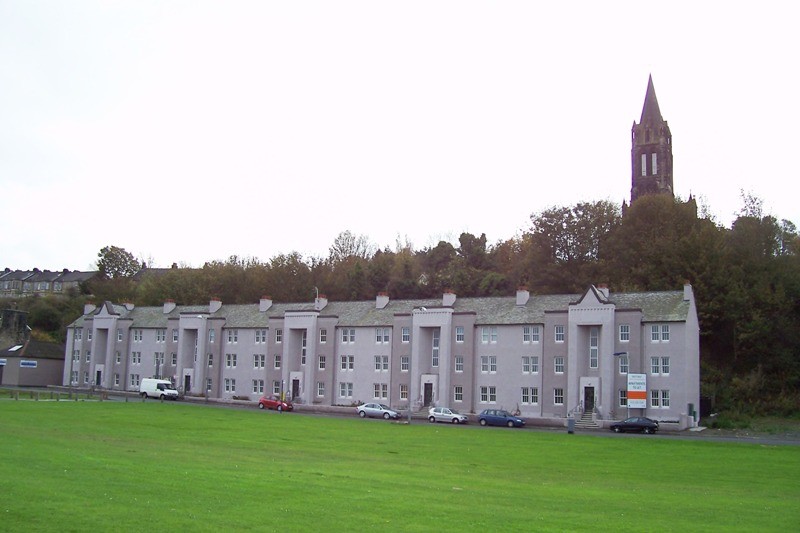
Entering the town of Bo’ness from the west the traveller approaches along the old turnpike road that follows the foot of the escarpment that until the 18th century formed the coastline. Entering the suburb of Corbiehall the first building on the right is now a large tenement known as the Queen Mary Buildings. Most people note this large 1930s building with its art deco finishes resembling the ocean liner from which its name derives. Few strangers to the area become aware that on the opposite side of the road is an old burial ground. The casual passerby only sees yet another grassy roadside verge.
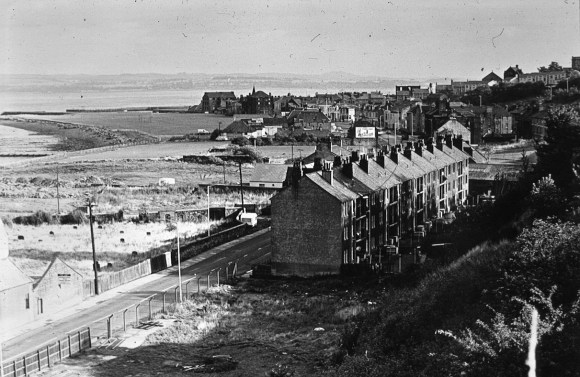
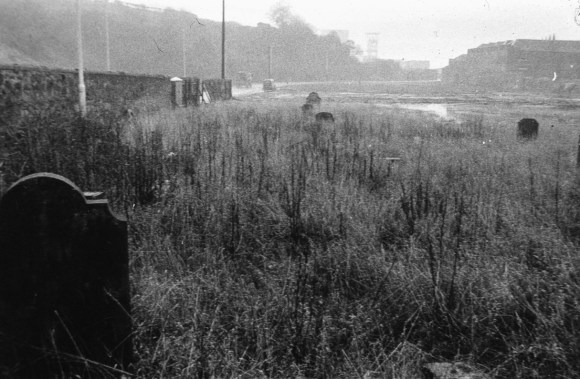
Rubbish had been dumped everywhere, the vegetation had run rampant, the boundary walls were unsafe, fences had been vandalised and the surrounding industrial sites lay derelict. The area was an unsightly mess and a health hazard to the community. No one ever visited the burial ground, which had long ceased to function. Now we have a pleasant green meadow giving access across the railway track to the nature reserve on the banks of the Forth Estuary. And the tombstones? Well they lie flat, just below the level of the grass in the south- east corner of the field. Some 34 are still exposed; the remainder buried around them.
Indeed, the existence of a graveyard on the north side of the A904 Corbiehall Road is today just a faint memory to the older inhabitants. Yet the burial ground, replete with head stones, was there for all to see until 1978. In that year, after almost a century of neglect, it was levelled and landscaped by Falkirk District Council. At the time of the decision to do so the site constantly flooded and rainwater stood for long periods of time.
History
So neglected had the graveyard become that its origins have been shrouded in mystery. Writing in 1913 the Bo’ness historian Thomas Salmon was given to “understand the churchyard on the shore at Corbiehall was necessitated because of the havoc which this outbreak (of cholera in 1851) caused among the inhabitants” (Salmon 1913, 420). Even today there is a local tradition that the graveyard was for sailors connected with the port of Bo’ness. It is said that the sailors wanted to be buried within spitting distance of the coast and that the waterlogged condition of the site reminded them of burial at sea.
Alas, the truth is likely to be less dramatic or prosaic then either of these accounts. The burial ground to the south of the parish church in Bo’ness had been in use since the 17th century and was severely overcrowded. It lay on steeply sloping ground on either side of Church Wynd. Not only did this gradient cause difficulties in digging the graves and performing the burial service, it also allowed noxious substances to ooze down the hillside.
By the time of the accession of Victoria to the British throne the citizens of Bo’ness were searching for an alternative burial plot. There was no suitable ground in the immediate vicinity of the parish church. In any case, there were now several other denominations in the town all needing the same requirement. The established church still saw itself in the lead role and as the owner of the existing burial ground it was undoubtedly the chief promoter of a new graveyard. The minister’s glebe stretched along the shore from Capies Point in the west to the harbour facilities in the east. Between Capies Point and the Corbiehall Saltworks some of the foreshore had been reclaimed. Ashes from the saltworks had been dumped there over the centuries and latterly pit waste from the Kinneil Colliery had added significantly to them. Then from 1840 onwards the Kinneil Ironworks radically remoulded the coastline and the arrival of the railway in 1850 isolated huge tracts of land from the sea. The land between Corbiehall Road and the railway was now relatively dry (it only became waterlogged as a result of action in the 20th century), but being reclaimed with waste was considered to be of little value. Sometime around 1845 the minister allowed one of the old enclosures here to be adopted as a new cemetery without payment of any kind (SRO CH2/540/30 – 12).
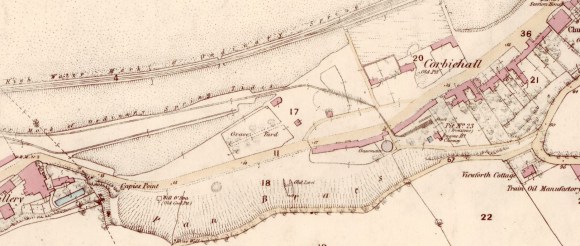
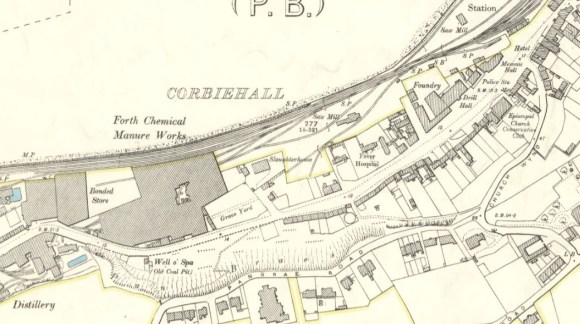
The enclosure lay immediately to the west of the saltworks and had been laid out around 1800 on the ashes from these works. Its northern boundary at the time lay on the tidal limit of the gently shelving coast. Consequently the enclosure was an odd shape, being wider at the east end where more land had been reclaimed. The Cleuch turnpike had been driven through the area and formed the southern limit of the new plot. The road was bounded on the north by a waggonway taking coal from Kinneil Estate to the harbour at Bo’ness (via Waggon Road). It appears that a branch of this waggonway led into the saltworks to supply it with the great quantities of panwood or dross that it consumed. This branch line passed through the south east corner of the enclosure and gave rise to the exclusion of this part resulting in the irregular shaped cemetery boundaries seen on the plan.
Description
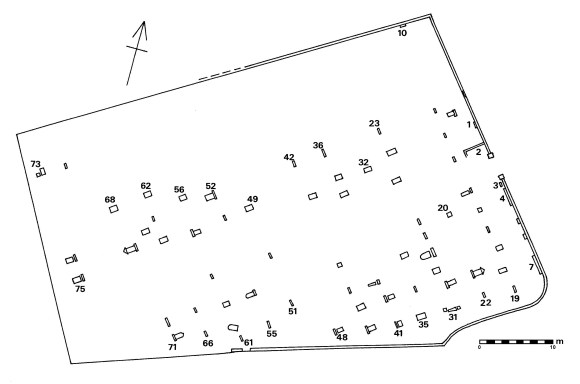
A boundary wall, some 2m tall, was soon erected around the burial ground. The north wall was 59m long and the average north/south dimension was 42.5m. The irregular shape thus enclosed measured 0.29 hectares (0.71 acre). The south-east corner of the boundary wall was curved to reduce the chances of damage by horse drawn vehicles heading for the main entrance in the centre of the east wall. The entrance faced the town and avoided any conflict with the waggonway. It was flanked by substantial gate piers made of ashlar blocks divided by V-channel joints. A tree-lined path led from the gate to the west end of the graveyard. This is clearly depicted on the first edition Ordnance Survey map and can be seen reflected in the plan by the absence of gravestones along its track. A small building in the north-east corner presumably functioned as the sexton’s shed.
The earliest burial recorded on a gravestone appears to be that of Alexander Nimmo in 1848, followed by his mother in 1852 (Stone Number 7). There is then a gap of seven years (No. 75) and from then on burials increased steadily in number. In 1866 the graveyard was referred to in the Penny Post as the new “cemetery”. The use of the word cemetery shows that the graveyard was ecumenical. Burials start to tail off after 1880 and continued in existing lairs into the 1890s. By then the more salubrious cemetery behind the new parish church, off Dundas Street, was operating well. It was operated by the Council and had opened in 1881. In the 19th century a large chemical works (latterly Fison’s) grew up to the west of the cemetery and a slaughterhouse was established to the north east. Little surprise then that few people visited it!
| DATE | No. of NEW STONES |
|---|---|
| 1800-1849 | 1 |
| 1850-1859 | 1 |
| 1860-1869 | 18 |
| DATE | No. of NEW STONES |
|---|---|
| 1870-1879 | 16 |
| 1880-1889 | 2 |
| 1890 – | 1 |
The apparent gap in the recorded tombstone dates between 1848 and 1859 is interesting, as this would include the period surrounding the cholera epidemic and its aftermath. It would have been some time after the last cholera death that the ground in the area would have been broken again. Given the priorities it is not surprising that few stones would have been erected then. The site was quite suitable for the disposal of the cholera victims, as the alkaline ashes would act as a disinfectant.
The distribution of gravestones in the cemetery was relatively even. Apart from the void left by the axial path there was also a notable absence along the northern wall. This may have been due to it being nearest to the sea, or due to the presence there of the cholera victims, buried in haste. The fact that this part of the graveyard lies furthest from any habitation and would have contained the greatest depth of ashes favours the second explanation. The locations of burials throughout the three decades after 1860 are evenly distributed, as one might expect if all the lairs had been sold at one time. Clearly the whole yard was laid out in a single exercise and was not subjected to subsequent growth or expansion.
The east wall, being the nearest to the town, attracted the attention of the monumental mason and contained a number of wall mounted monuments. By contrast the western boundary was latterly a fence made of railway sleepers. It is not known whether there was ever a stone-built wall here. It is possible that such a wall, poorly founded, had been allowed to fall into decay and had been replaced. Alternatively, it may have been a wooden fence from the start in order to allow for future expansion in that direction.
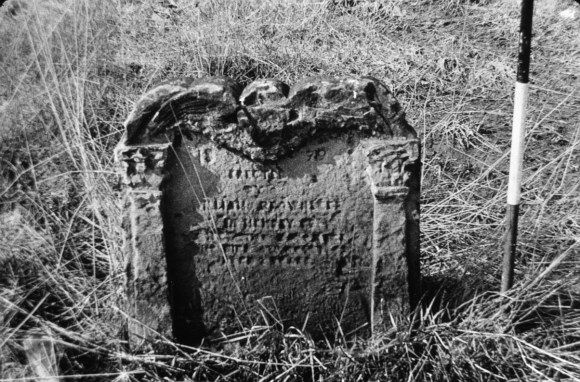
There are a number of stones that were evidently brought from the old parish churchyard for re-use. No. 42, for example, has the date 1742 carved on its top surface, but the facial inscription was only added in 1879. Similarly, No. 45 bears the date 1835 and this was cemented over when a new dedication was placed on the other side by people with no obvious family connection. Stylistically, the carved decoration on Nos. 36, 42, 52, 70 and 72 shows that the stones all originally belonged to the latter half of the 18th century.
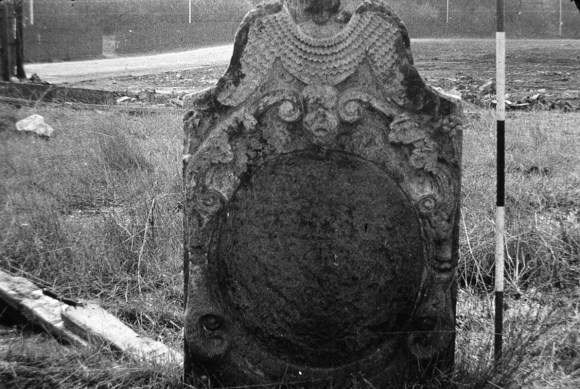
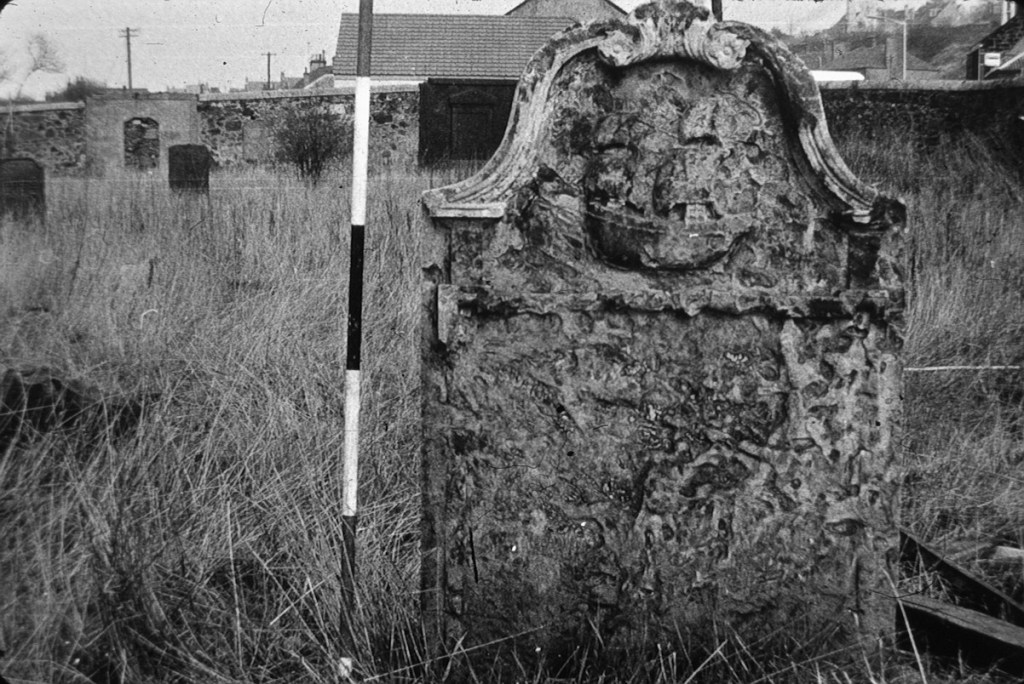
No. 79 is of fireclay, but the remainder of the memorials are sandstone. The older and more elaborate gravestones are executed in a fine-grained sandstone, which is hard wearing. This may have been available at one of the many quarries in the Bo’ness area, or it may have come been brought down the river from the well-known beds at Dunmore/Longannet. Later stones are from bedded sandstones that have a tendency to laminate and were imported.
Trades
Whether or not the cemetery was used for cholera victims, it was widely utilised by a wide spectrum of the town’s population. This included some of the wealthier members of the business community. As might be expected the position of Bo’ness as an important maritime base is reflected in the gravestones. However, because we are dealing with the period 1860-1890 it is not as prominent a feature as in the older graveyard by the church. Stone No. 72, which depicts a two-masted ship, is from that earlier graveyard.
Historically the most important of the connections with the sea is the stone erected by BFG Meldrum (No. 76) “shipbuilder in Bo’ness“. Salmon states that Meldrum was the last shipbuilder at Bo’ness and that he built the Ebenezer and the Isabella (Salmon 1913, 259). According to Bowman (unpublished notes in Falkirk Museum) these were built in 1847 and 1851. BFG Meldrum built the Euphemia in 1865 and the Amelia in 1866. The latter was owned by Meldrum and Co, presumably a venture by the shipbuilder himself. As well as Inverkeithing, mentioned on the stone, the Meldrum family had connections with Burntisland and Granton. Merchants are also present on Nos. 14, 69 and 80, as is a wood merchant (No. 31). It can be assumed that Lawrance Scotland, who was killed in an accident at the Dock Gate in 1892, was connected with the sea too (No. 11).
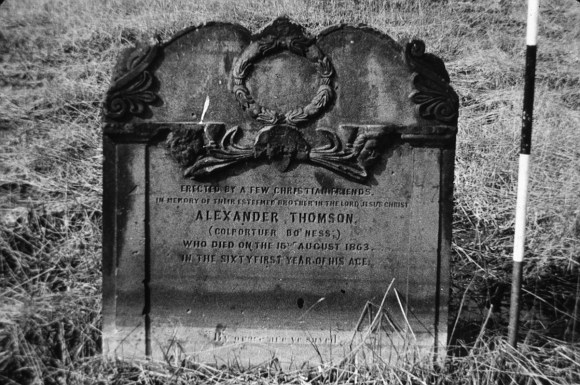
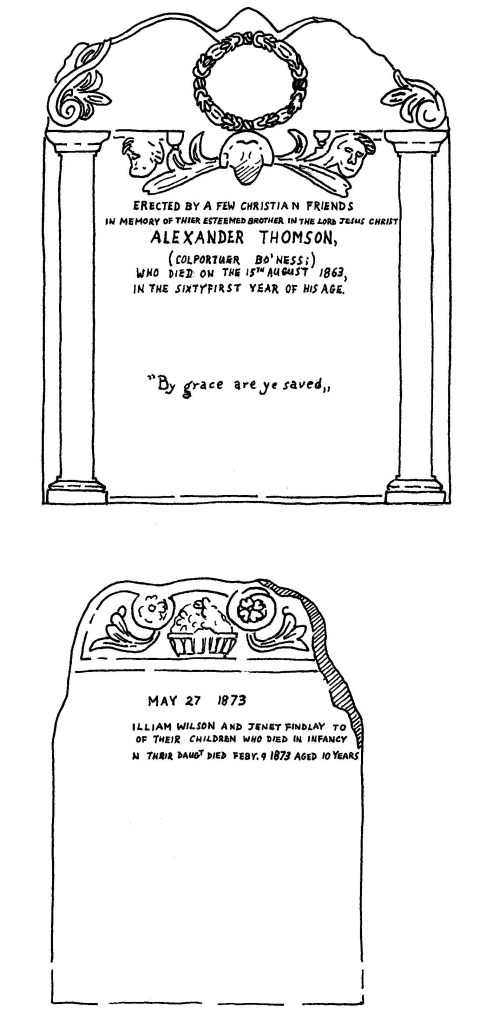
The relative wealth and level of education in the burgh may be gauged by the presence of a colporteur (despite the misspelling of the word itself on stone No. 36). The British Encyclopaedia (1933 edition) says that this was a naturalised French term “appropriated to a class of men always, or most commonly, subsidized by societies or associations with the view of disseminating literature by carrying about publications for sale, generally at reduced rates.” Hence the dedication by “a few Christian friends in memory of their esteemed brother in the Lord Jesus Christ“.
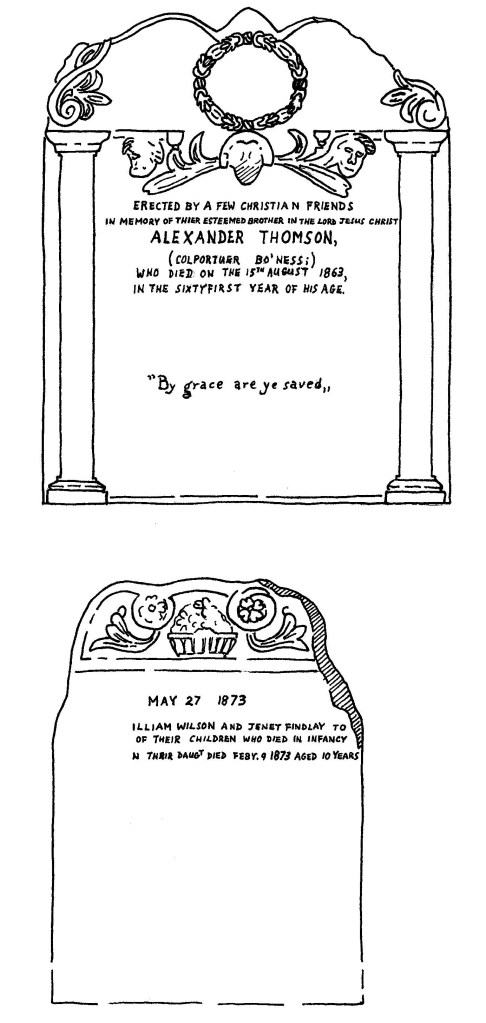
The other trades mentioned are bakers (Nos. 7 & 34) and a surgeon (No. 18). There is also a worn reference on stone No. 45 to the manager of a company. John Dryer(?) had been manager for some 30 years. Whilst this may have been a shipping company, it is more likely to have been the pottery or a chemical company.
Inventory
Before the site was cleared in 1978 the gravestones were recorded by Lorna Main (Central Region Archaeologist) and Iain Paterson. It is their photographs of the site that are published here for the first time. We would like to thank them for giving the author permission to incorporate their work into this account.
The site was levelled and some of the stones set flush with the grass. The 34 stones still visible were examined by the author in 2001 and a further five inscriptions were recorded. These are probably from stones that were lying face down in 1978 and an attempt has been made to match them to the sequence recorded then. By and large the stones were not transported far when the site was landscaped and they lie in a similar pattern to that shown on the plan of 1978. It has not been considered worthwhile to produce a plan of their current locations, as it would have little historical meaning and the stones are no longer readily accessible. They have now sunk and lie a little below the surface with weeds growing over their edges. The grass is cut using large mowers and their blades have slowly chipped away at the raised detail on a number of the stones. This is particularly evident on No. 36. Much of the detail that can be seen on the 1978 photograph has been planed down to a lower level. Another unfortunate consequence of the semi-submerged state of the stones is that water gathers in the hollows above the stones and frost shattering results. Many of the stones have laminated badly and completely lost inscriptions that were readily read in 1978. What is more, there has been a tendency for the area to be used as an overflow car park for events in the town centre, such as the Fair Day or Victorian Market. Here, at least, the Community Council has offered help with the policing of such days.
The graveyard was not surveyed by Mitchell and Mitchell as part of their West Lothian volume in the 1970s and this is the first full record of it. The format of the inventory follows that of previous volumes of Calatria:
1. Each stone is given a unique number that also appears on the plan;
2. The type of stone, whether flat or head;
3. If a headstone, then the shape of the top of the stone (see volume 10, p.17 for the key);
4. The dimension of the stone starting with the height, then the width and thickness;
5. The inscription.
- Wall, triangular pediment. 1.80 x 0.83 m. ERECTED BY THOMAS MILLER/ IN MEMORY OF/ THOMAS MILLER/ HIS GRANDFATHER WHO DIED 1st MARCH/ 1864 AGED 91 YEARS/ ALSO/ GEORGE/ HIS SON DIED 17th OCT 1864 AGED 11 YEARS.
- Wall, missing (kerbstones only present).
- Head, arched. 0.73 x 0.55 x 0.17 m. ERECTED/ BY WILLIAM NIMMO/ IN MEMORY OF HIS DAUGHTER/ MARGARET WHO DIED 28th OCT/ 1-74 AGED 15 YEARS/ ALSO HIS SON JOHN/ WHO DIED — 18– / AGED 44 YEARS.
- Wall, missing (impression on wall).
- Wall, cut corners. 1.25 x 0.65 m. Blank.
- Wall, ogee. 0.98 x 0.90 m. 1861/ By/ JOHN BLACK/ and/ MARGARET DUNCAN/ HIS WIFE AND THEIR CHILDREN/ ABOVE MARGARET DUNCAN DIED/ 26 MARCH IN 1871 AGED 64 YEARS.
- Wall, triangular pediment. 2.30 x 1.06 m. (a) ERECTED/ BY/ ROBERT NIMMO/ BAKER, BO’NESS [on pediment] (b) IN MEMORY OF JANET ROWAN HIS WIFE &/ CHILDREN VIZ. ALEXANDER DIED 20th JAN/ MAGDALENE 12th OCT 1848. JANET ROWAN/ DIED 21st APRIL 1852. JANE DIED 31 MARCH 1863 (c) WELCOME SWEET HOUR OF FULL DISCHARGE/ THAT SETS MY LONGING SOUL AT LARGE/ UNBIND MY CHAIN, BREAK UP MY CELL/ AND GIVES ME WITH MY GOD TO DWELL [on plinth].
- New
- New
- Wall, square. 0.90 x 0.71 x 0.18 m. 1880/ ERECTED BY/ RICHARD PEEBLES AND MARION WILSON HIS WIFE/ IN MEMORY OF ALEX. THEIR SON WHO/ DIED 18 APRIL 1878 AGED 16 MONs.
- Head, chamfered. ERECTED BY/ JOHN SCOTLAND IN MEMORY OF HIS FATHER/ LAWERANCE SCOTLAND WHO WAS KILLED/ DOCK GATE 22nd AUGt AGED 52 IN 1892/ ALSO HIS MOTHER AGNIS McFARLANE WHO/ DIED 17th APRIL 1891 AGED 45 ALSO IN MEMORY OF/ HIS BROTHER AND TWO SISTERS.
- Head, double ogee. 1.00 x 0.75 x 1.35 m. (a) 3 LAIRS [along top] (b) 1864/ ERECTED BY/ ROBERT BALD & CHRISTIAN GRAY/ IN MEMORY OF ROBERT, THEIR SON/ WHO DIED IN INFANCY.
- Head, double ogee. 0.75 x 0.70 x 0.12 m. (a) 3 LAIRS [along top] (b) ERECTED BY/ JAMES MARSHALL/ BUILDER IN MEMORY OF HIS WIFE/ ISABELLA STEWART/ WHO DIED 23 APRIL 1863 AGED 44 YEARS.
- Head, rounded. 1.11 x 0.44 x 0.15 m. ERECTED/ BY/ JOHN & ELIZABETH BALD/ IN MEMORY OF/ ELIZABETH MARY BALD/ THEIR DAUGHTER WHO/ DIED 4th MARCH 1867/ IN THE 3d YEAR OF HER AGE/ THE ABOVE JOHN BALD, / MERCHANT, BO’NESS/ WHO DIED 20th JULY 1872/ AGED 49 YEARS.
- Head, base only.
- Head, ogee & arch. 0.88 x 0.71 x 0.15 m. ERECTED BY/ CHRISTIAN PATON/ IN MEMORY OF/ JOHN GOW/ HER HUSBAND WHO DIED/ 18th MAY 1864 AGED 65 YEARS/ ALSO HER MOTHER ISABELLA WRI[GHT]/ WHO DIED 11th JULY 18– AGED 84 YE—.
- Head, ogee & arch. 1.36 x 0.80 x 0.10 m. Fallen face down.
- Head, fleur-de-lis. 1.28 x 0.90 x 0.26 m. ERECTED BY WILLIAM MURRAY, SURGEON/ IN MEMORY OF/ ISABELLA McDONALD/ HIS MOTHER/ WHO DIED 4th DEC 1863/ AGED 76 YEARS/ ALSO/ JANET MURRAY, HIS SISTER/ WHO DIED 29th JAN 1871/ AGED 41 YEARS.
- Head, ogee & arch. 0.86 x 0.79 x 0.05 m. Illegible.
- Head. Fallen.
- Head, triangular pediment. 1.80 x 0.75 x 0.17 m. Illegible.
- Head, ogee & arch. 1.23 x 0.81 x 0.10 m. Inscription lost.
- Head, ogee & arch. 1.15 x 0.77 x 0.15 m. ERECTED BY/ WILLIAM HENDERSON. &/ CHRISTINA ROSS. / IN MEMORY OF/ THOMAS/ THEIR SON WHO DIED 17 DECEMBER 1864/ AGED 6 YEARS/ ALSO/ ARCHIBALD DIED 14th DECr 1872/ AGED 2 YEARS AND 8 MONTHS/ CHRISTINA ROSS MY BELOVED WIFE/ DIED 30th OCTr 1888/ AGED 55 YEARS.
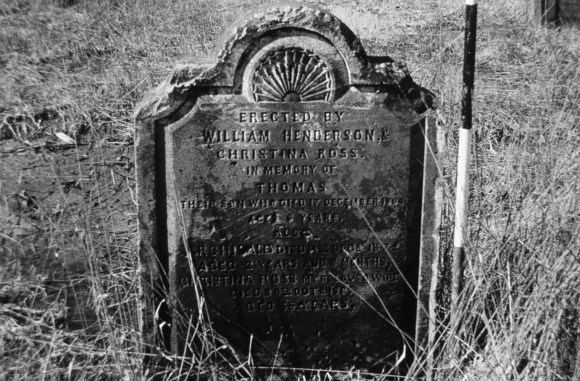
one of several with the Scallop Shell Design.
- Head, square. 1.30 x 0.62 x 1.35 m. Fallen face down.
- Head, ogee & arch. 1.10 x 0.67 x 0.08 m. Fallen.
- Head, Arabic arch. 0.90 x 0.63 x 0.07 m. ERECTED BY/ CHARLES G. BAXTER/ NEW YORK/ IN LOVING MEMORY OF HIS UNCLE & AUNT/ HUGH FLEMING/ DIED 17th SEP 1867, AGED 57 YEARS/ JANET GRANT HIS WIFE/ DIED 17th JAN 1891, AGED 78 YEARS. [Most of this inscription has since been lost due to lamination]
. - Head. Base only.
- Head, arched. 1.40 x 0.90 x 0.20 m. ERECTED/ IN MEMORY OF/ JAMES FREW MASON/ WHO DIED 7 SEPT 1880 AGED 65 YEARS/ ALSO HIS WIFE UEAN FORGIE/ DIED 10th FEB 1898 AGED 85 YEARS.
- Head, S-arch. 1.05 x 0.75 x 0.09 m. Inscription lost.
- Head, stepped arch. 1.03 x 0.59 x 0.08 m. Fallen face down.
- Head, truncated obelisk. 1.62 x 0.43 x 0.43 m. (a) IN/ MEMORY OF/ HIS BELOVED WIFE/ SARAH MILLER/ WHO DIED IN THE LORD/ MARCH 9th 1873/ IN HER 35th YEAR (b) ERECTED BY/ ROBERT BRECHIN/ WOOD MERCHANT, BO’NESS [on plinth].
- Head, not recorded.
- Head, square. 1.02 x 0.77 x 0.12 m. Fallen face down.
- Head, Arabic arch. 1.16 x 0.66 x 0.07 m. (a) 2 LAIRS/ ERECTED BY/ HUGH ROSE/ IN MEMORY OF HIS WIFE/ AGNES MACKIE/ WHO DIED 15th SEPTEMBER 1877/ AGED 48 YEARS [east side] (b) IN MEMORY OF/ HENRIETTA & JANE 4 & 3 DAUGHTERS OF/ WILLIAM FERGUSON BAKER, BO’NESS/ HENRIETTA DIED 3 MARCH 1871 AGED 14/ JANE DIED 4 JUNE 1874 AGED 22/ GONE BEFORE [west side – most of this inscription has since been lost due to lamination]
- Head, ogee & arch. 1.03 x 0.66 x 0.10 m. 1868/ ERECTED/ BY/ HENRY McEWAN/ AND HIS WIFE ELIZABETH/ IN MEMORY OF THEIR SON/ WHO DIED ON THE 5 OF MAR/ AGED 3 YEARS.
- Head, ogee & tri-lobed. 1.18 x 1.00 x 0.20 m. ERECTED BY A FEW CHRISTIAN FRIENDS/ IN MEMORY OF THEIR ESTEEMED BROTHER IN THE LORD JESUS CHRIST/ ALEXANDER THOMSON (COLPORTUER BO’NESS)/ WHO DIED ON THE 15th AUGUST 1863/ IN THE SIXTYFIRST YEAR OF HIS AGE/ “By grace are ye saved”.
- Head. Partly buried.
- Head. Not recorded.
- Head, truncated obelisk. 1.45 x 0.40 x 0.20 m. (a) 1871/ ERECTED/ BY WILLIAM HASTIE AND/ ELISABETH HENDERSON HIS WIFE/ IN MEMORY OF THEIR CHILDREN/ THOMAS WHO DIED/ MARCH 17th 1861 AGED 3 MONTHS/ ROBERT WHO DIED/ JULY 27th 1862 AGED 6 MONTHS/ DAVID WHO DIED/ OCT 23rd 1868 AGED 2 YEARS/ ANN SHARP HASTIE/ WHO DIED 27th APRIL 1876/ AGED 11 YEARS (b) SAFE IN THE ARMS OF JESUS [on plinth].
- Head, cut corners. 1.10 x 0.66 x 0.09 m. ERECTED BY/ ROBERT CAR—-R &/ SARAH STANLAY/ IN MEMORY — —–/ —- — —/ — — —.
- Head, stepped flat triangle. 0.74 x 0.82 x 0.04 m. Fallen face down.
- Head, tri-lobed. (a) 1742 [along top] (b) 18 79/ ERECTED/ BY/ WILLIAM BROWN—/ IN MEMORY OF/ — — —/ —- DIED — — —-/ AGED 2 YEARS.
- Head. Partly buried.
- Head. Partly buried.
- Head, double ogee. 1.15 x 0.67 x 0.10 m. (a) 1876/ ERECTED/ BY/ JOHN DUNCAN AND AGNIS _ET. VEITCH IN/ MEMORY OF THEIR CHILDREN/ THOMAS DUNCAN DIED 13th APRIL 1869 AGED 10 Moth/ MARGARET DUNCAN DIED 31st AUGt 1871 AGED 3 moth/ GEORGE DUNCAN DIED 3rd JUNE 1872 AGED 6 DAYS/ THOMAS DU-CAN DIED 19th JULY 1873 AGED 5 DAYS/ ELIZABETH WATSON DUNCAN DIED 1 MARCH 1876/ AGED 6 YEARS [east face] (b) ERECTED/ BY/ ELIZA WALSH/ IN MEMORY OF HER/ AFFECTIONATE HUSBAND/ JOHN D–EYER/ For 30 years Manager of THE —- Company well known in B—– — Much respected/ Who died 18TH Octr 1835/ AGED — YEARS [west face, infilled with concrete – lower part of inscription since lost].
- Head, Arabic arch. 1.15 x 0.65 x 0.12 m. Fallen face down.
- Head, 5-lobed. 1.26 x 0.65 x 0.15 m. Fallen face down.
- Head, damaged ogee. 0.95 x 0.65 x 0.07 m. Fallen face down.
- Head. Partly buried.
- Head. ? x 0.80 x 0.07 m. Only stump left.
- Head, double ogee. 0.95 x 0.65 x 0.10 m. (a) [fallen on east face] (b) ERECTED/ BY/ THOMAS LOCKIE/ IN MEMORY OF HIS DAUGHTER ELIZABETH/ BORN 1 JUNE AND DIED 2 DEC 1860/ ANDREW HIS SON BORN 29 OCTOBER 1857/ — SEPTEMBER 1858/ —– BORN 18 SEPTEMBER AND/ DIED — NOVEMBER 1861/ WILLIAM CARLAW LOCKIE/ —- —3 DIED 2 DEC 1-84/ —IE BORN 15 OCTOBER —- [west face].
- Head. 0.90 x 0.82 x 0.16 m. SACRED/ TO THE MEMORY OF/ SUSAN VINCENT WHO DEPARTED THIS/ LIFE 2nd AUG 1872 AGED 16 MONTHS.
- Head, damaged. 0.15 x 0.60 x 0.05 m. Inscription lost.
- Head, Gothic arch. 1.13 x 0.62 x 0.10 m. ERECTED/BY/ WILLIAM MURPHY/ IN MEMORY/ OF HIS DAUGHTER/ ISABELLA MURPHY/ DIED 8th JAnr 1871 AGED 1 YEAR/ MATILDA BLACK IN LOVING MEMORY/ OF MY BELOVED HUSBAND/ WILLIAM G. MACKIE MURPHY WHO/ DIED 7th NOv 1883 AGED 51 YEARS/ NEVER FORGOTTEN.
- Head, flat triangle. 0.75 x 0.85 x 0.11 m. (a) 2 LAIRS [along top] (b) ERECTED/ BY ANDREW STEELE AND RACHEL DUFFIN HI-/ WIFE IN MEMORY OF THEIR DAUGHt MARY S—-/ WHO DIED MARCH 29th 1879 AGED 15 YEARS AND 5 MO—-.
- Head. Not recorded.
- Head. Not recorded.
- Head. Badly damaged.
- Head. Mostly buried.
- Head, Arabic arch. 1.30 x 0.70 x 0.12 m. ERECTED/ BY/ CHARLES HAGGIE AND GRACE TAIT/ HIS WIFE IN MEMORY OF THEIR CHILDREN/ —–AM DIED SEPt 8 1870 AGED 7 MTS/ —N DIED JANy 16 1873 AGED 5 YEARS/ WILLIAM DIED JANy 1873 AGE- — —/ INFANT SON 30 SEPt 18–.
- Head, flat triangle. 0.40 x 0.65 x 0.10 m. (a) 2 LAIRS [along top] (b) ERECTED BY HIS WIDOW/ IN MEMORY OF/ JAMES LAFFERTY/ DIED 25th JANUARY 1873 AGED 48 YEARS.
- Head. Not recorded.
- Head. Not recorded.
- Head. Mostly buried.
- Head, flat triangle. 0.50 x 0.69 x 0.10 m. —-TED BY/ —MAS SMITH/ — –MORY OF HIS SON/ ROBERT SMITH/ — —- — —- -873 AGED 17 YEARS.
- Head, ogee? 0.91 x 0.69 x0.07 m. 1874/ ERECTED/ BY/ AGNIS MACKIE/ IN MEMORY OF HER HUSBAND/ JOHN JOHNSTON/ WHO DIED 8 OCt 1874 AGED 39/ YEARS/ “Blessed are the dead, who die in/ the Lord”.
- Head. Not recorded.
- Head. Not recorded.
- Head, triangular pediment. 1.05 x 0.85 x 0.20 m. (a) ERECTED/ BY/ JAMES & EDWARD HARRISON/ Merchants Bo’ness [on pediment] (b) IN MEMORY OF THEIR FATHER/ ROBERT HARRISON/ MERCHANT THERE WHO DIED 24th MAY 1860/ AGED 55 YEARS AND OF THEIR MOTHER/ JANE JOHNSTON/ WHO DIED 5th DECEMBER 1860 AGED 57 YEARS/ AGNESS THE BELOVED WIFE OF JAMES WHO DIED OCT 4th 1866/ AGED 27 YEARS/ ALSO AGNESS, DAUGHTER WHO DIED NOV 22nd 1866 AGED 8 WEEKS/ ELIZABETH WHO DIED JANy 1st 1869 AGED 5 YEARS/ ALSO ROBERT WHO DIED DEC 20th 1870 AGED 3 YEARS.
- Head, S-arch. 1.56 x 1.01 x 0.22 m. ERECTED BY/ —–S AND JESSY BUCHANAN/ IN M—– — TH— FATHER —- BUCH—-/ WHO —- — — 1864 AGED 6- —–/ — — —- —–NAN THEIR SISTER WHO DIED — —-/ — — — HELLEN THEIR SIS—/ — —- — YEARS ALSO JANE ——AN/ WI– — —– BUCHANAN WHO DIED 21st/ — —9 —D YEARS MUTCH REG—-D.
- Head, square. 1.30 x 0.62 x 1.35 m. Fallen face down.
- Head, ogee. 0.75 x 0.65 x 0.10 m. MAY 27 1873/ -RECTED BY WILLIAM WILSON AND JENET FINDLAY TO/ -HE MEMORY OF THEIR CHILDREN WHO DIED IN INFANCY/ —-N THEIR DAUGHTr DIED FEBY 9 1873 AGED 10 YEARS
- Head. Not recorded due to flooding
- Head. Not recorded due to flooding.
- Head, rounded. 1.10 x 0.80 x 0.20 m. ERECTED/ BY/ WILLIAM RUTHERFORD/ IN MEMORY OF/ WILLIAM HIS SON WHO DIED/ SEPTr 14th 1859 AGED 2 YEARS/ CHRISTIAN McNAIR HIS MOTHER IN LAW/ WHO DIED 6th MAY 1860 AGED 70 YEARS/ JOHN HIS SON WHO DIED/ SEPTr 6th 1865 AGED 2 YEARS/ ALSO/ JANE FLOCKHART HIS DAUGHTER WHO DIED/ NOVr 26th 1872 AGED 6 YEARS/ ALSO OF/ WILLIAM RUTHERFORD HIS GRANDSON/ WHO DIED MARCH 17th 1879 AGED 8 MONTHS/ THE ABOVE WILLIAM RUTHERFORD/ THE ERECTOR OF THIS STONE WHO DIED/ JANUARY 24th 1880, AGED 60 YEARS.
- Head, arched. ERECTED/ BY BFG MELDRUM/ SHIPBUILDER IN BO’NESS/ IN AFFECTIONATE REMEMBRANCE/ OF/ AMELIA MITCHELL/ HIS WIFE/ WHO DIED AT BO’NESS ON 27TH MARCH 1864/ IN THE 29TH YEAR OF HER AGE/ ALSO/ AMIL MITCHELL MELDRUM/ HIS SON/ WHO DIED — — JUNE —-/ AGE- — —-/ —ERT MITCHELL MELDRUM/ HIS SON/ DIED AT INVERKEITHING THE 7TH SEPT 18–/ AGED 3 YEARS AND 3 MONTHS.
- Head, square. 2 LAIRS/ ERECTED BY/ DUNCAN REW&/ CATHERINE BALD IN MEMORY OF THEIR SON/ WILLIAM BORN 6TH MAY 1863, DIED 14TH JAN 1866/ ALSO CATHERINE REW THEIR DAUGHTER/ DIED 14TH DECEMBER 1866, AGED 14 MONTHS/ THE ABOVE CATHERINE BALD/ DIED 9TH JUNE 1874, AGED 49 YEARS. [This may be stone number 24 above.]
- Head, scallop shell design. ERECTED BY/ JOHN WISHART & P. SANDERSON,/ IN MEMORY OF PETER SANDERSON WHO/ DIED 14 NOVr 1868, AGED 3 MONTHS./ AGNES DIED NOVr 26 1880 AGED 8 MONTHS/ MAGGIE DIED OCT 29 1885 AGED 6 YEARS/ LIZZIE DIED MAY 16 1891 AGED 8 YEARS &/ 6 MONTHS. [This may be stone number 38 above.]Head, not recorded.
- Head, clay, arched. 1868/ ERECTED/ BY WILLIAM BRYCE/ IN MEMORY OF HELEN NIMMO HIS WIFE/ WHI DIED 29TH JANy 1867/ AGED 43 YEARS/ ALSO MARGARET YOUNG MY WIFE/ WHO DIED 18TH DEC 1895 AGED 70 YEARS. [This may be stone number 46 above.]
- Head. ERECTED/ BY DENIS LUNDIE MERCHANT BO’NESS/ ROSE ANNA ADAMS HIS WIFE/ IN MEMORY OF THEIR CHILDREN/ WILLIAM JOHN LUNDIE BORN 10 MARCH DIED 10 APRIL 1870/ BENJAMINE LUNDIE BORN 24 MARCH DIED 16 JUNE 1871/ MARY EVELYN MOOR LUNDIE BORN 20 [OCT] 1867 DIED 3 JUNE 1872/ JAMES ARTHUR BORN 3 NOV 1872 DIED 16 JUNE 1873/ COME CHILDREN HAIL THE PRINCE OF PEACE/ OBEY OUR SAVIOURS CALL/ COME SING ALOUD HIS GLORIOUS GRACE/ AND CROWN HIM LORD OF ALL/ ALSO ERECTED/ BY DENIS LUNDIE IN MEMORY OF HIS FATHER/ ARTHUR LUNDIE WHO DIED 26 1863 AGE 63 YEARS. [This may be stone number 74 above.]
Index of Names on Grave Markers
| Adams, Rose Anna | 80 |
| Bald, Catherine | 77 |
| Bald, Elizabeth | 14 |
| Bald, Elizabeth Mary | 14 |
| Bald, John | 14 |
| Bald, Robert | 12 |
| Baxter, Charles G | 26 |
| Black, John | 6 |
| Black, Matilda | 54 |
| Brechin, Robert | 31 |
| Brownlee, William | 42 |
| Bryce, William | 79 |
| Buchanan, Hellen | 70 |
| Buchanan, Jane | 70 |
| Buchanan, Jessy | 70 |
| Dreyer? John | 45 |
| Duffin, Rachel | 55 |
| Duncan, Elizabeth Watson | 45 |
| Duncan, George | 45 |
| Duncan, John | 45 |
| Duncan, Margaret | 6, 45 |
| Duncan, Thomas | 45 |
| Ferguson, Henrietta | 34 |
| Ferguson, Jane | 34 |
| Ferguson, William | 34 |
| Findlay, Janet | 72 |
| Fleming, Hugh | 26 |
| Forgie, Jean | 28 |
| Gow, John | 16 |
| Grant, Janet | 26 |
| Gray, Christian | 12 |
| Haggie, Charles | 60 |
| Haggie, William | 60 |
| Harrison, Agnes | 69 |
| Harrison, Edward | 69 |
| Harrison, Elizabeth | 69 |
| Harrison, James | 69 |
| Harrison, Robert | 69 |
| Hastie, Ann Sharp | 39 |
| Hastie, David | 39 |
| Hastie, Robert | 39 |
| Hastie, Thomas | 39 |
| Hastie, William | 39 |
| Henderson, Archibald | 23 |
| Henderson, Elisabeth | 23 |
| Henderson, Thomas | 23 |
| Henderson, William | 23 |
| Johnston, Jane | 69 |
| Johnston, John | 66 |
| Lafferty, James | 61 |
| Lockie, Andrew | 51 |
| Lockie, Elizabeth | 51 |
| Lockie, Thomas | 51 |
| Lockie, William Carlaw | 51 |
| Lundie, Benjamine | 80 |
| Lundie, Denis | 80 |
| Lundie, James Arthur | 80 |
| Lundie, Mary Evelyn Moor | 80 |
| Lundie, William John | 80 |
| McDonald, Isabella | 18 |
| McEwan, Elizabeth | 35 |
| McEwan, Henry | 35 |
| McFarlane, Agnes | 11 |
| MacKie, Agnes | 34, 66 |
| McNair, Christian | 75 |
| Marshall, James | 13 |
| Mason, James Frew | 28 |
| Meldrum, Amil Mitchell | 76 |
| Meldrum, BFC | 76 |
| Meldrum, Robert ?Mitchell | 76 |
| Miller, George | 1 |
| Miller, Sarah | 31 |
| Miller, Thomas | 1 |
| Mitchell, Amelia | 76 |
| Murphy, Isabella | 54 |
| Murphy, William | 54 |
| Murphy, William G MacKie | 54 |
| Murray, Janet | 18 |
| Murray, William | 18 |
| Nimmo, Alexander | 7 |
| Nimmo, Helen | 79 |
| Nimmo, Jane | 7 |
| Nimmo, John | 3 |
| Nimmo, Magdalen | 7 |
| Nimmo, Margaret | 3 |
| Nimmo, Robert | 7 |
| Nimmo, William | 3 |
| Paton, Christian | 16 |
| Peebles, Alex | 10 |
| Peebles, Richard | 10 |
| Rew, Catherine | 77 |
| Rew, Duncan | 77 |
| Rew, William | 77 |
| Rose, Hugh | 34 |
| Ross, Christina | 23 |
| Rowan, Janet | 7 |
| Rutherford, Jane Flockhart | 75 |
| Rutherford, John | 75 |
| Rutherford, William | 75 |
| Sanderson, P | 78 |
| Sanderson, Peter | 78 |
| Scotland, John | 11 |
| Scotland, Lawrence | 11 |
| Smith, Robert | 65 |
| Smith, Thomas | 65 |
| Stanlay, Sarah | 40 |
| Steele, Andrew | 55 |
| Steele, Mary | 55 |
| Stewart, Isabella | 13 |
| Tait, Grace | 60 |
| Thomson, Alexander | 36 |
| Veitch, Agnes | 45 |
| Vincent, Susan | 52 |
| Walsh, Eliza | 45 |
| Wilson, Alison | 72 |
| Wilson, Marion | 10 |
| Wilson, William | 72 |
| Wishart, Agnes | 78 |
| Wishart, John | 78 |
| Wishart, Lizzie | 78 |
| Wishart, Maggie | 78 |
| Young, Margaret | 79 |
Bibliography
| Salmon, T.J. | 1913 | Borrowstounness and District |
| SRO | Scottish Records Office |

